
Pick by age. Ages 3–4: 10–30 large bricks. Ages 5–6: an eight-planet model plus a 20–50 piece kit. Ages 7–8: 7×35 binoculars plus a 50–150 piece kit. Ages 9–12: a 70mm telescope plus a 150–500 piece kit.
The model, a kit, and binoculars run $60–$165. A telescope adds $110–$280, and it can wait until your kid stays with one target for 20 minutes.
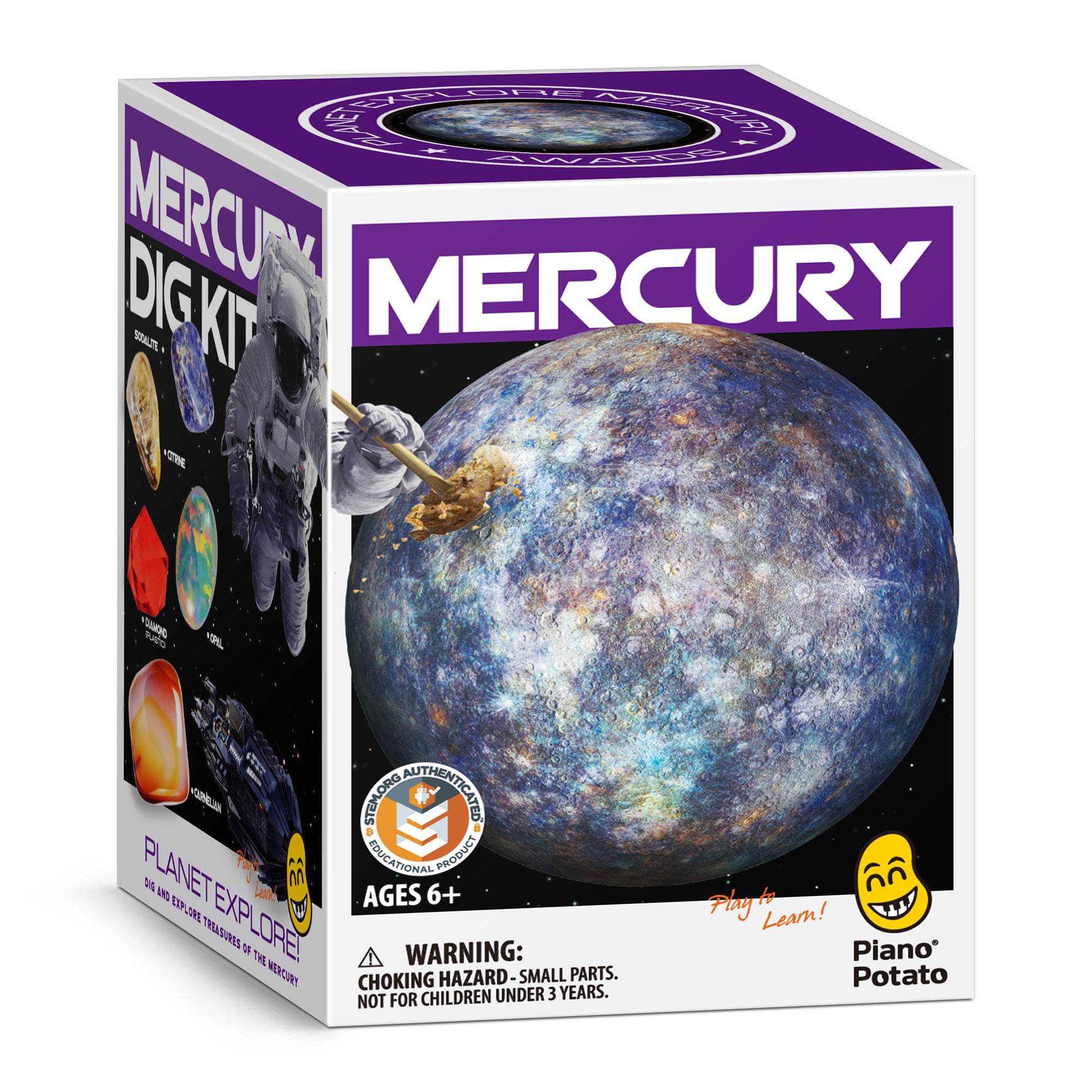
By Age
| Age | New buy | What to check | Price for the new item |
|---|---|---|---|
| 3–4 | Large building bricks | 10–30 pieces; no small parts; no magnets or coin batteries | $15–$30 |
| 5–6 | Eight-planet model | 4–10cm spheres; base at least 10cm | $15–$40 |
| 7–8 | 7×35 binoculars | 700g or less; 5mm exit pupil | $30–$70 |
| 9–12 | 70mm telescope | 20–70x; 140x max; 2–4kg | $110–$280 |
The age range on the box tells you what’s safe, not what your kid will enjoy. Watch how long they stay with one thing. Most 3- and 4-year-olds last 5–10 minutes. By 5 or 6, it’s 10–15. At 7 or 8, 20–30. At 9 to 12, 30–45. With the youngest, stay close for at least 10–15 minutes.
Around 5 or 6, kids can pick up the planet order with “My Very Educated Mother Just Served Us Noodles.” A 1–2cm coloring spill is not a problem. At 9 to 12, try a four-week moon log or a weekly Jupiter sketch. It will tell you more than another toy. If they log three entries or more, an upgrade makes sense.
A city balcony gives you three to five bright targets: the Moon, Venus, Jupiter, maybe Saturn and Mars. A planet model is $15–$40. A telescope starts at $110. Buy the model first, save $70–$265, and see if the interest sticks.
Compare the Three Types
The three types ask for different kinds of attention:
| Type | What the child does | First result | Age | Price |
|---|---|---|---|---|
| Planet model | Places and compares eight spheres | 10–20 min | 5–9 | $15–$40 |
| Creative kit | Builds or paints 20–500 pieces | 30–45 min per sitting | 5–12 | $15–$55 |
| Exploration set | Finds and observes real targets | 3–5 min for Moon or Jupiter | 7+ | $30–$280 |
Planet Models
Scale
If Earth were a 1cm marble, Jupiter would be an 11cm grapefruit, Saturn a 9.5cm orange, and the Sun a 109cm beach ball.[1] Earth would sit 117m from the Sun, about a football field away. The Moon would be 30cm from Earth. The Sun holds 99.86% of the solar system’s mass and could swallow about 1.3 million Earths.[2]
Shrink the Sun to a 24cm basketball, and Earth becomes a 2mm peppercorn 26m away. No desktop model can get both size and distance right. Check Jupiter at 11 times Earth’s diameter, Saturn at 9.5, Neptune at 3.9. I’d rather see “not to scale” plus the actual scale than a set that fakes it.
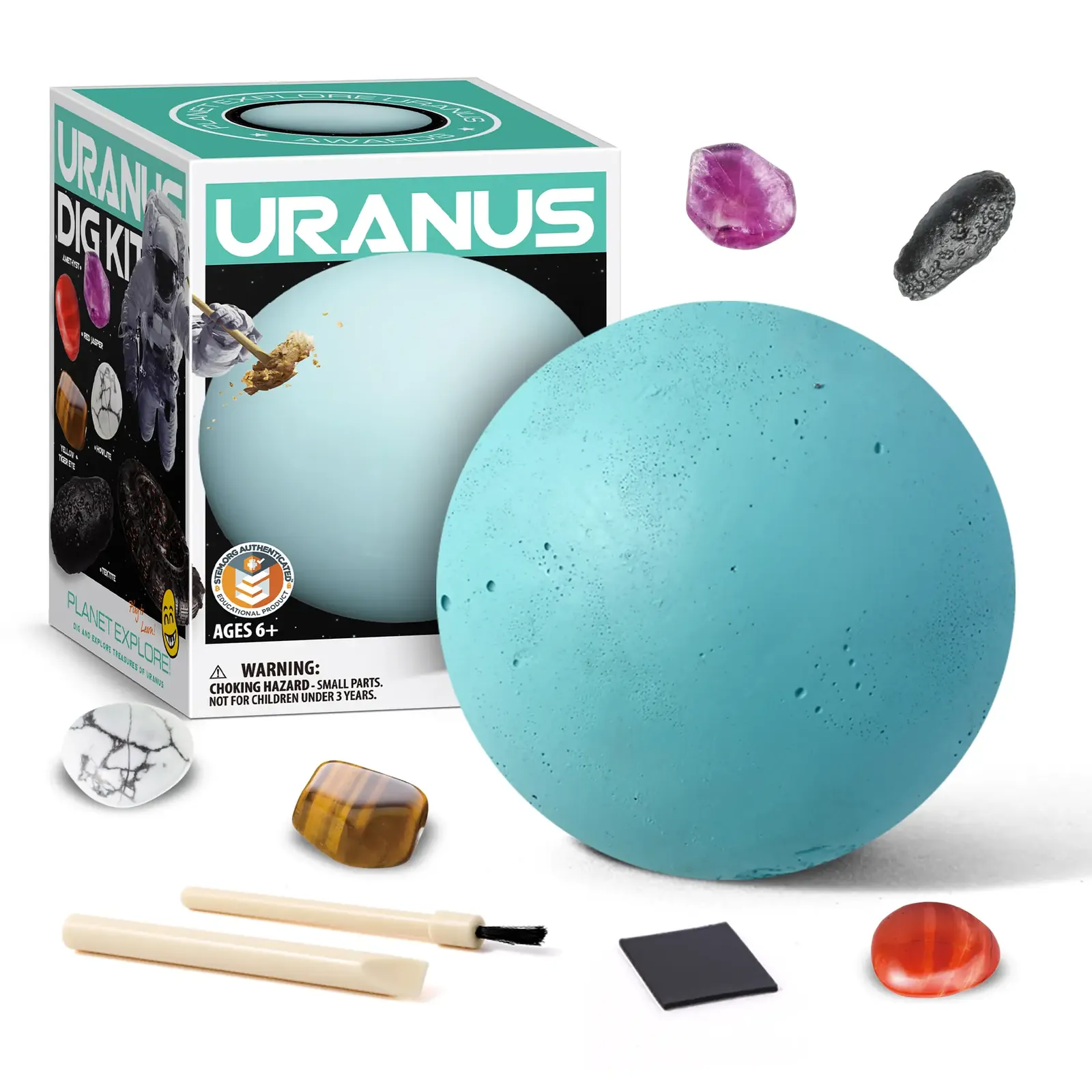
Try it with clay. Make the sizes first: Earth 1cm, Jupiter 11cm, Sun 109cm. Then do distance only: 117m. All eight planets side by side add up to about 31cm. That sounds small until you try it on a living-room floor.
Planet Data
| Planet | Diameter (Earth = 1) | Orbit | Distance from Sun | One thing to know |
|---|---|---|---|---|
| Mercury | 0.38 | 88 days | 0.39 AU | About 600°C between day and night |
| Venus | 0.95 | 225 days | 0.72 AU | Surface around 465°C, hotter than Mercury |
| Earth | 1.00 | 365.25 days | 1.00 AU | The only planet known to have liquid-water oceans |
| Mars | 0.53 | 687 days | 1.52 AU | Olympus Mons rises about 22km |
| Jupiter | 11.2 | 11.9 years | 5.20 AU | The Great Red Spot is wider than Earth |
| Saturn | 9.5 | 29.5 years | 9.58 AU | Average density 0.69g/cm³, less than water |
| Uranus | 4.0 | 84 years | 19.2 AU | Its axis is tilted about 98° |
| Neptune | 3.9 | 165 years | 30.1 AU | Winds can reach about 2,000km/h |

One AU is about 150 million km, or 8 minutes 20 seconds of sunlight. Moonlight covers 384,000 km in 1.3 seconds.
Pluto
In 2006, the International Astronomical Union reclassified Pluto as a dwarf planet.[3] It is 2,377km across, smaller than our Moon at 3,475km. It sits about 39.5 AU from the Sun and takes 248 years to go around once. A model can include Pluto. Check the name, the order, and the relative size. If one is wrong, send it back.
The Base and the Finish
A good set weighs 300–800g. A 4–6cm sphere fits one hand. An 8–10cm one needs two. Under 4cm, the print gets soft and the plastic feels cheap.
The base is where cheap sets fail. If it’s under 10cm across and has no weight, it tips easily. Tap it on a table. A stable one settles in 1–2 seconds.
You don’t need the AR app. If a full-screen ad pops up in the first 30 seconds, or it asks for your phone number before you can use it, skip it.
Creative Kits
How Many Pieces
Kits range from 10 to 500 pieces. Most sit between 50 and 300 and take 2–4 sittings of 30–45 minutes. The 70% rule matters more than the count: your kid should finish about 70% alone, with the rest done on a hint. Ten minutes with no progress, or you doing 70% of the steps, means it’s too hard.
“STEM” on the box doesn’t tell you much. A $4 set with 20 stickers and a $280 set with 500 circuits can both call themselves STEM. Look at the piece count and the steps instead.
Drying Time
White glue skins over in about 30 minutes and cures in 24 hours. Super glue grabs in 10–30 seconds. Epoxy buys you 5–30 minutes. Acrylic paint wants 20–30 minutes between coats, and most projects need two or three. Plaster starts to set in 20–30 minutes.
Three coats with a 30-minute wait each is 1.5 hours of waiting, and that’s before anyone picks up a brush. At 30 minutes a night, that’s three evenings.
Paint, Glue, and Shelf Space
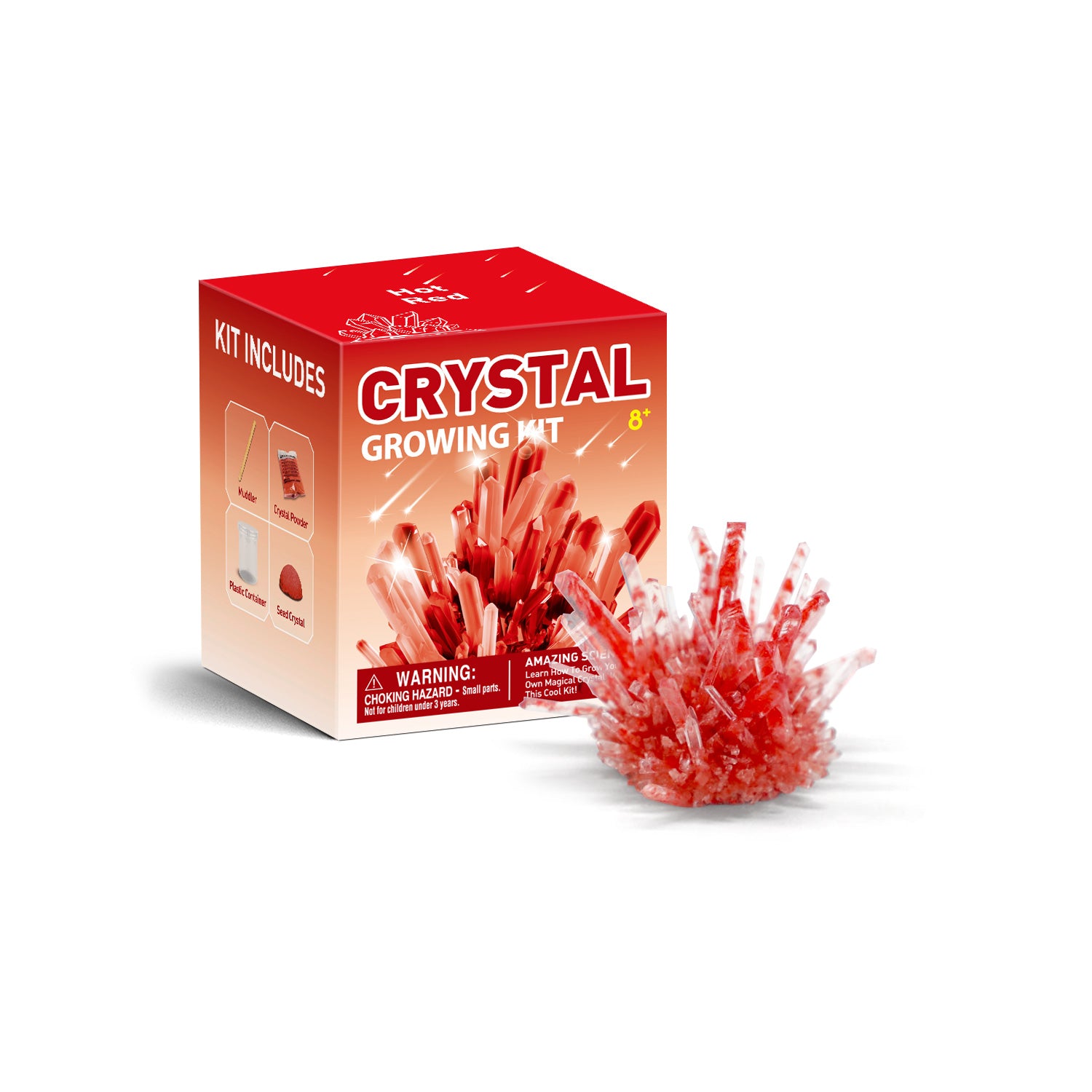
Stick to water-based paint and glue that don’t smell strong. Let an adult mix the plaster powder. Crystal kits need 3–7 days to sit, well out of reach of small kids. A finished model is usually 15–30cm tall. Clear 30×40cm of shelf or wall. Most shelves are 28–32cm high, so measure before you buy.
Exploration Sets
Telescopes
Your pupil opens to about 7mm in the dark. A 70mm lens gathers about 100 times more light. A 50mm lens gets only 51% of the light a 70mm gets. The box won’t tell you that.
To get magnification, divide focal length by eyepiece. A 700mm scope with a 10mm eyepiece gives 70x. A 70mm scope tops out around 140x. A 600x claim needs a 300mm lens, and that setup usually weighs more than 10kg. That’s not a kid’s first telescope.
A 20mm eyepiece is good for the Moon and star clusters. A 10mm is for planets. For a child, look for a 70mm refractor around 2–4kg. Tap the tube. If it wobbles for more than 3 seconds, focusing becomes a waiting game.
For the Sun, use a solar filter that fits over the front of the lens. Solar projection is possible, but an adult must run it and no one looks through the eyepiece. Never point a telescope, binoculars, or a camera at the Sun.[4]
Binoculars
On an 8×40, the exit pupil is 40 ÷ 8 = 5mm. That matches a dark-adapted eye. The field is about 7°, or 14 full Moons side by side. Keep the weight under 700g. Your kid needs to hold it for 3–5 minutes. If they can’t hold it steady for 30 seconds, it’s too heavy. Ages 7–8 do better with a 7×35. Ages 9 and up can handle an 8×40.
What to Look At
With a telescope, start on the Moon at 20x; craters show up right away. With 7x or 8x binoculars, the Moon’s larger craters are still visible. A 10x view of Jupiter gives you four moons; Venus at 50x shows phases, and Saturn’s rings start to show around 30x. In a city or suburb, you can see 100–300 stars. Downtown, you may see fewer than 100. A dark sky gives 2,000–3,000. Give your eyes 20–30 minutes to adjust. Use a red light for the star chart. Skip anything dimmer than magnitude 4 at first.
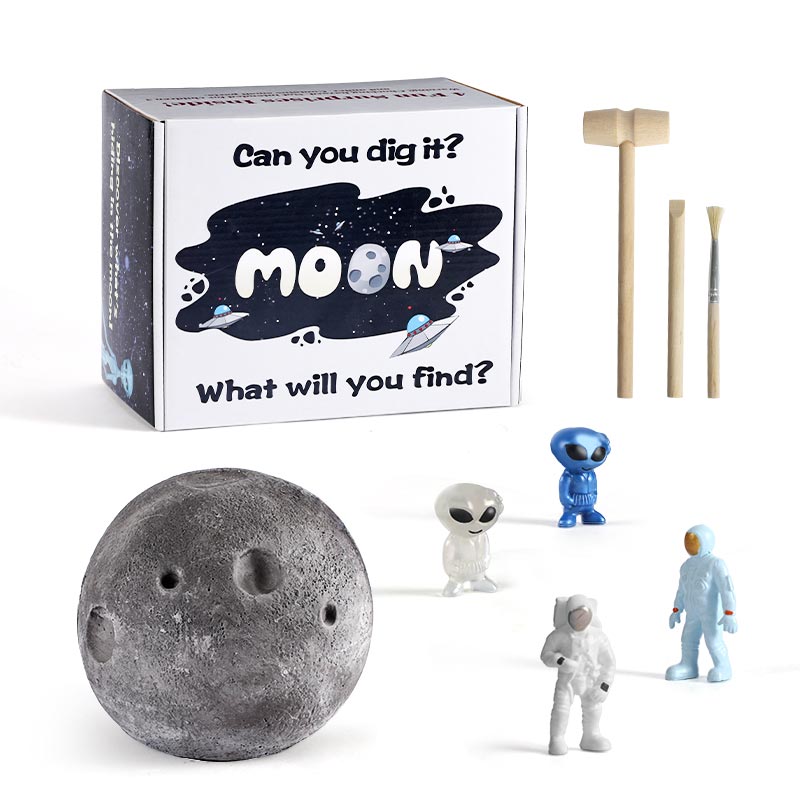
The ISS is a fun add-on. It orbits at about 400km, goes around once every 90 minutes, and moves at 7.7km/s.[5] A pass lasts 3–6 minutes. You can see it without any gear. If your kid would rather dig than look up, a moon dig kit is a good switch.
Water Rockets
A 1.5L bottle, a pump, and a launcher cost $3–$7. A good flight goes 20–30m. This is for ages 8 and up, with an adult nearby. Hold the pressure steady. Launch at 30°, 45°, and 60°, three times each. The 45° launch usually goes farthest.
Safety
| Item | Key number | What to do |
|---|---|---|
| Small parts | No small parts under 3; test cylinder 31.7×57.1mm[6] | If it fits completely, keep it away from kids under 3 |
| Magnets | 2 or more, or 1 plus metal, can attract through bowel walls[7] | If swallowed, go to the ER |
| Coin battery | 20mm common; tissue damage within 2 hours[8] | Don’t induce vomiting. Get to the ER |
| Laser | Class 1[9] | Never at eyes, mirrors, or cars |
| Compliance | US ASTM F963 + CPSIA, plus CPC[10]; EU CE + EN 71[11]; China CCC + GB 6675 | Check the mark, the manual, and the CPC |
Use chemicals outside or with a window open, and keep gloves on. Nothing goes in the mouth, and rockets or darts never point at faces. If a battery swells, stop using it.
Budget
Add it up. A planet model is $15–$40. A creative kit is $15–$55. Binoculars are $30–$70. That’s $60–$165 for the first three. A telescope is $110–$280 on top.
For one child from 5 to 8, that set usually lasts 2–3 years. Wait at least three months between purchases. If the kid brings it up three times in those months, then upgrade.
$60 over 24 months is about $2.50 a month. $165 over 36 months is about $4.60. If it gets used less than once a month, don’t upgrade.
If money is tight, a star chart runs $3–$6, the library is free, and a planetarium ticket is $4–$11. The planet model can wait until you have $15–$40.
Storage
- Planet model: keep it out of direct sun. Check the hanging line every 3 months.
- Telescope: store it dry. Use an air blower and a lens cloth, not a tissue. Tighten the tripod screws every 6 months.
- Creative kit: seal the paint and glue. Keep plaster away from moisture.
- Small parts: use a divided box. Count them after play.
- Observation night: once a month, three times in a row. Check off targets on the same star chart.
For buyers and educators
Building a space-themed range for a store or a school program?
Tell us the age range, quantity, and target price. We’ll come back with a shortlist, packaging options, and a sample plan.
How We Built This
Age bands and safety limits come from the published standards linked in this guide. Prices are typical U.S. online ranges in October 2026. The 70% rule, 10-minute check, and 3-month rule are practical thresholds, not research findings. We did not lab-test every product. Piano Potato sells space-themed kits; product links are examples, not rankings.