
“Sustainable” sounds good on a product page, but it tells a factory almost nothing. “Main molded body contains at least 50% post-consumer recycled PP by weight” is much more useful. Purchasing can quote it, production can follow it, and inspection can check it.
Replace “Eco-Friendly” With a Measurable Requirement
| Weak wording | Better purchasing requirement |
|---|---|
| Eco-friendly wood | State the wood species and required FSC claim |
| Recycled plastic | State the polymer and minimum recycled-content percentage |
| Organic fabric | State the fiber composition and certification requirement |
| Safe paint | Identify the coating used on the approved sample |
| Less packaging | Set the retail-pack or master-carton requirement |
The FTC advises companies against broad, unqualified environmental claims such as “green” or “eco-friendly.” If you make an environmental claim, the benefit should be specific and backed by evidence.[1]
That starts at the sourcing stage. If a factory cannot clearly explain what makes the product environmentally different, you will probably struggle to support the same claim when the toy reaches your store.
Match the Sustainability Requirement to the Toy
A wooden puzzle, a plush animal and a molded science kit should not go through the same material review.
With wooden toys, look at the timber source, construction and coatings. For plush products, separate the outer fabric from the filling because they may use different materials. Molded toys are different again. Here, you can usually specify the polymer grade and recycled-content percentage more precisely.
Durability still matters. Suppose a plastic body drops from 600 g to 520 g. That saves 80 g of material, which looks useful on paper. But if the lighter housing starts cracking during normal play, the change has not improved the product.
For educational toys, also think about how long and how often the toy will actually be used. Someone comparing STEM toys for problem solving and screen-free play should look at the activity itself, not simply accept “STEM” as proof of value.
Check Toy Safety Before the Environmental Claim
For applicable toys sold in the United States, 16 CFR Part 1250 incorporates the mandatory toy safety standard. ASTM F963-23 applies to relevant children’s toys manufactured on or after April 20, 2024.[2]
Accessible parts of children’s products generally cannot contain more than 100 ppm total lead. Paint and similar surface coatings are limited to 90 ppm lead.[3]
Covered children’s toys and child-care articles also cannot contain more than 0.1%, or 1,000 ppm, of a regulated phthalate in an applicable accessible component.[4]
These rules do not disappear because the material has an environmental certificate. FSC-certified wood does not prove that the paint meets the lead limit. Recycled polyester does not tell you whether a plush eye can be pulled off.
For products made for younger children, start with age grading and construction. The same point comes up when reviewing safe and non-toxic toys for toddlers. Material choice matters, but it is only one part of finished-product safety.
Piano Potato explains its general testing approach on the Product Safety page. For wholesale purchasing, however, you still need to confirm that the compliance records match the exact SKU and production version you are ordering.
Know Who Is Responsible for U.S. Certification
For an applicable children’s product made outside the United States, the importer is responsible for issuing the Children’s Product Certificate. The CPC must be supported by applicable passing test results, including testing by a CPSC-accepted third-party laboratory where required.[5]
So put the destination market in the RFQ before anybody starts quoting laboratory costs.
For most regulated imported consumer products that require CPSC certification, electronic filing of certificate data became mandatory on July 8, 2026. Certain Foreign Trade Zone entries have a later effective date.[6]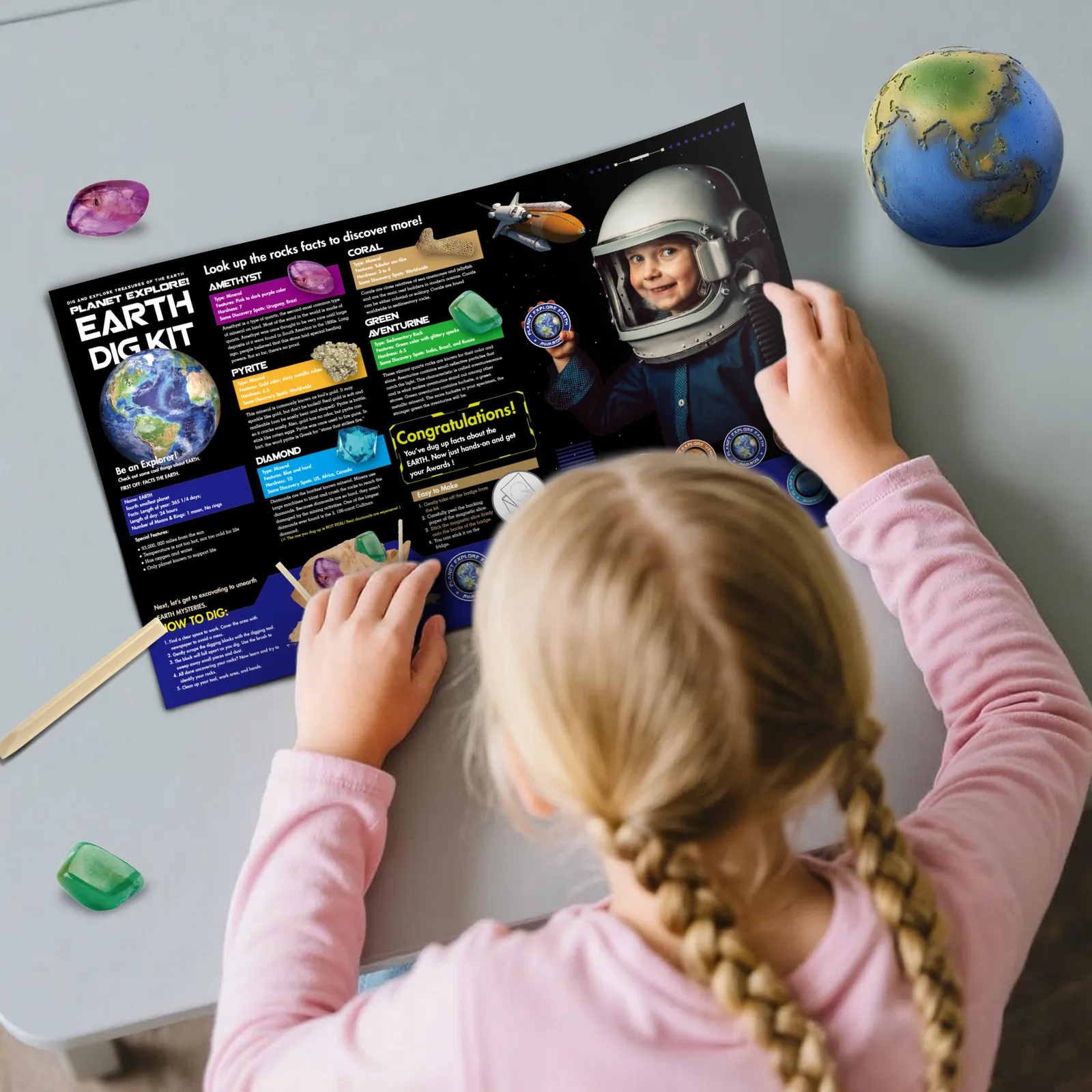
Verify Wooden-Toy Sourcing Separately From Toy Safety
“Wooden toy” can mean solid wood, plywood, MDF, paperboard or a mix of several materials. Do not leave that detail open. Put the real construction in the specification.
If FSC-certified material is required, check that the supplier and the material concerned are covered by the Chain of Custody system. FSC describes Chain of Custody certification as the system used to verify certified forest-based material as it moves through the supply chain.[7]
You can also use the FSC certificate search to check the organization name, certificate code and current certification information.[8]
After that, look at the actual toy.
For a small pilot, you might inspect 30 pieces and record splinters, coating damage and loose joints. If three toys show the same split next to one glued joint, record it as 3/30 and check that joint before placing a larger order.
Thirty pieces is not a universal acceptance sample. It is simply a practical development check that can expose the same problem appearing again and again.
Specify Recycled Plastic by Polymer and Percentage
“Recycled PP” is still too vague for production.
A usable requirement looks more like this:
Main molded body: PP containing a minimum 50% post-consumer recycled material by weight. No material substitution without written approval.
| Component weight | Recycled content | Recycled material per toy | At 10,000 toys |
|---|---|---|---|
| 400 g | 30% | 120 g | 1,200 kg |
| 400 g | 50% | 200 g | 2,000 kg |
| 400 g | 70% | 280 g | 2,800 kg |
The highest recycled percentage is not automatically the best choice. If clips become brittle at 70% recycled content while the approved 50% version survives normal use, the 70% version still needs work.
Textile Exchange states that the Recycled Claim Standard is intended for products containing at least 5% recycled material. The Global Recycled Standard can be used as a business-to-business tool from 20% recycled content, while the current threshold for a consumer-facing GRS product claim is 50%.[9]
That difference matters. A product containing 30% recycled material may meet the GRS threshold for B2B certification, but 30% is still below the current 50% threshold for a consumer-facing GRS product claim.
Do a quantity check as well. If 10,000 toys should each contain 200 g of the specified recycled polymer, production should use roughly:
10,000 × 0.20 kg = 2,000 kg
If the production records can connect only 600 kg of that material to the order, you have a 1,400 kg gap. That needs an explanation before you accept the claim.
Calculate Plush-Toy Claims by Component
Take a 300 g plush toy as a simple example:
| Component | Weight | Material |
|---|---|---|
| Outer fabric | 120 g | 100% recycled polyester |
| Filling | 150 g | 80% recycled polyester |
| Thread, labels and accessories | 30 g | Conventional material |
The recycled portion is:
120 g + (150 g × 80%) = 240 g
That is 80% of the finished 300 g toy by weight. Calling the entire toy “100% recycled” would clearly overstate what is actually in it.
For GOTS-certified goods, check the supplier’s valid Scope Certificate. For an individual certified shipment or delivery, the supplier should provide the relevant Transaction Certificate. The product details and shipment information should match your order.[10]
Ask What “Plant-Based” or “Biodegradable” Actually Means
Plant-based, biodegradable and compostable are not the same thing.
If a supplier offers “plant-based plastic,” ask what polymer it is and what percentage is actually bio-based.
If the supplier calls a material biodegradable, ask under what conditions. Something that breaks down in a controlled industrial process may not break down in a home compost bin.
Use the same approach with coatings. Instead of writing:
Natural safe paint.
write:
Use the coating approved on the final sample. Record the coating manufacturer and reference. Any substitution requires written approval.
The second version is not as pretty, but a factory can actually follow it.
Send the Same RFQ to Every Supplier
You cannot compare quotations properly when every supplier is pricing a slightly different product.
| RFQ item | What to provide |
|---|---|
| Product | Drawing, controlled specification or reference sample |
| Age | Intended age range |
| Market | Country or region of sale |
| Material | Wood, polymer, textile and critical component requirements |
| Environmental claim | Required percentage or certification |
| Packaging | Retail pack and export-carton requirement |
| Quantity | First order and expected annual volume |
Start with around 5–8 credible suppliers. Ask what similar products they have made and request one recent quality record. If a supplier is quoting recycled PP, it should be able to explain the recycled PP it actually buys and processes. A photo of unrelated virgin-plastic toys does not tell you much.
From there, keep the best 2–3 suppliers for samples and detailed quotations.
For private-label development, revision control becomes important at this point. Piano Potato’s guide to private-label educational toy sourcing also uses a locked SKU revision, BOM and approved sample before mass production.
Existing products usually involve less development, but a wholesale toy order still needs checks for the actual material, pack quantity, carton data and requirements in the destination market.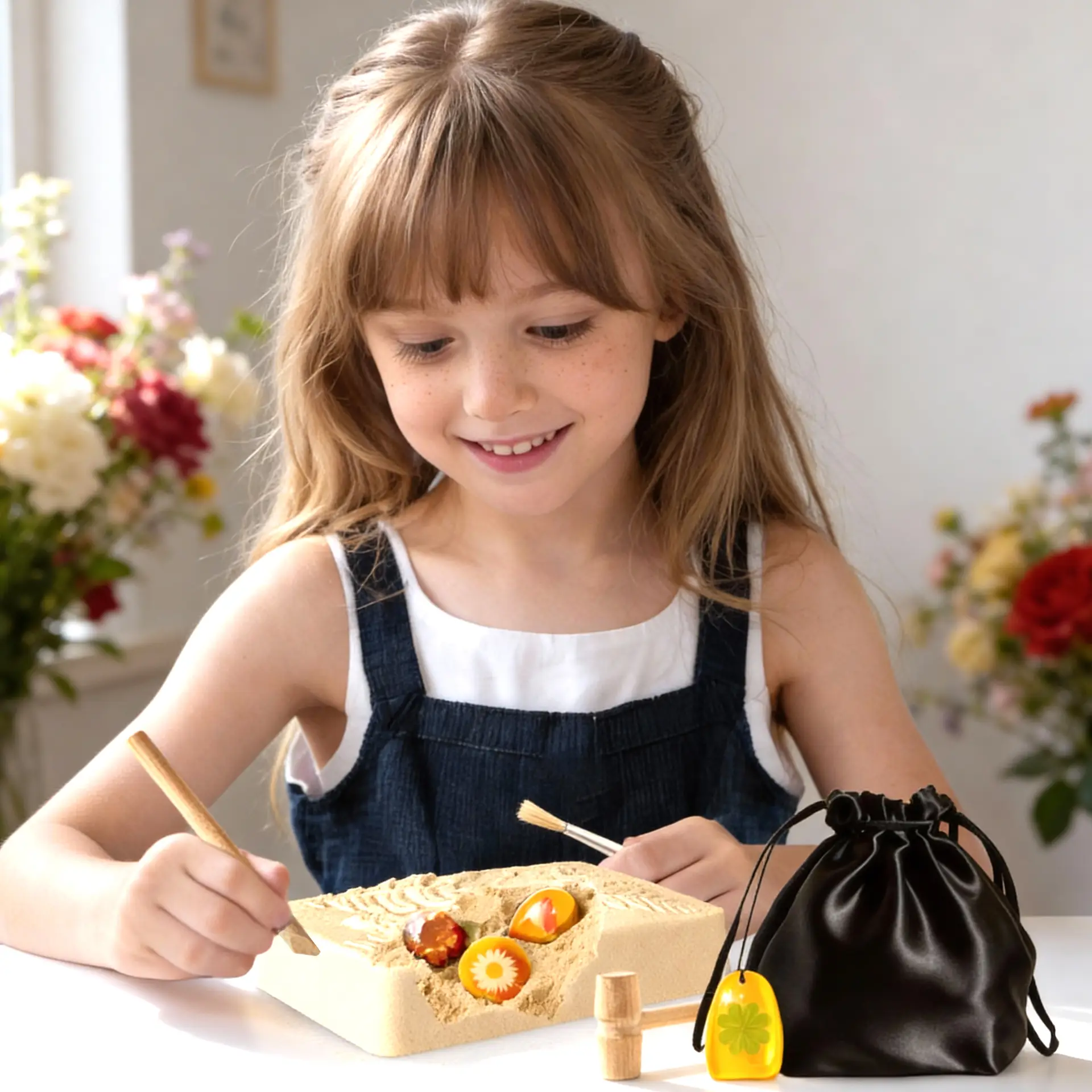
Lock the BOM Before Production
The BOM and approved sample should describe the same toy. If they do not, production has two different references to follow.
| Component | Record before production |
|---|---|
| Main molded body | Polymer grade and recycled percentage |
| Wooden part | Species and relevant sourcing claim |
| Coating | Supplier and coating reference |
| Fabric | Fiber composition |
| Stuffing | Composition and recycled percentage |
| Retail packaging | Material and construction |
If the approved specification calls for 50% recycled PP and the factory later switches to virgin PP because the usual resin is unavailable, that is not a minor purchasing change. The specification has changed, and so has the environmental claim.
The same issue comes up with a new coating, a different fabric or a move to another production site.
A simple purchase-order clause can say:
No change to the approved material, coating or production site without written buyer approval.
Inspect the Complete Product, Not Only the Main Material
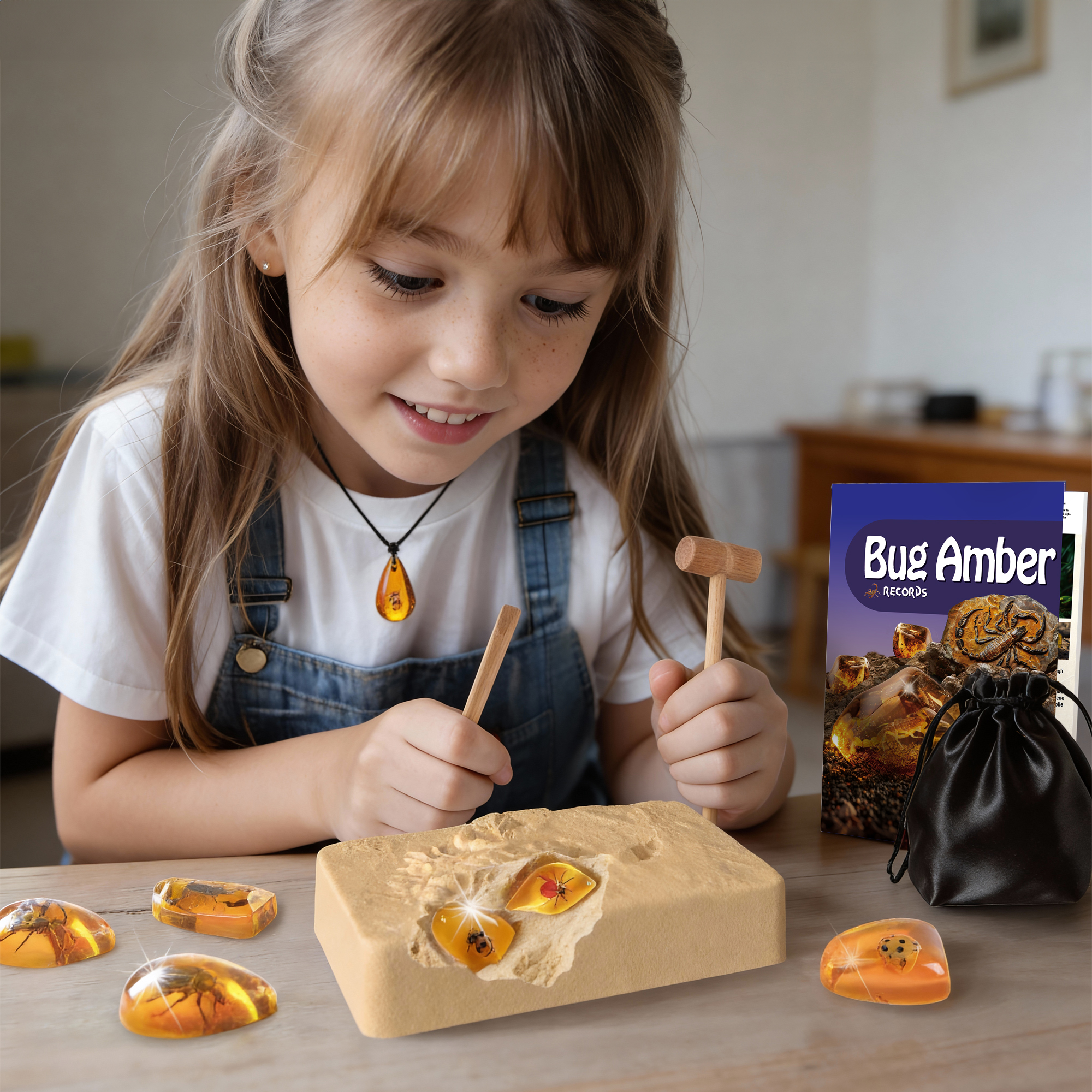
Multi-component toys make this especially important. The Amber Dig Kit, for example, includes a digging block, six resin finds, one separate natural amber piece, digging tools, a pouch, necklace cords and a guide.
If one component has a particular material claim, do not casually apply that claim to the whole box.
When you compare finalist suppliers, use the same sample size. You might inspect 20 units from Supplier A and another 20 from Supplier B.
If six of Supplier A’s 20 retail boxes arrive crushed and only one of Supplier B’s does, Supplier A’s packaging deserves a closer look. The 6/20 figure does not mean every future shipment will have a 30% damage rate. It simply tells you there is a problem worth investigating before you scale up.
Use a Pilot to Find Repeat Production Problems
Imagine a 2,000-piece pilot where 20 toys show the same assembly failure:
20 ÷ 2,000 × 100 = 1.0%
The percentage is useful, but the next question is where those 20 failures came from. If they all came from one shift or one material lot, the investigation suddenly becomes much narrower.
Fix that cause before turning a 2,000-piece pilot into a 20,000-piece order.
Use Real Carton Data for Packaging Decisions
The Amber Dig Kit product information lists 24 pieces per carton and an outer-carton volume of about 0.042 m³.
For 1,000 units:
1,000 ÷ 24 = 41.67, so plan 42 cartons
42 × 0.042 = 1.764 m³
For 5,000 units:
5,000 ÷ 24 = 208.33, so plan 209 cartons
209 × 0.042 = 8.778 m³
Those figures give you carton volume, not a finished freight quotation. Pallets, total weight, container utilization and the carrier’s charging method can all change the final logistics cost.
Now suppose the packaging is redesigned so that 30 pieces fit in each carton instead of 24, without increasing damage. A 5,000-piece order would drop from 209 cartons to about 167. That is the sort of packaging change worth running past your forwarder and costing properly.
Turn MOQ Into Cash Exposure
A lower unit price can still require a lot more cash upfront. Look at the inventory commitment, not just the number beside “unit price.”
Supplier A:
3,000 pieces × $4.80 = $14,400
Supplier B:
5,000 pieces × $4.60 = $23,000
Supplier B saves $0.20 per toy, but you have to put another $8,600 into inventory before adding testing, freight, duty and destination costs.
That may be perfectly reasonable for a proven bestseller. For a new toy with uncertain sell-through, it is a very different decision.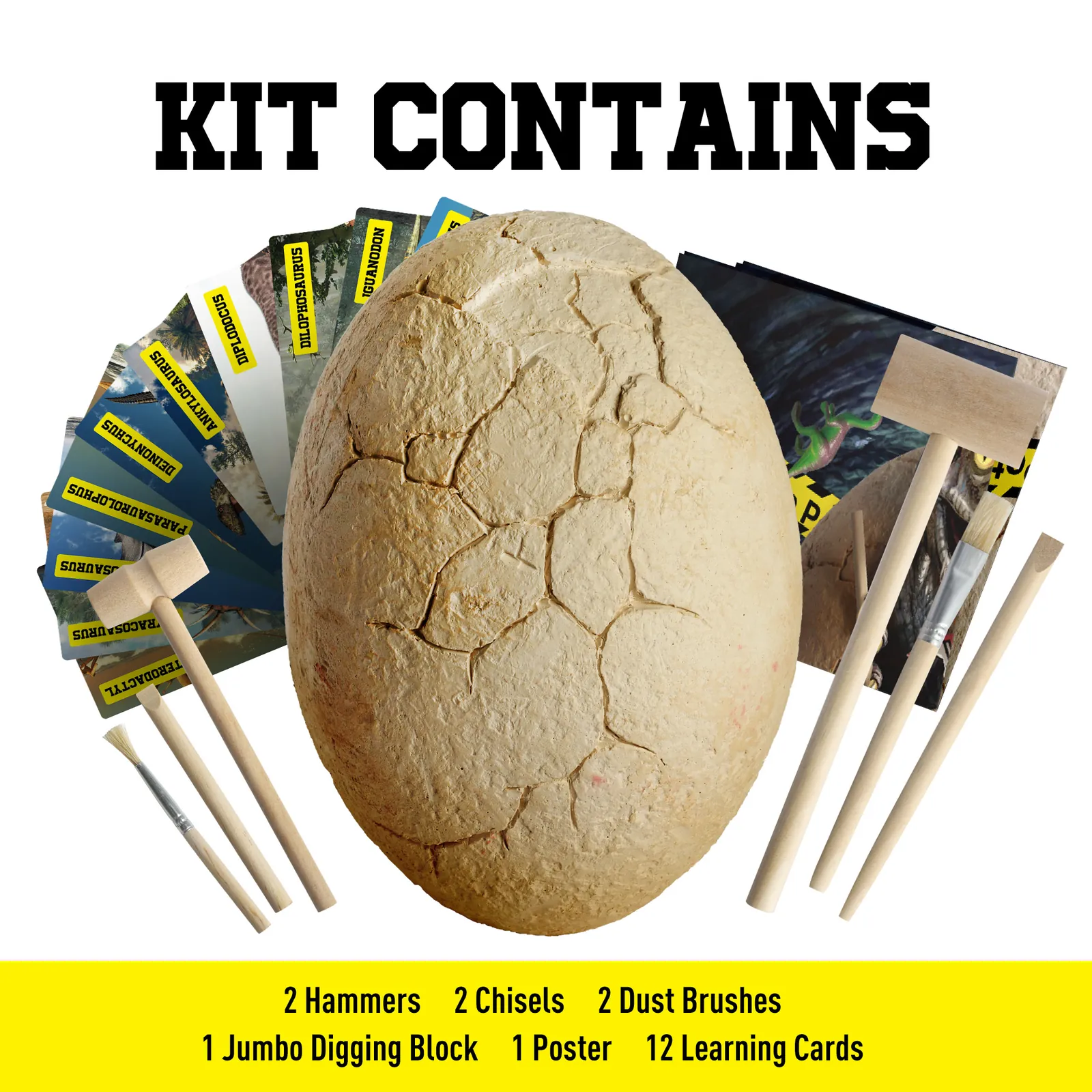
Compare Cost per Good Unit
| Cost per toy | Supplier A | Supplier B |
|---|---|---|
| Factory price | $4.40 | $4.65 |
| Packaging | $0.60 | $0.35 |
| Freight allocation | $0.50 | $0.38 |
| Testing and inspection | $0.10 | $0.10 |
| Total before rejects | $5.60 | $5.48 |
At 10,000 pieces, Supplier A costs $56,000 and Supplier B costs $54,800 before quality losses.
If 2% of Supplier A’s order is unusable, only 9,800 good toys remain:
$56,000 ÷ 9,800 ≈ $5.71 per good toy
If Supplier B loses 0.5%, you have 9,950 good toys:
$54,800 ÷ 9,950 ≈ $5.51 per good toy
This is a simplified example and assumes rejected units have no recovery value. Even so, it shows why factory price by itself can be misleading. The supplier that appeared $0.25 cheaper at the factory level ends up around $0.20 more expensive for each usable toy.
Keep Retail Claims as Specific as the Evidence
| Avoid | Use when supported |
|---|---|
| 100% eco-friendly toy | Main wooden parts use the specified FSC-certified material |
| Green plastic | Main molded body contains 50% post-consumer recycled PP by weight |
| Zero-waste packaging | Retail package contains no plastic viewing window |
| 100% recycled plush | Outer fabric is 100% recycled polyester; filling is 80% |
Write what you can actually prove. Age, material, contents, dimensions and activity usually tell shoppers more than loose words such as “premium” or “eco-friendly.” Piano Potato takes the same practical approach in its guide to writing educational toy product descriptions.
Treat the EU as a Separate Compliance Market
Do not assume that U.S. testing or a CPC automatically covers Europe. It does not.
Regulation (EU) 2025/2509 is the EU’s new Toy Safety Regulation. It applies generally from August 1, 2030, while Articles 28–44 and 49–55 apply from January 1, 2026.[11]
If Europe is part of your sales plan, say so in the RFQ. Check the rules that will apply when the toy is actually placed on the market rather than assuming the U.S. compliance file will cover it.
Score the Final Suppliers Before Awarding the Order
| Area | Example weight |
|---|---|
| Safety and compliance | 30% |
| Sustainability evidence | 20% |
| Sample quality | 15% |
| Traceability | 10% |
| Packaging and logistics | 10% |
| Landed cost | 10% |
| Communication | 5% |
Score each supplier from 1 to 5 in each area.
This stops one attractive number from hiding a bigger weakness. A factory may score 5 for price and only 2 for traceability. Give traceability a 10% weighting and the weakness remains visible instead of disappearing behind the cheapest quotation.
The weighting does not have to stay the same for every toy. A toddler product may need more weight on safety and construction. A simple wooden craft item may put more emphasis on material sourcing.
Check These Items Before Bulk Production
| Item | Required position |
|---|---|
| Age range | Confirmed |
| Destination market | Confirmed |
| Production material | Matches released BOM |
| Environmental claim | Supported by records |
| Safety testing | Applicable requirements identified and completed as required |
| Approved sample | Controlled reference available |
| Packaging | Retail pack and carton data approved |
| Change control | Written requirement in place |
| Pilot result | Repeat problems closed before scaling |
If nobody can confirm the recycled percentage, do not approve the recycled-content claim.
If you still do not know which factory will actually make the order, sort that out before paying the deposit or releasing production.
And if the material records do not support the wording you plan to print on the retail box, one of those two things has to change: the claim or the product specification.
FAQ
Can one supplier certificate cover every toy the factory makes?
No. Read what the certificate actually covers. A factory may hold a valid FSC, GRS, RCS or GOTS document without every product it makes being certified. Match the company, certification scope, material and relevant transaction records to the exact SKU you are buying.
Does changing the color mean the toy needs new testing?
Not always, but do not treat every color change as cosmetic. A new pigment, paint, ink or coating may change the chemical profile of the product. Record the change and ask the responsible laboratory which previous test results still apply before you reuse the old compliance file.
Should sustainability documents be collected for every shipment?
Keep enough records to connect each claimed shipment with the approved supply chain. This matters most when your retail wording depends on certified or recycled material. For GOTS-certified goods, the relevant Transaction Certificate is used to support a particular certified shipment or delivery.
Can recycled-material certification replace finished-toy testing?
No. A recycled-material standard supports the material claim and chain of custody. It does not prove that the finished toy passes applicable requirements for small parts, mechanical hazards, coatings, magnets or other safety issues. These are two different checks.
What records should a retailer keep after the order ships?
Keep the released BOM, approved sample revision, applicable test reports, required compliance certificate, environmental certification records, purchase order, inspection report and records of any approved production changes. If somebody questions a claim later, these documents help you trace the material and the exact product version that was sold.
Finally
A supplier is ready for bulk production only when the exact material claim, finished-toy safety requirements, production site, approved BOM, sample revision and packaging are all controlled. Compare the final suppliers by landed cost per good toy, not factory price alone. In the example above, Supplier A looks $0.25 cheaper at the factory but ends up at about $5.71 per usable toy after a 2% loss, while Supplier B comes to about $5.51 with a 0.5% loss. Check MOQ the same way: 3,000 pieces at $4.80 ties up $14,400, while 5,000 at $4.60 requires $23,000 before testing, freight and duty. If the environmental wording on the retail box is stronger than the records behind it, change the claim or change the product before placing the order.