
CRYSTAL DIG KIT
Five finds.
A closer look.
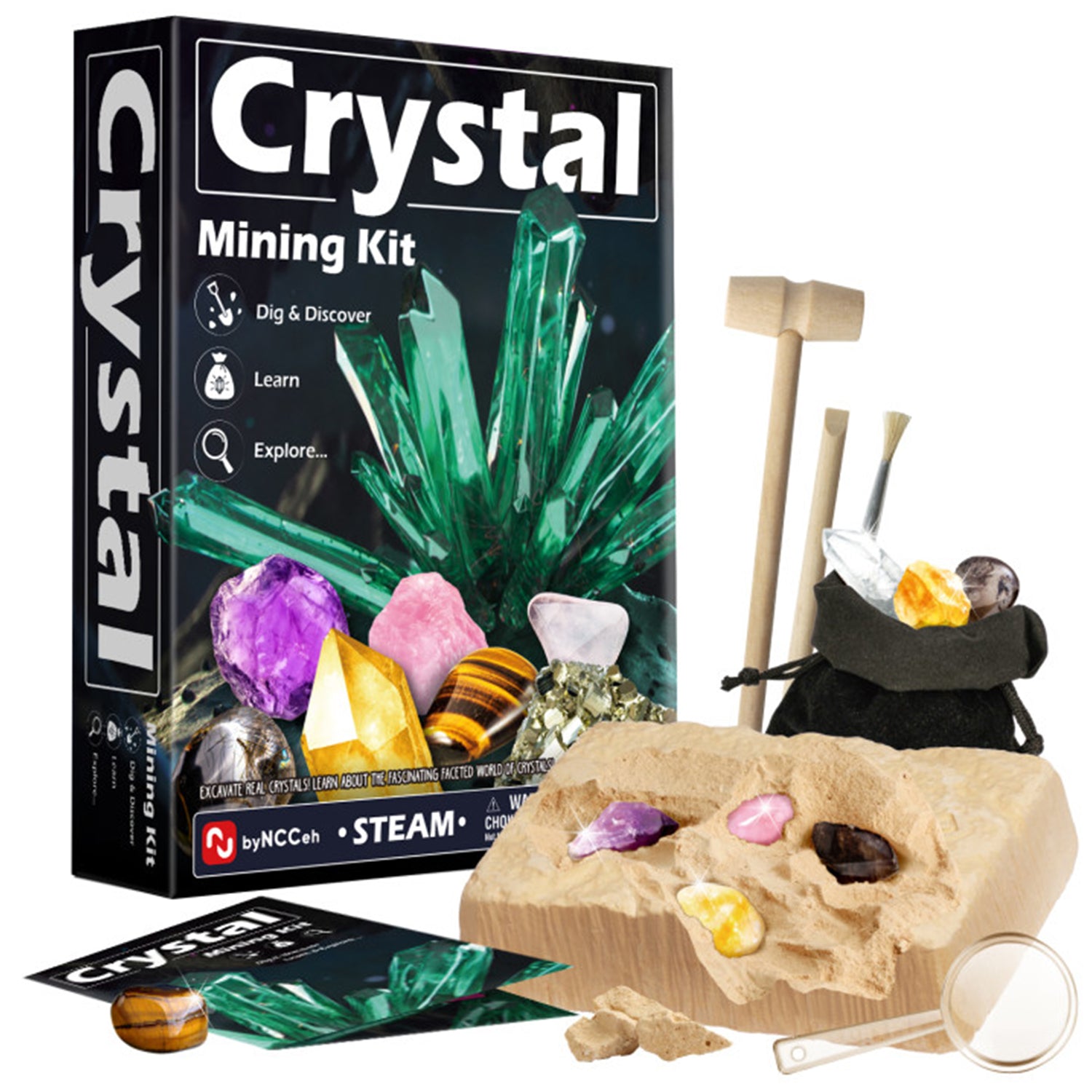
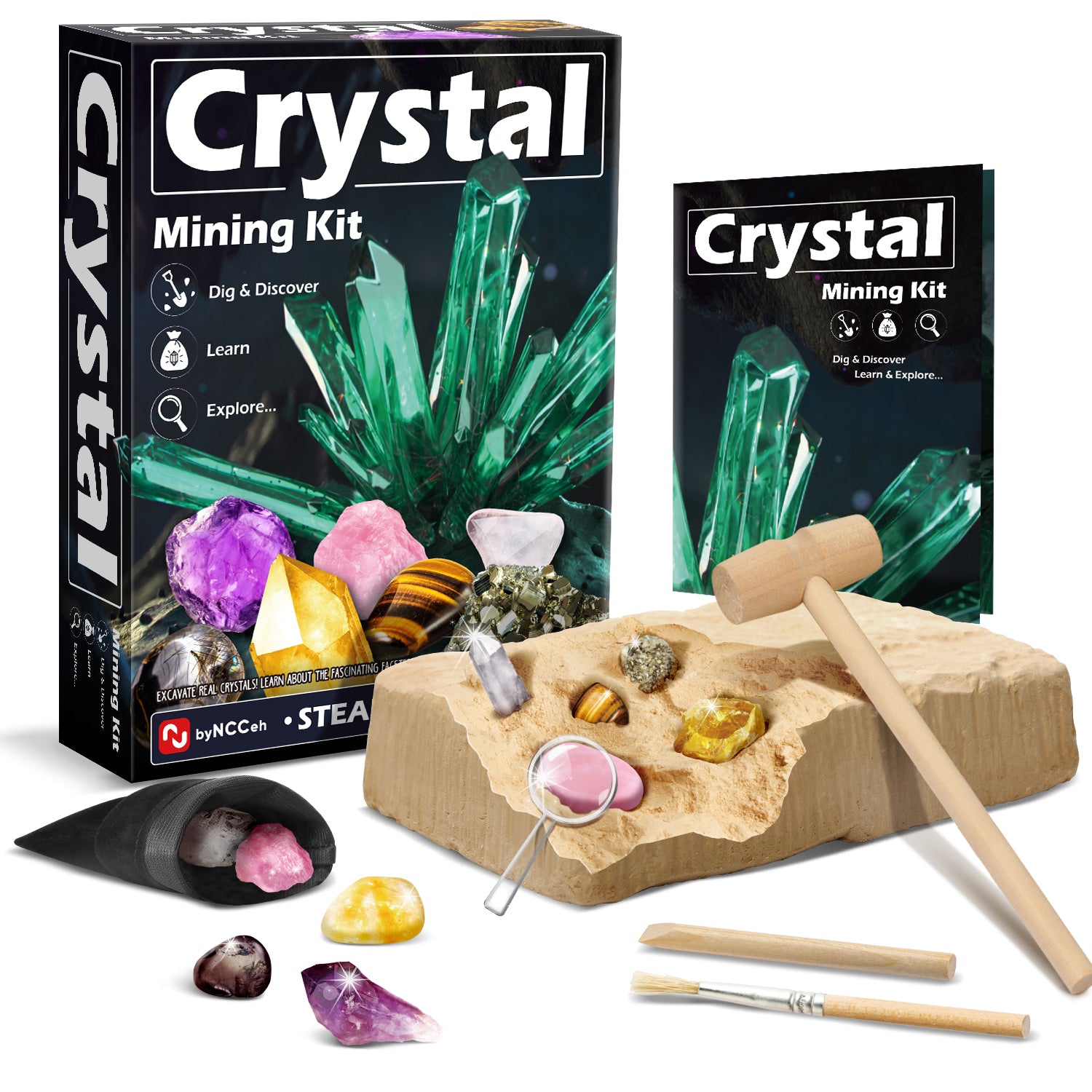
Dig out five real crystal and mineral specimens, then get to know what you found. A magnifier and printed guide turn the finished dig into a collection your child can inspect, compare, and keep.
Randomly selected from 8 types
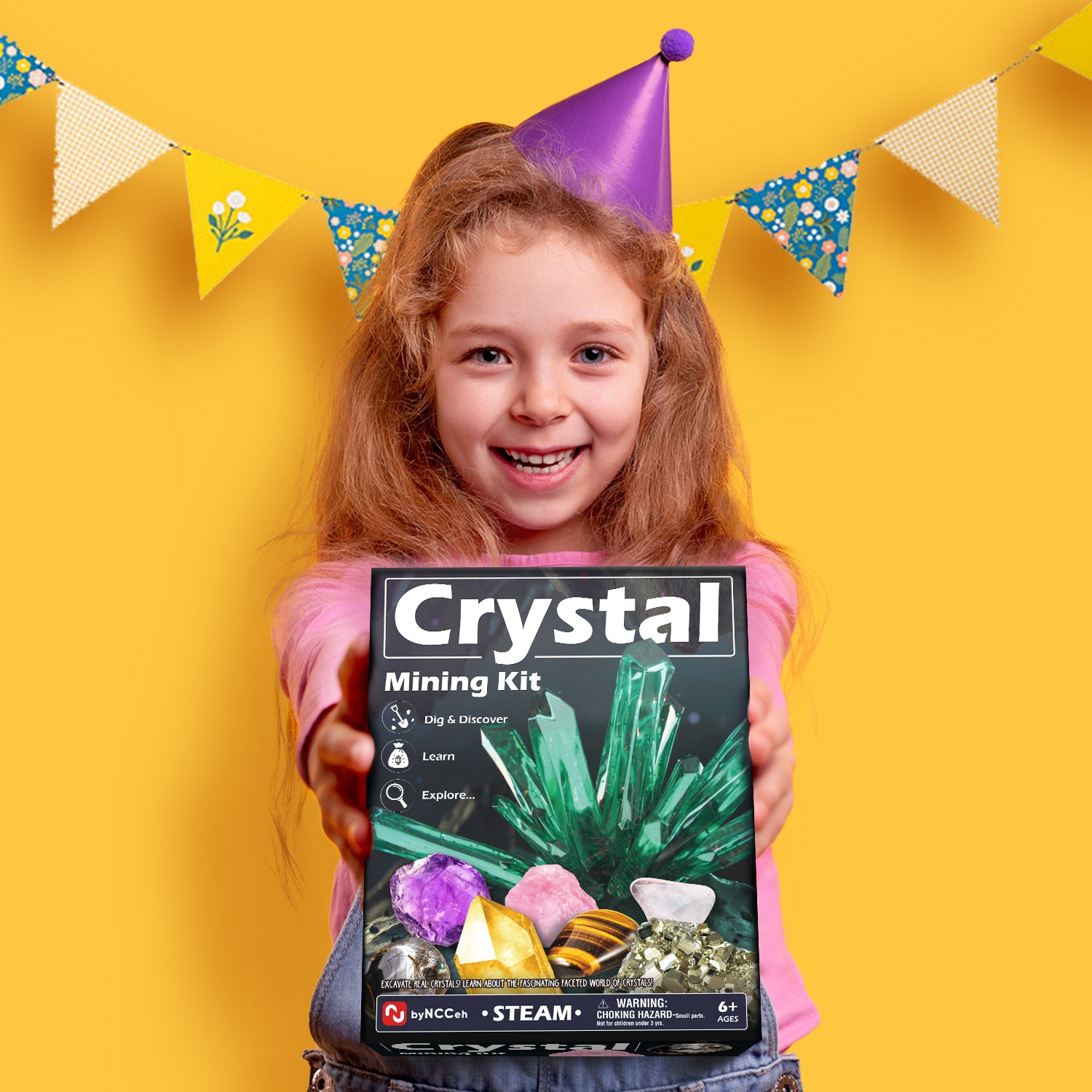
A shared digging project
Magnifier and guide included
Storage pouch included
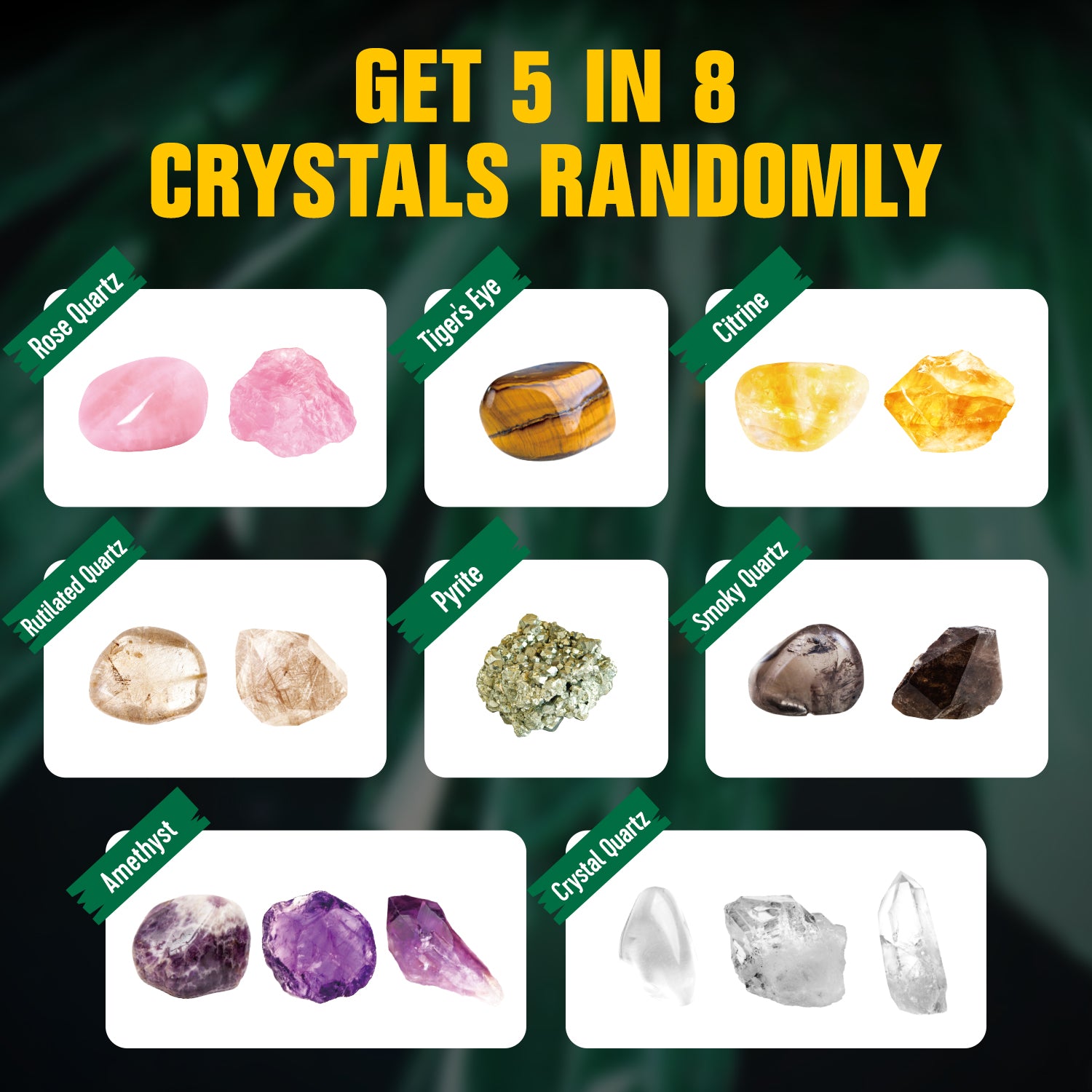
THE SURPRISE IS THE MIX
Eight possibilities.
Five to uncover.
Your child won’t know the full selection until the block is opened up. Use the chart to see what might be inside: rose quartz, tiger’s eye, citrine, rutilated quartz, pyrite, smoky quartz, amethyst, and crystal quartz.
Each box contains five specimens, not all eight types. The mix is random. Photos show examples; natural shapes, colors, and surface textures vary.
Before digging, pick a specimen on the chart and describe it. Afterward, see whether anything you found shares those features.
UNPACK THE KIT
Tools for the dig.
A home for the finds.
The block is used once; the specimens, guide, magnifier, and pouch stay useful after the digging is done.
FROM BLOCK TO COLLECTION
Dig a little.
Look a little.
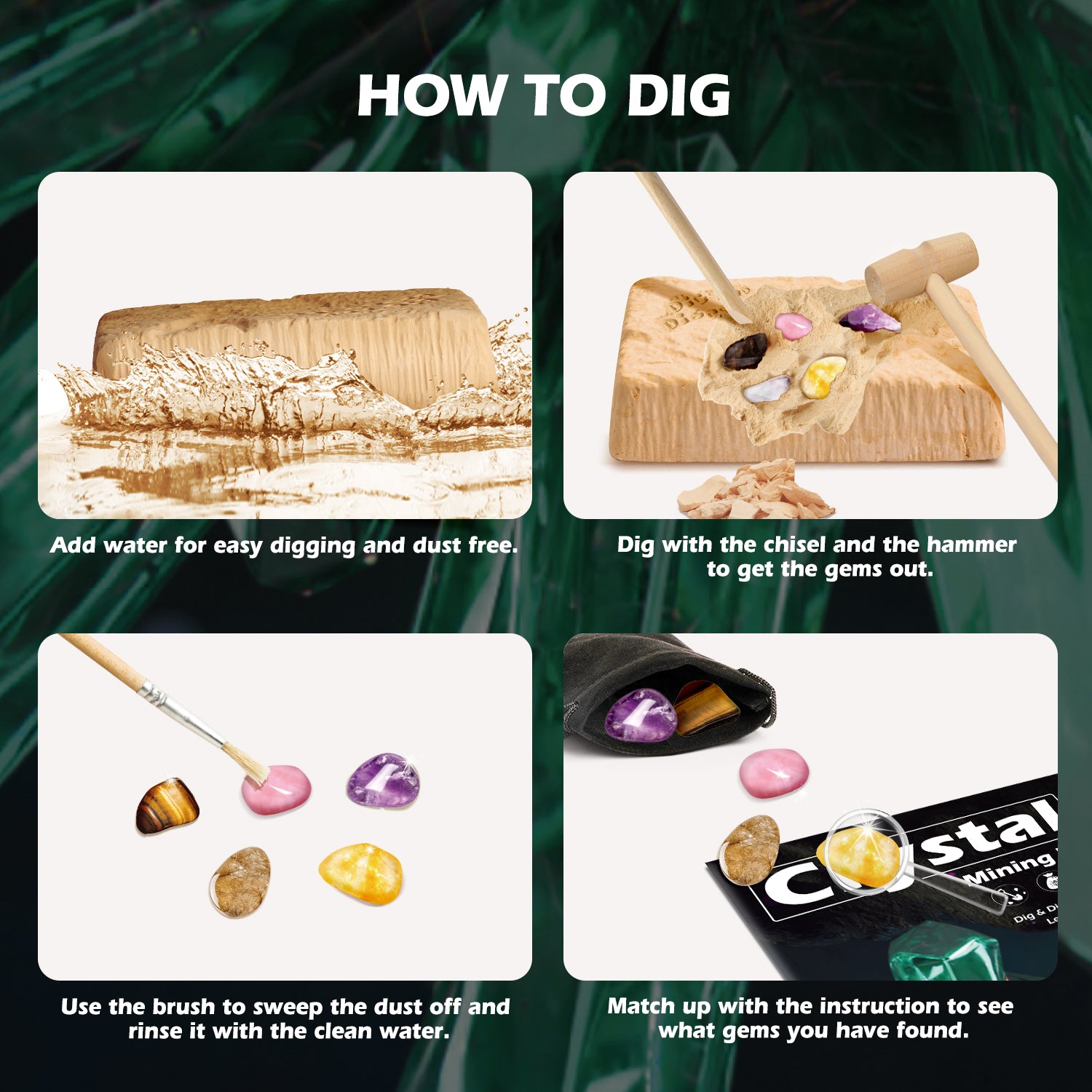
Set up
Place the block on a tray or covered table. Add water to soften the surface, following the included instructions. Keep the guide and pouch away from the wet work area.
Dig gently
Use the hammer and chisel to remove small amounts of material. When a specimen appears, work around it instead of striking it directly.
Brush clean
Lift each find out carefully and brush away loose debris. The pictured instructions also show rinsing the specimens with clean water.
Look closer
Use the magnifier and guide to compare your finds. Let them dry before putting them in the pouch, and keep a note of the names you identify.
START WITH WHAT YOU SEE
Find a clue.
Then find a name.
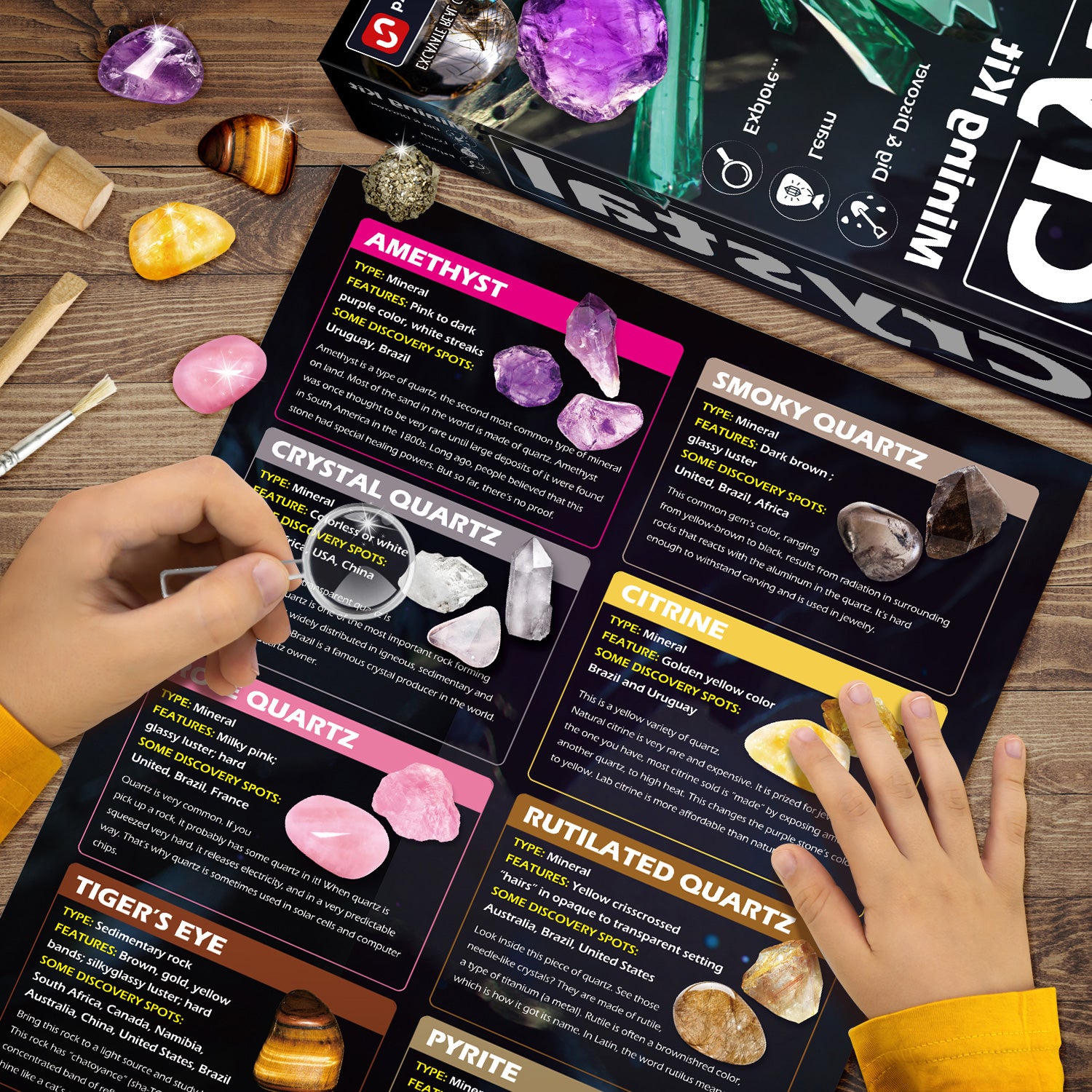
Lay the recovered specimens next to the guide. Ask your child to describe each one before guessing its name: Is it banded, glassy, cloudy, or metallic-looking? What changes when you turn it toward the light?
Compare more than color. Use the magnifier to look at surface details, then check the guide together. If a match is uncertain, label it “still investigating” and come back to it.
Add a small paper label with a name or a sketch. Now each find has a place in a collection, instead of disappearing into a drawer.
AFTER THE EXCAVATION
Make a five-piece
mini museum.
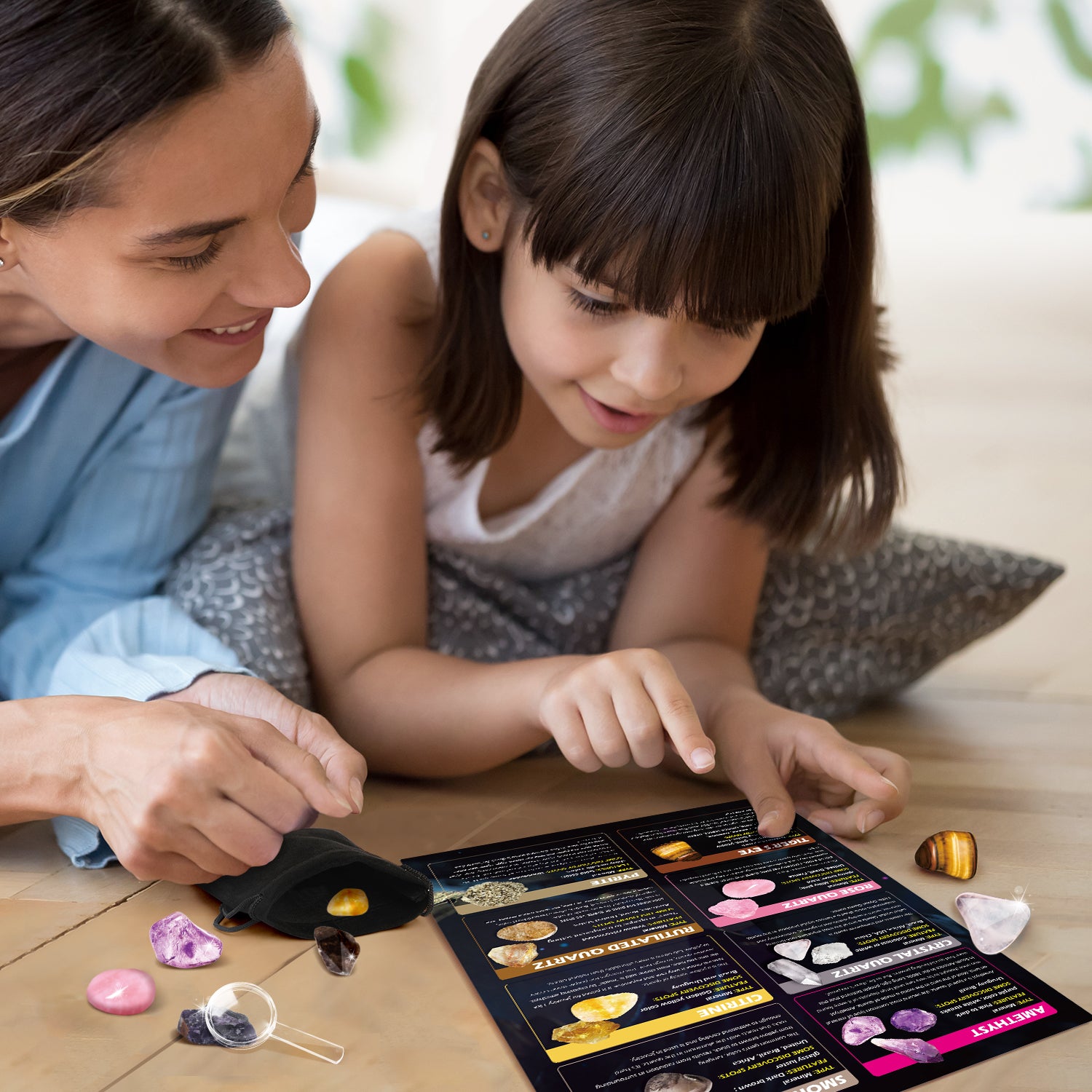
At home: number the finds on a sheet of paper. Let your child draw the most noticeable feature and give you a short tour of the collection.
With a sibling: take turns describing one specimen without naming it. The other person chooses the matching find and explains the clue.
At a small-group table: share the block and rotate digging, brushing, and recording roles. This is one block with one set of tools; plan for turn-taking rather than a separate dig for every child.
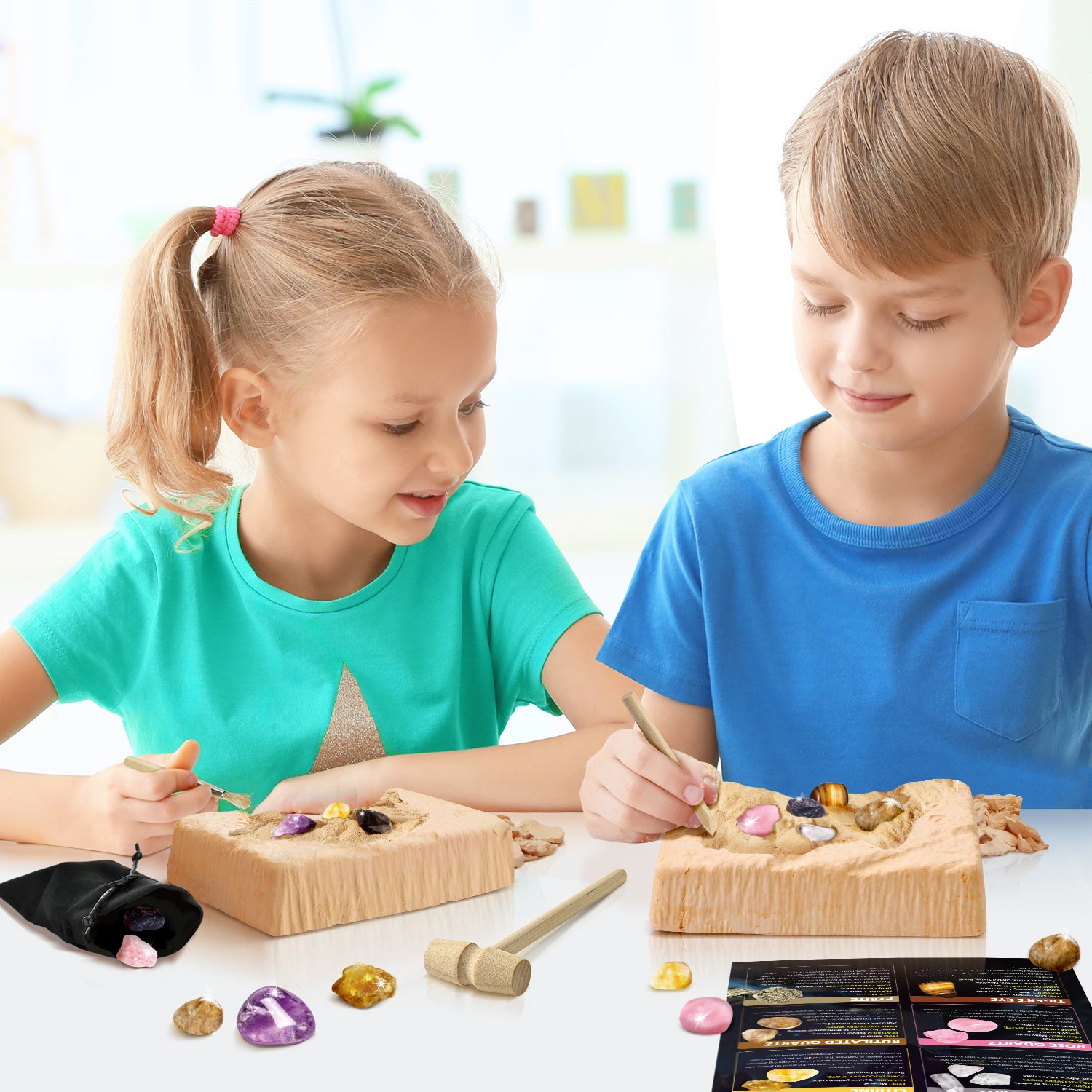
BEFORE YOU BEGIN
A covered table.
An adult nearby.
Follow the enclosed instructions and package warnings. Keep small specimens and tools away from children who may put them in their mouths. Help with controlled tapping and keep tools pointed away from faces.
Expect loose excavation material. Keep food away from the work area, collect debris on a tray, wipe the table, and wash hands afterward. Dry the specimens and tools before putting them away.
KEEP EXPLORING
Choose a different dig.
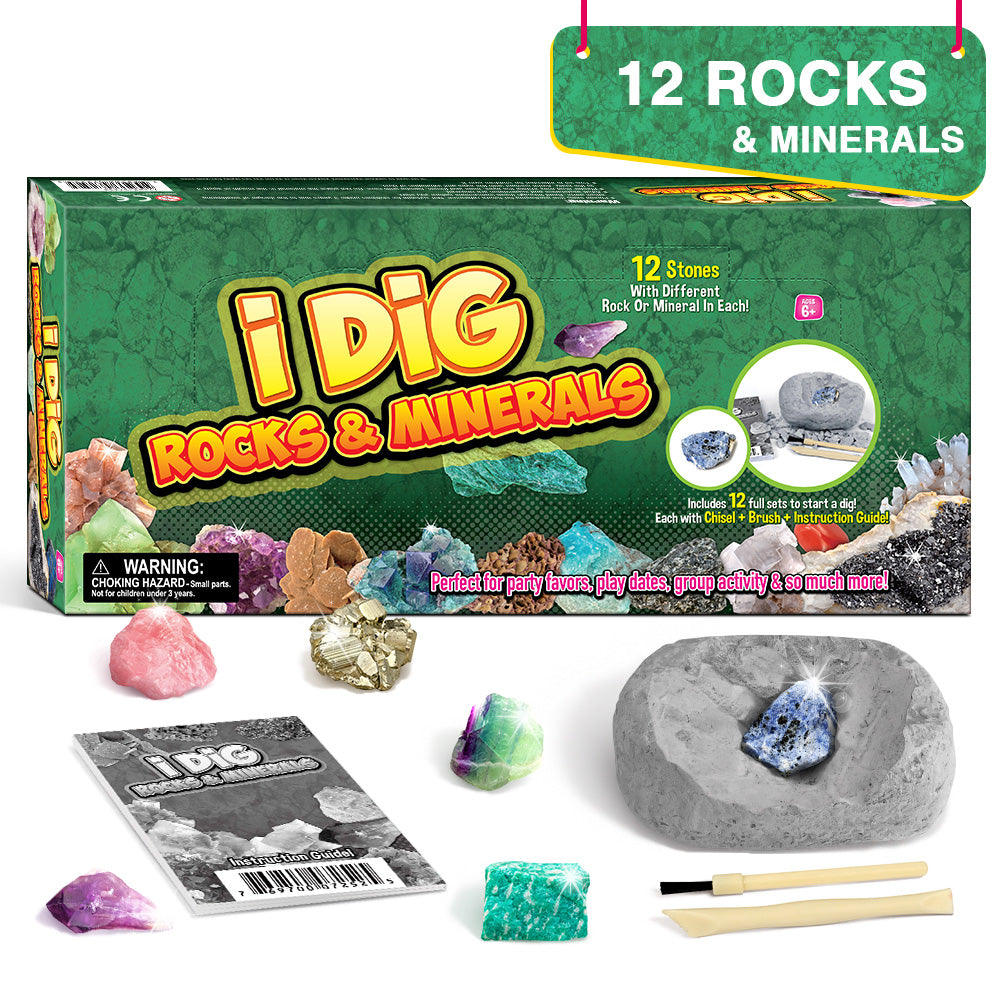
12 Natural Rock & Mineral Dig Kit
Separate blocks for a group activity when each child needs a digging project.
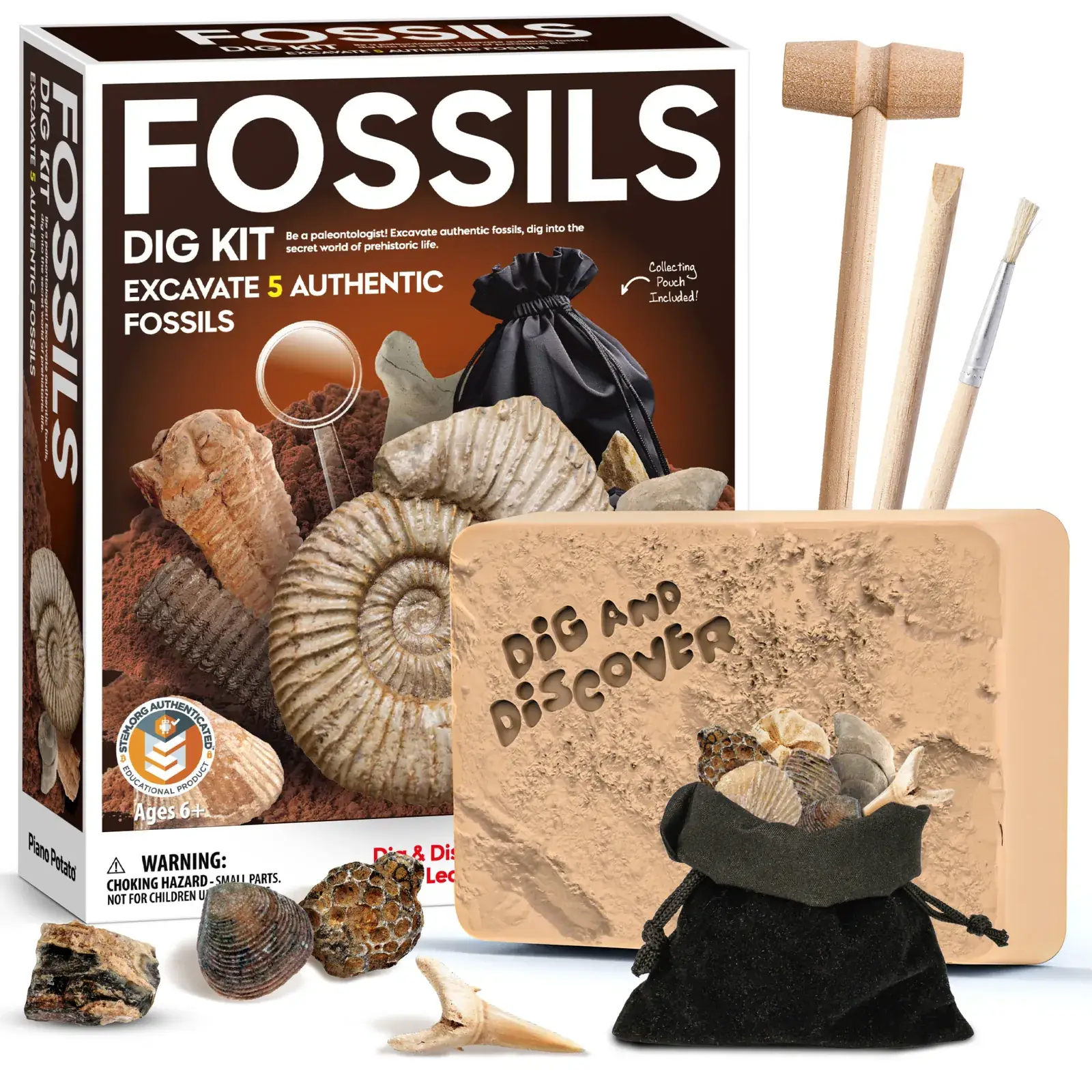
Five-Fossil Dig Kit
Switch from crystals to fossils and compare a different kind of natural find.
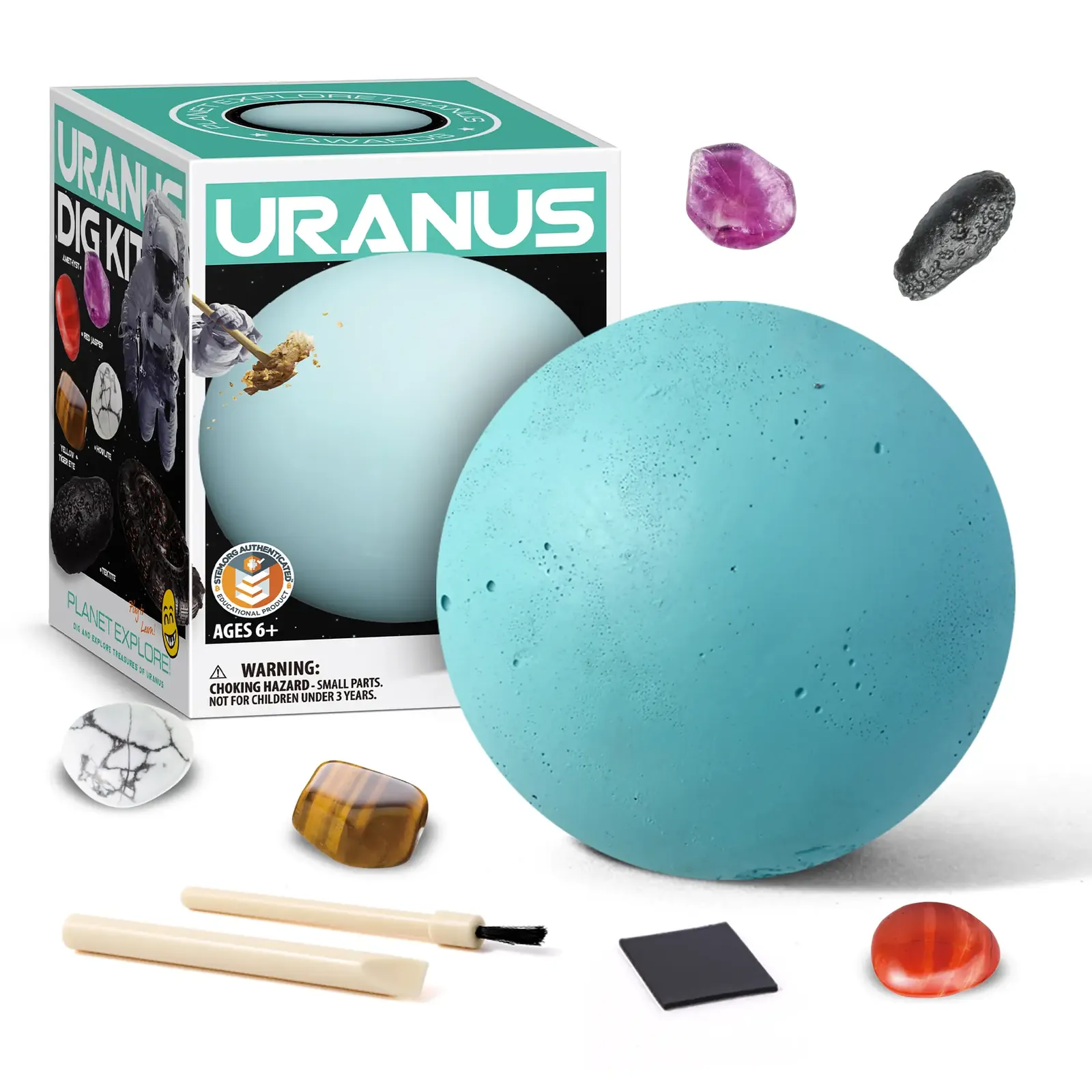
Uranus Planet Dig Kit
Choose a planet-shaped excavation project for a child who keeps asking about space.
FOR THE NEXT PROJECT
A little reading for parents.
A FEW PRACTICAL ANSWERS
Before you dig in.
Does the kit contain five crystals or eight?
Each kit contains five randomly selected specimens from eight possible types. The eight-type chart shows the selection range, not the contents of every box. A particular type is not guaranteed.
Which types might we find?
The possible selection includes rose quartz, tiger’s eye, citrine, rutilated quartz, pyrite, smoky quartz, amethyst, and crystal quartz. The actual mix varies, as do the specimens’ shapes and appearance.
Are digging tools and a guide included?
Yes. The pictured set includes one hammer, one chisel, one brush, one magnifier, a printed guide, and a storage pouch, along with the excavation block. Bring your own tray or table covering and water.
What age is this kit for?
The current product information does not specify an age range. Please contact us to confirm the package age guidance before buying for a child. The kit contains small specimens and digging tools and should be used with adult supervision.
Can we use it again after digging?
The excavation block is a one-time dig. Keep the recovered specimens for matching, sorting, drawing, and a small labeled collection. Dry the finds before storing them in the pouch.
WHAT WILL YOU UNCOVER?
Let the first find
start the questions.
One block, five surprise specimens, and the tools to take a closer look. Make room on the table—and a little room for the collection afterward.