12 PACKS · ONE SHARED DISCOVERY
12 Natural Rock & Mineral Dig Kit
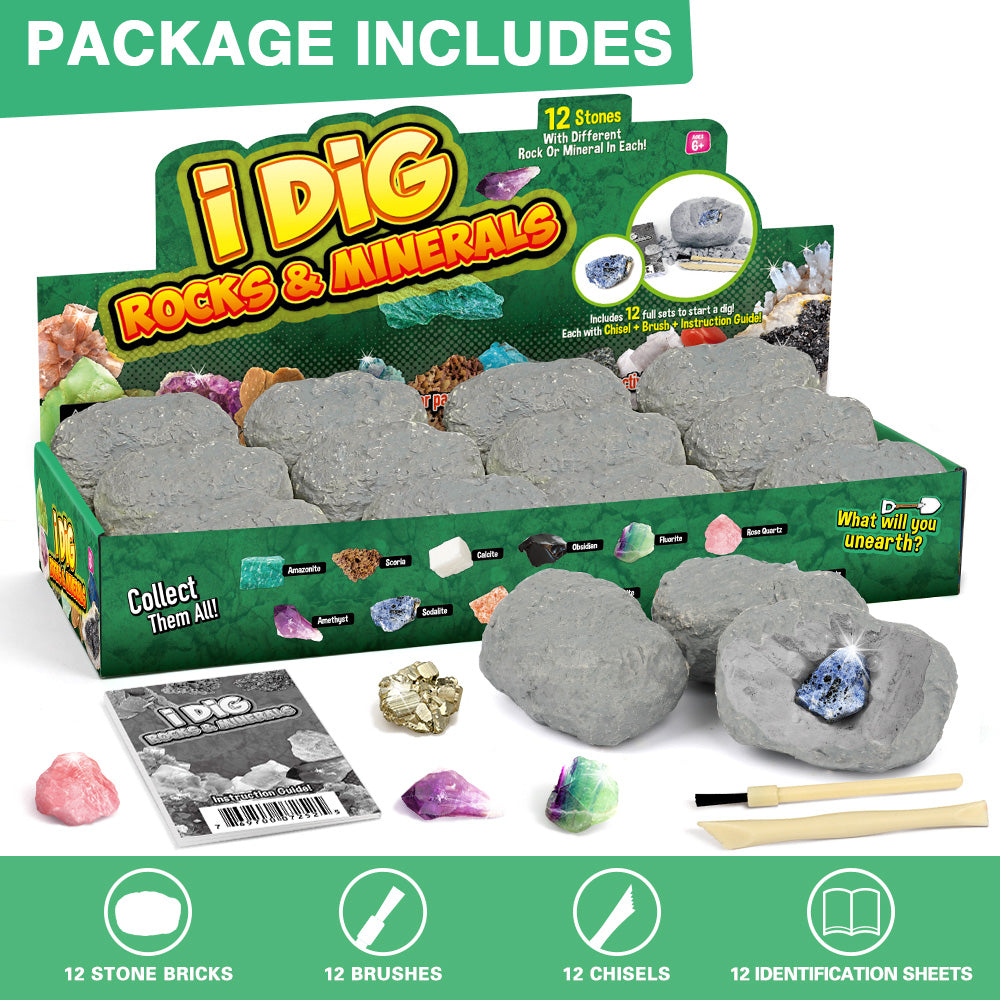
Hand out a pack, dig into the block, and brush off a surprise. Each of the 12 blocks holds a different natural rock or mineral, from purple amethyst to dark obsidian.
Give each child a dig of their own, or open one block at a time to build a collection. Recommended for ages 6 and up.
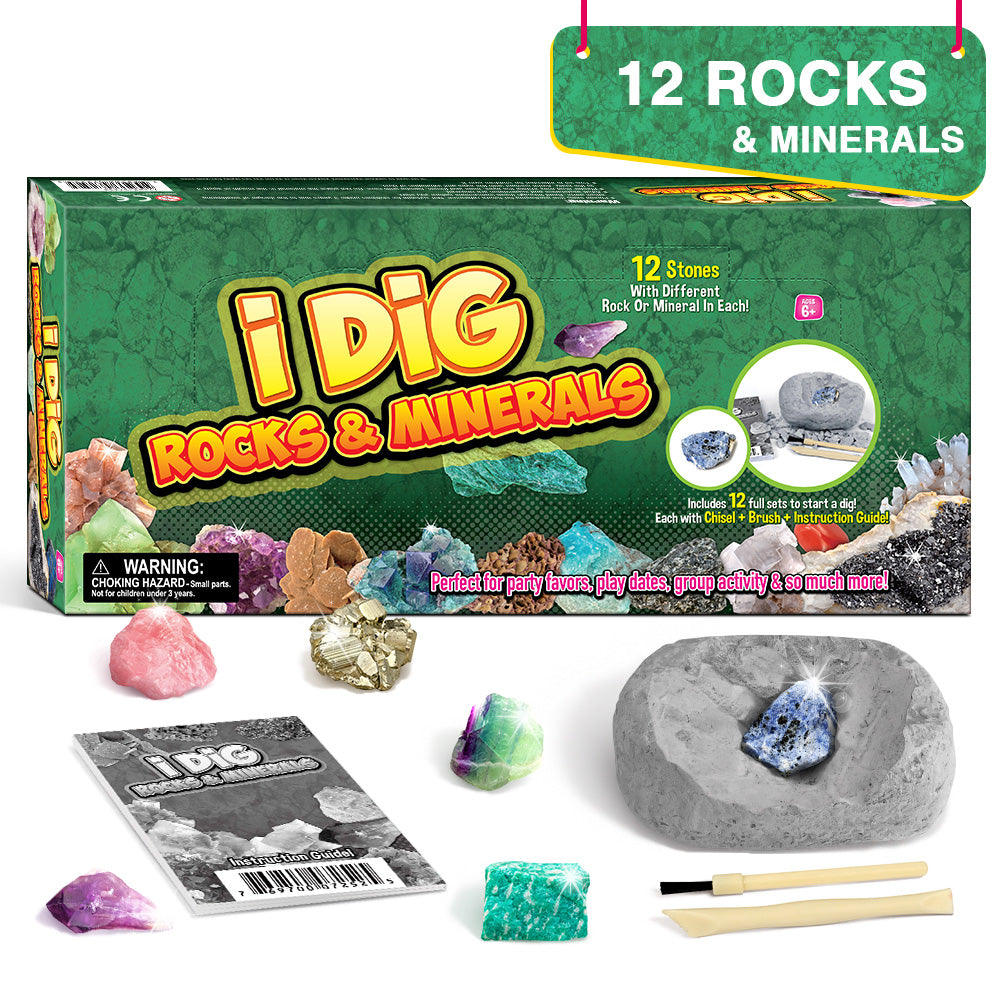
A PACK FOR EACH CHILD
No waiting for the brush.
Give each child a block and the tools that come with it. There are tools for up to 12 children and one shared instruction guide; you supply the covered work area.
For a smaller group, keep the remaining packs unopened for another day.
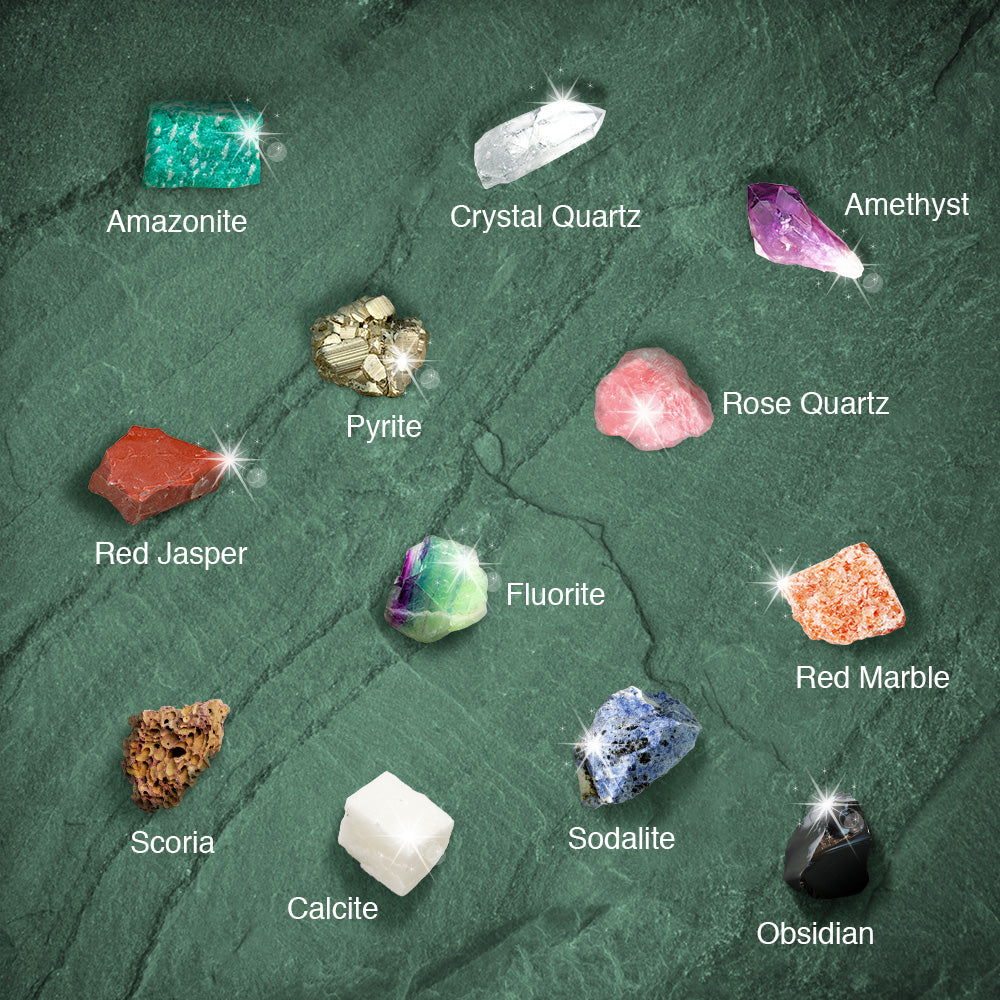
MEET THE COLLECTION
Twelve names. Twelve things to notice.
Use these visible features as a starting point, then check the instruction guide. Natural specimens vary in size, shade, and markings; your pieces will not look exactly like the photographs.
OPEN · DIG · IDENTIFY
Give each find its own spot.
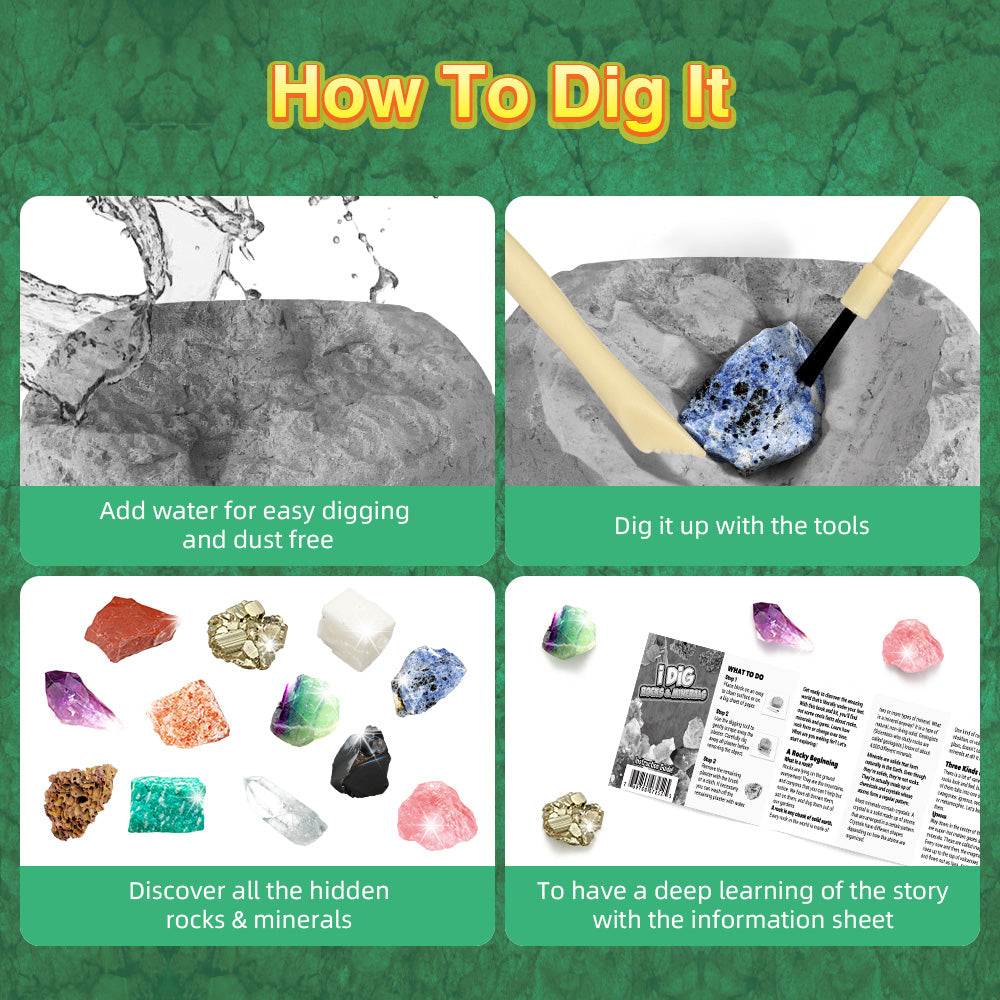
Set out each pack.
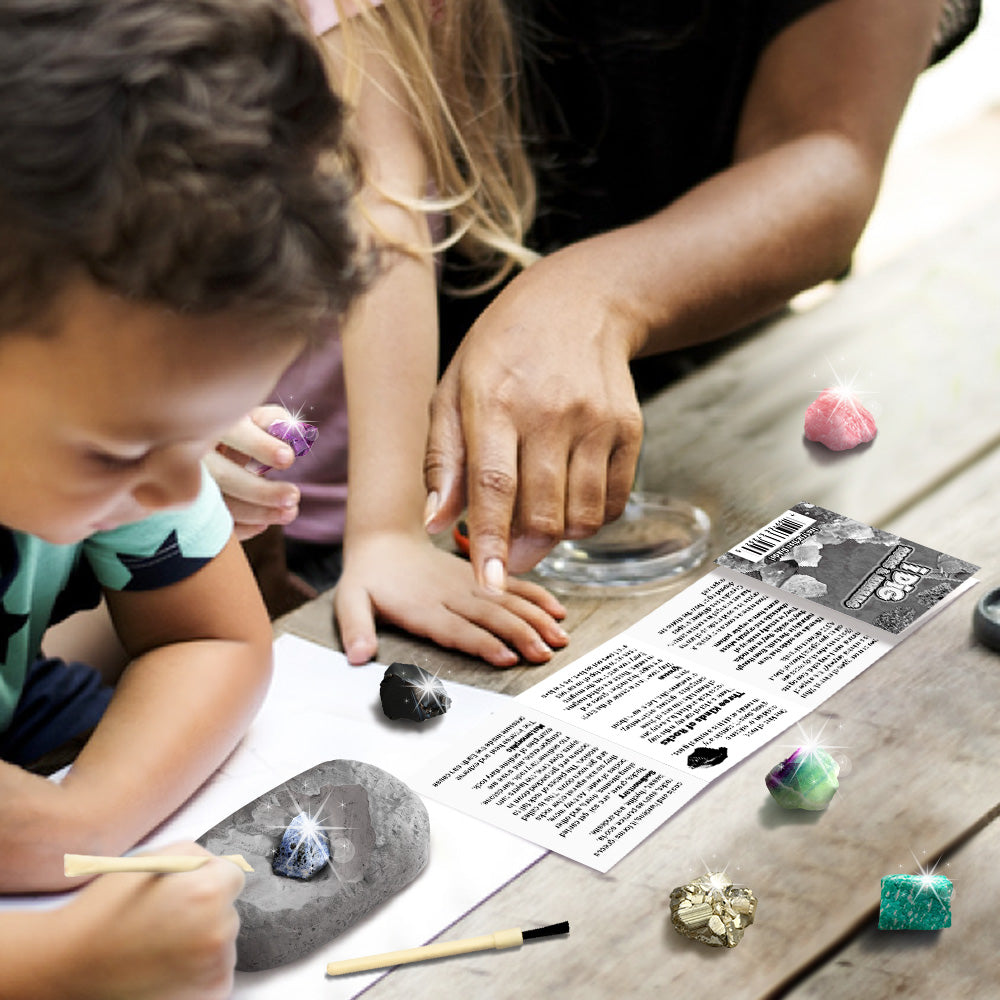
Put one block on a tray or covered work surface. Keep its brush and chisel together so each child has a digging spot. Place the shared instruction guide where everyone can consult it.
Dampen and uncover.
Read the included directions and add water as directed to soften the block. Scrape away small amounts, easing up as soon as a specimen appears.
Brush and identify.
Clear the loose material around the find. Compare it with the instruction guide, then put the specimen beside its name.
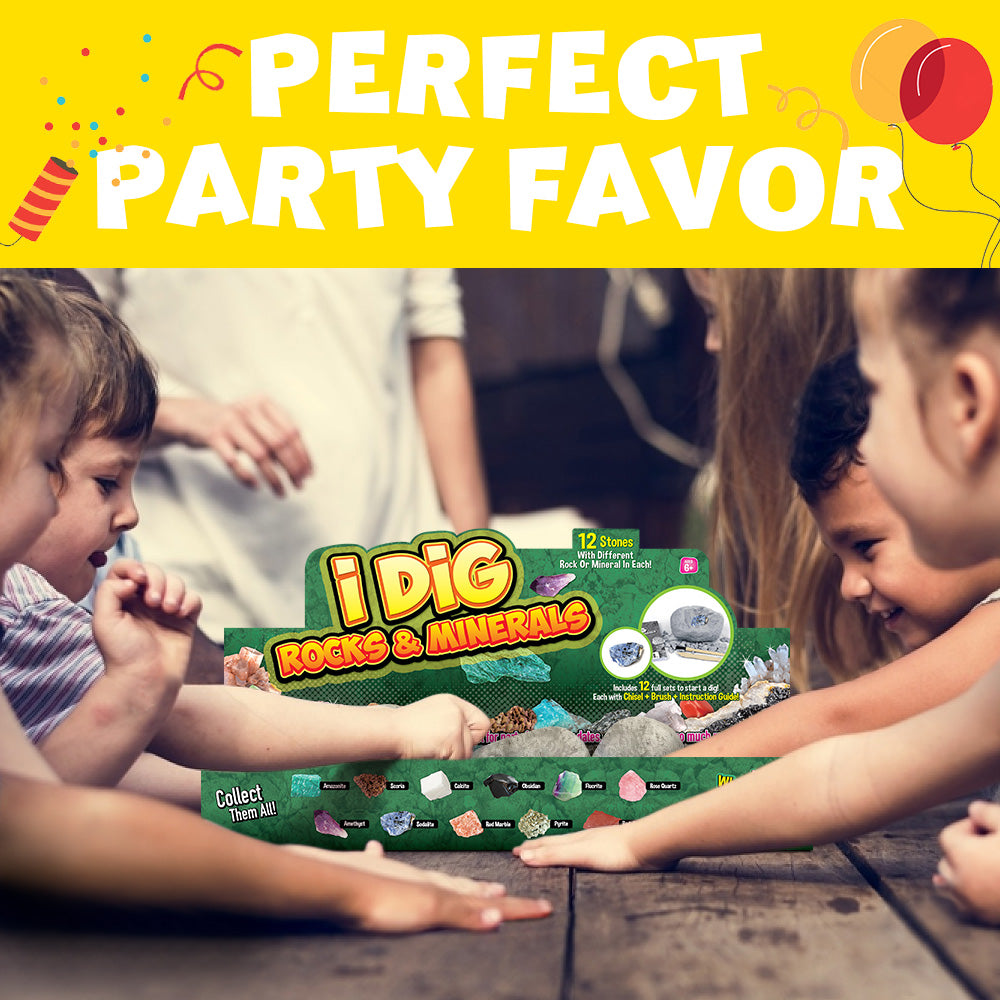
THE DIG ENDS. THE COMPARING STARTS.
What did you find?
Ask everyone to place a recovered specimen beside the shared instruction guide. Each child can point out one detail: a shiny surface, a pale streak, or tiny holes.
Compare the scoria with the obsidian. Look at the holes in one and the smoother, glassy-looking surface of the other. Then place the amethyst and rose quartz together and compare their colors.
Keeping the box for one child? Arrange the finds on your own sheet of paper and write the names underneath. Paper labels and a storage box are optional additions from home.
ONE-ON-ONE OR AROUND A TABLE
Let them make the match.
At home, let your child choose a specimen, describe its color and surface, then look for it on the instruction guide. You can read the names aloud while they compare the pictures.
For a classroom table, have each child show one find and name one visible difference. Try sorting by color first, then by smooth or rough surfaces. The same collection can end up in a completely different order.
After the dig, label a small container for each specimen and keep its name nearby. Labels and storage containers are items to bring from home.
AGE, SETUP & CLEANUP
Small finds need a little care.
For ages 6 and up. Choking hazard: small parts. Not for children under 3 years.
An adult should supervise tool use and follow the package directions. Keep the specimens and digging material away from younger children, eyes, and mouths.
Collect the loose debris from the tray, wipe the surface, and wash hands after play. Store dry specimens and small tools together in a closed container.
PRODUCT DETAILS
What comes home with you.
BEFORE YOU OPEN THE BOX
A few practical answers.
Does every child get a complete set?
Each of the 12 individually packaged sets has one digging block, one chisel, and one brush. The box includes one shared instruction guide. Giving out one pack per child provides up to 12 separate digs.
Will everyone uncover the same specimen?
No. The box contains 12 different rocks and minerals, with one hidden in each block. After excavation, compare the finds as a group or keep all 12 as one collection.
What should I have ready at home?
A covered work surface or tray, water as directed in the instructions, and adult supervision. Bring your own labels or small storage containers if you want to name and store the finds afterward.
Can a block be used for another dig?
Each block is a one-time excavation. Keep the recovered specimens for sorting and collecting, and save unopened packs if you want to spread the activity over several sessions.
A DIFFERENT KIND OF DIG
Choose what to uncover next.
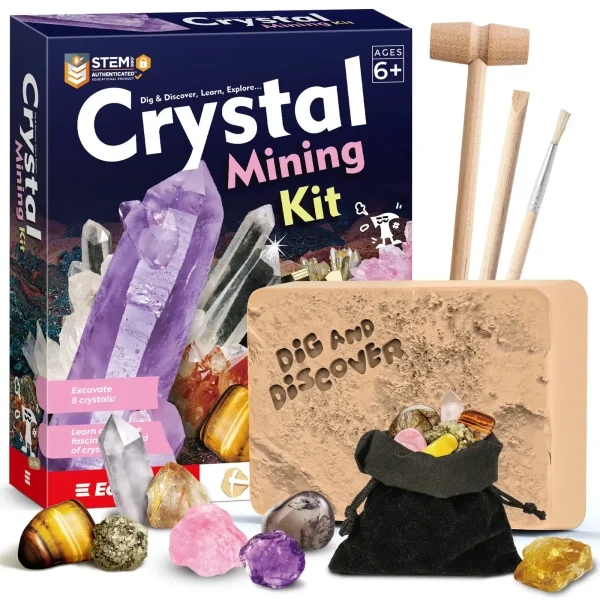
Crystal Mining Kit
Try one larger dig with a magnifier for closer inspection and a pouch for keeping the recovered specimens together.
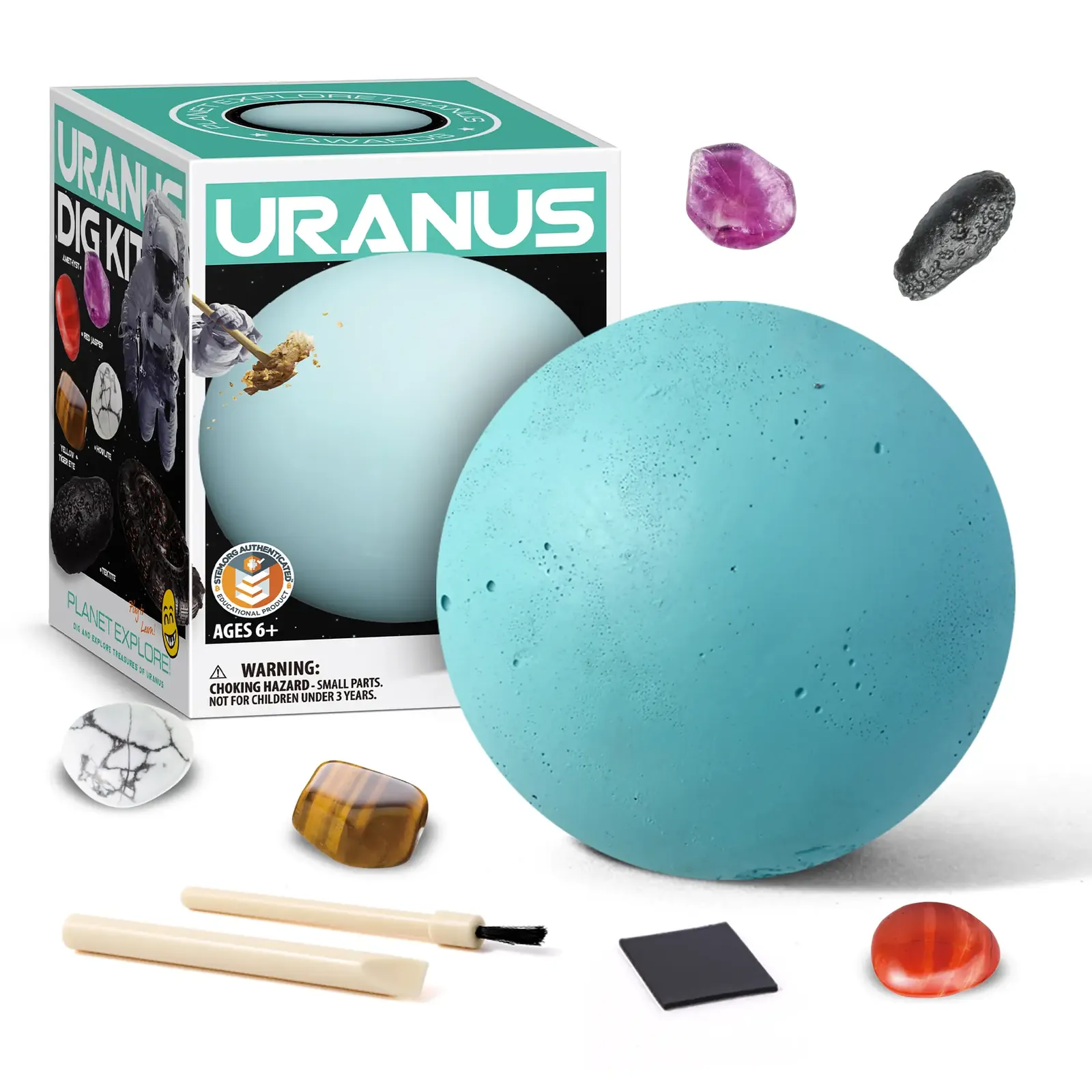
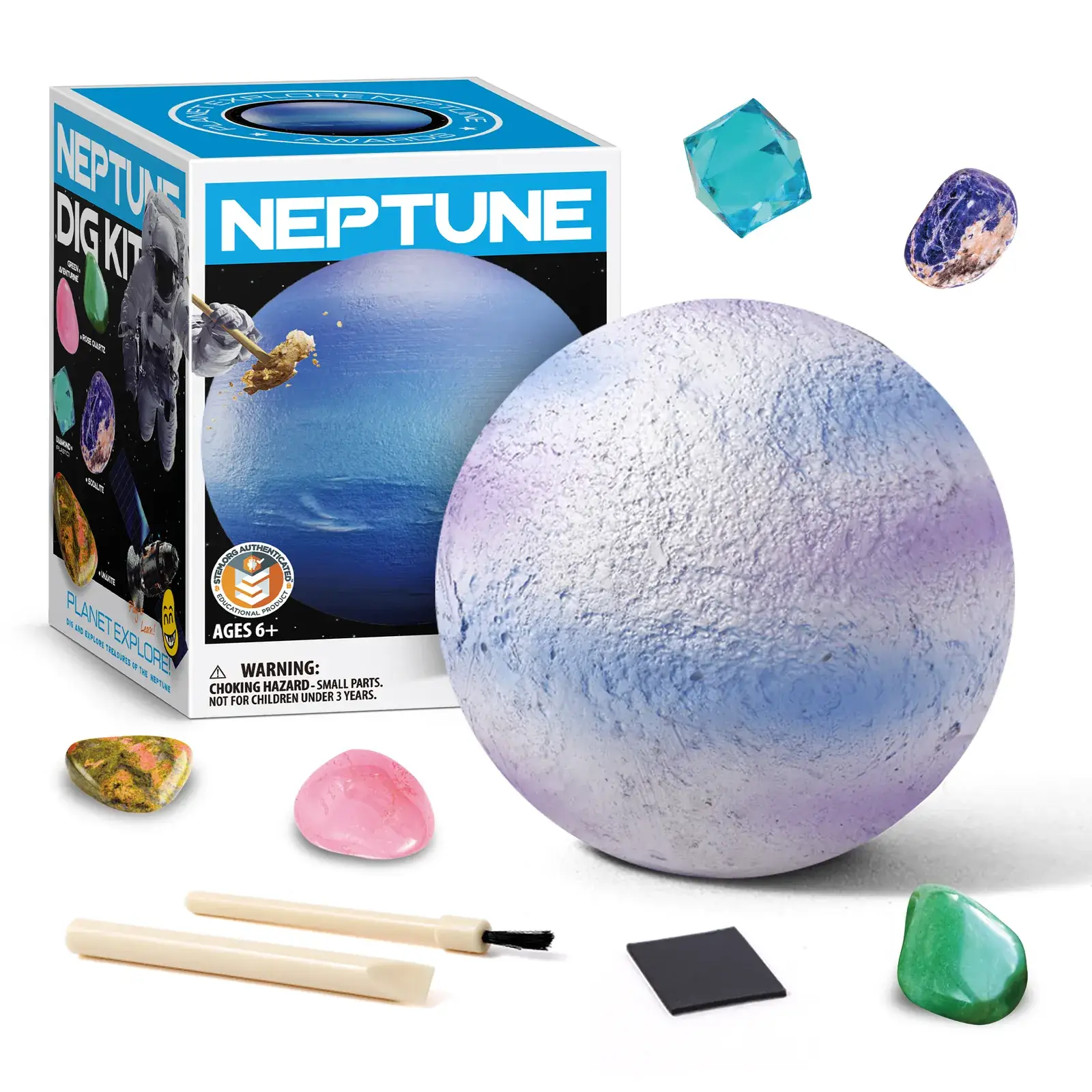
Neptune Gem Dig Kit
Dig into a blue planet-shaped block, then unfold the included Neptune poster.
PLAN AN AFTERNOON TOGETHER
More ideas for hands-on play.
One box. Twelve digs to share.
Set out a pack for each child, uncover the specimens, and bring everyone’s finds together.