
Choose dinosaur figures for ready-to-play stories, building sets for assembly and rebuilding, and dig kits for an excavation activity. Figures need the least setup. Building sets offer more repeat use when they support easy disassembly or alternative models. Dig kits usually have a one-time digging stage, although the recovered pieces may become toys or displays.
This guide compares play format, assembly demands, cleanup, and what remains after the activity. Product examples use published contents lists; they have not been hands-on tested for this article.
Figures, Building Sets, or Dig Kits?
| Buying Detail | Figures | Building Sets | Dig Kits |
|---|---|---|---|
| Best Fit | Children who make up stories with toys | Children who enjoy following steps or changing structures | Children who enjoy uncovering and examining objects |
| Before Play | Remove packaging and check accessories. | Sort parts and read assembly instructions. | Protect the table and prepare tools. |
| Repeat Use | New stories and scenes with the same figures | Rebuilding or alternative models, if supported | Play, assembly, or display using the recovered pieces |
| Cleanup | Collect figures and accessories. | Store loose pieces and unfinished builds. | Clear debris and clean tools and hands. |
| Main Buying Risk | Poor balance or a size that does not fit existing playsets | Difficult connections or a finished model too fragile for play | Unexpected contents or too few tools for shared use |
If you are unsure, look at toys your child already uses. A child who carries figures between rooms may prefer a ready-made dinosaur. One who takes models apart may get more from a rebuildable set. Dinosaur branding alone does not tell you whether either activity will appeal.
Dinosaur Figures
Ask for each figure’s length, width, and height—not just the box dimensions. Measure any toy truck or block-built doorway it needs to fit. Check photos or videos for balance: some two-legged models need their tail or a base to stand.
For poseable figures, inspect the neck, jaw, and limb connections. Find out which accessories detach. Fine horns, teeth, and tail tips may suit display better than frequent handling; choose according to the product’s age label and intended use.
A T. rex, a long-necked dinosaur, and a Triceratops offer three body shapes to compare. Children can sort them by visible features or build roads and fences with existing blocks. This is a play example, not a minimum shopping list.
Follow the cleaning instructions. Do not immerse a model with a speaker or battery compartment unless the manufacturer expressly allows it.
Building Sets
Piece count alone does not establish difficulty. Before buying, examine a sample instruction page for three things: how clearly it distinguishes similar parts, whether it shows connector direction, and whether several connections must line up at once. Screw-assembly kits also require different hand movements from press-fit bricks.
Numbered bags and separate modules help with longer builds. Keep completed sections intact, mark the last finished step, and store loose pieces in a container.
Check the finished model’s intended use. A display dinosaur may need a base and careful handling. A play model should tolerate the movement described in its instructions. For repeated building, look for a design intended for disassembly and alternative-model instructions; being able to pull pieces apart is not enough.
Confirm compatibility before mixing sets with existing bricks. Similar-looking connectors may not fit. Also check the missing-parts policy and whether replacement instructions are available online.
Dig Kits
Read the contents list rather than relying on the word “fossil.” A block may contain whole figures, skeleton parts, replicas, or genuine specimens. A real fossil is not necessarily a dinosaur fossil; the listing should identify what is supplied.
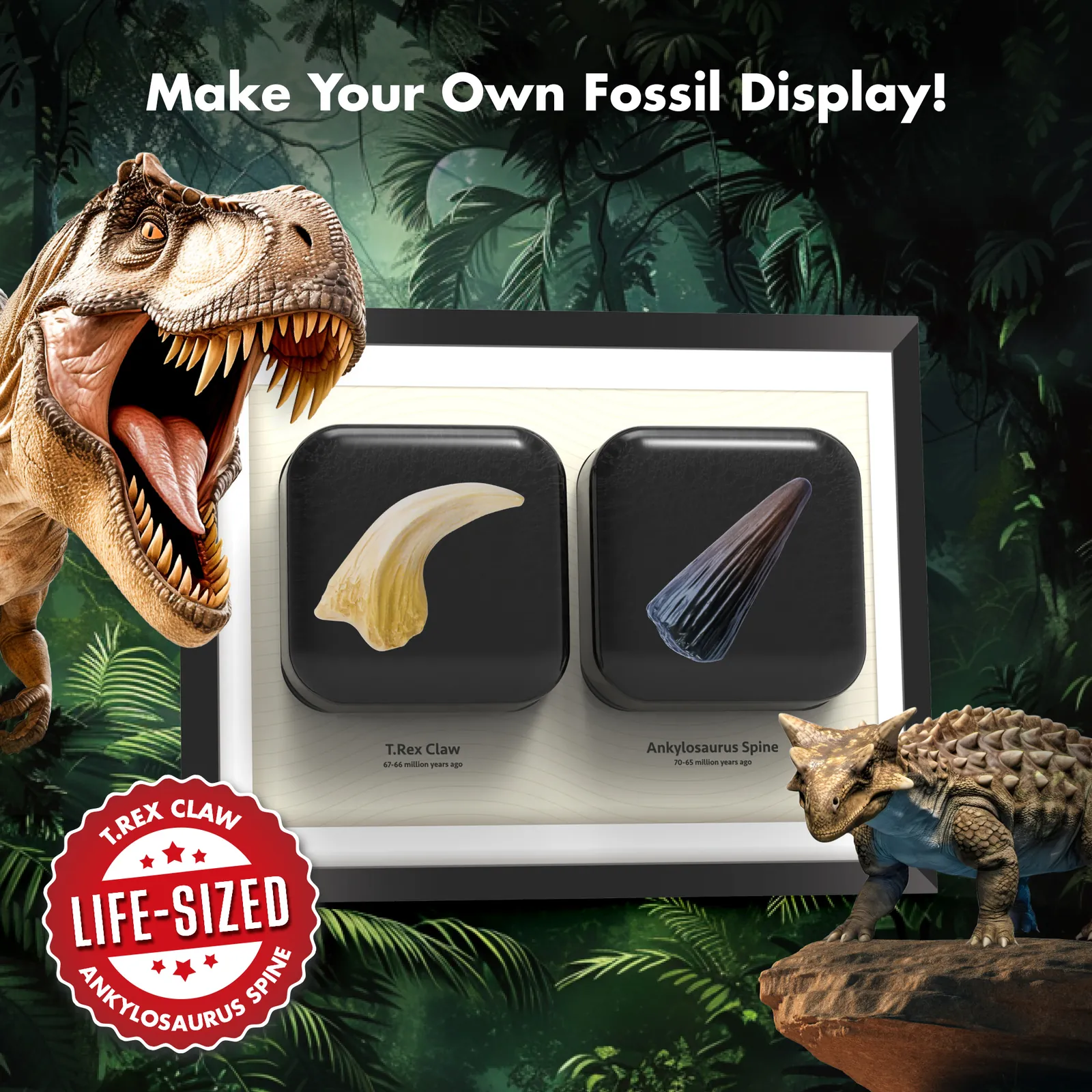
The equipment included after digging changes the activity. A two-replica dinosaur kit includes a frame and two glue dots for mounting the finds. A five-fossil specimen kit includes a magnifier and collecting pouch, with no skeleton to assemble.
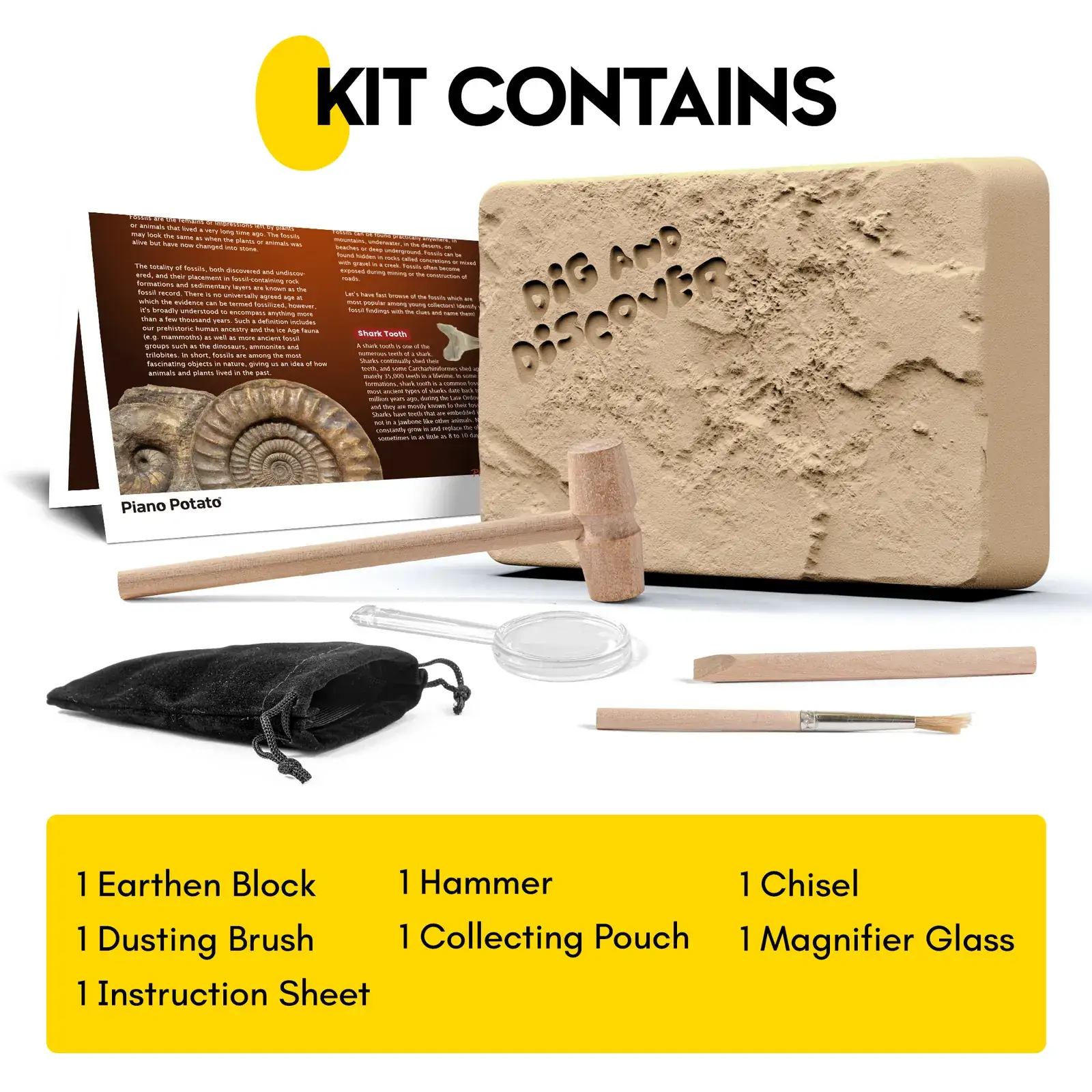
For siblings or group use, count blocks and tool sets. Five buried objects do not mean five children can dig at once. With one block and one tool set, children will need to take turns digging, brushing, and checking the guide.
Before starting, confirm whether the material may be wetted and whether eye protection is required. Use the supplied tools as directed. Protect the table, avoid blowing dust, and keep food away from the work area. Clean tools and hands afterward.
Follow the storage directions if you pause, especially after adding water. For skeleton kits, count the recovered parts against the assembly list before discarding the remaining material.
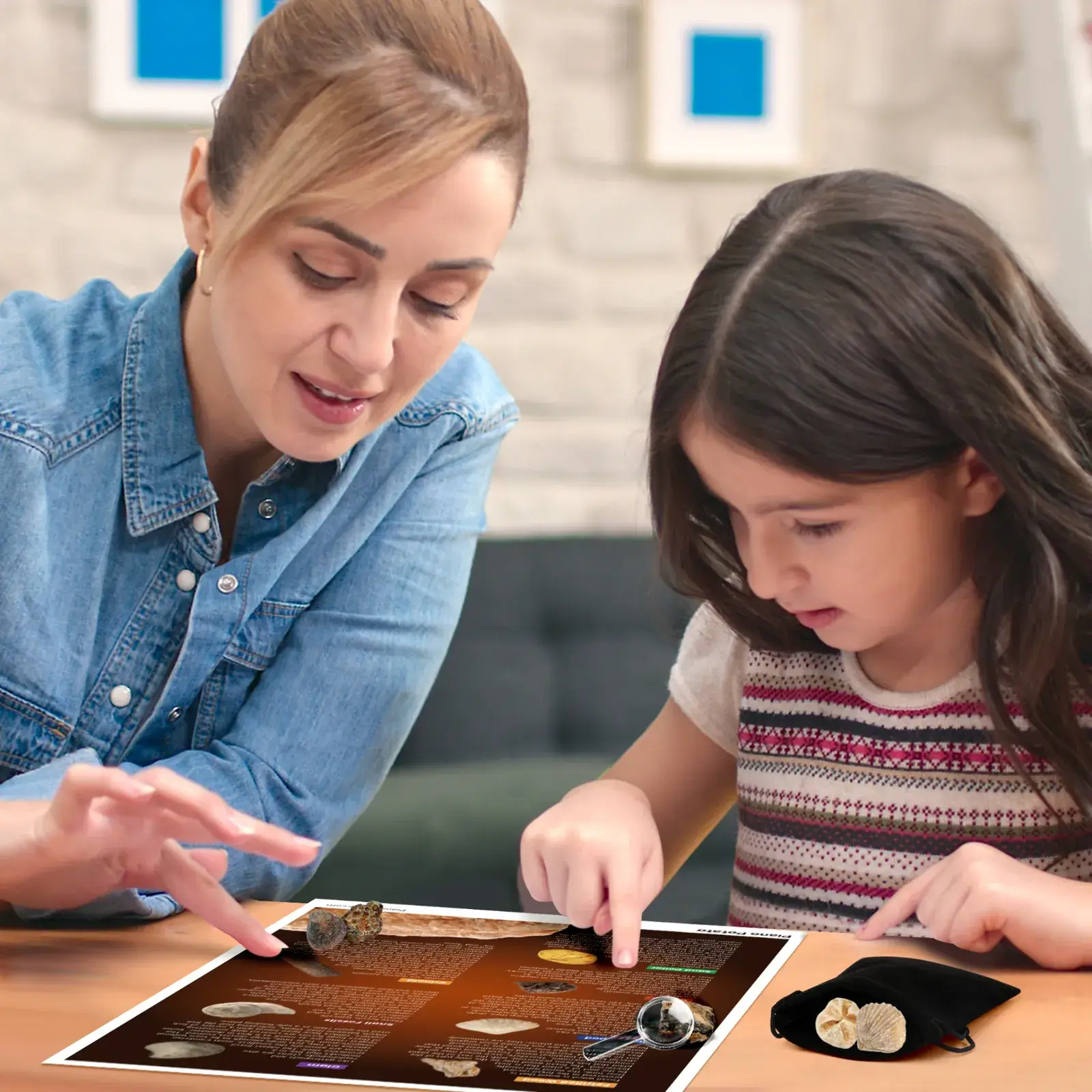
After digging, compare a find’s outline, ridges, or shell pattern with the guide. A magnifier helps reveal details without further scraping.
Age Labels and Safety
Follow the product’s age guidance and safety warnings. Adult supervision does not make small parts suitable for a younger child.
In the United States, products intended for children under 3 are banned if small parts create a choking, aspiration, or ingestion hazard. Small parts can include separate accessories and pieces that break off during use-and-abuse testing.[1]
Stop using toys with cracks, loose parts, or damaged battery covers. CPSC states that toys containing button or coin batteries need a secure closure requiring a screwdriver, coin, or other tool to open. Keep a product with a damaged battery compartment away from children until it is properly repaired or replaced.[2]
Wholesale buyers should match compliance documents to the exact model. A U.S. Children’s Product Certificate must identify the covered product, applicable safety rules, and required manufacturer and testing information. A general “non-toxic” claim does not replace those details.[3]
Price and Contents
Suppose two sets have the same price. One contains 10 dinosaur figures; the other contains 5 figures and 15 trees or fence pieces. The second set has 20 pieces, not 20 dinosaurs. These are illustrative counts, not specific product listings.
Compare figure dimensions, materials, construction, and finish before judging value. Add any batteries, storage containers, or required equipment not included. For a dig kit, separate the value of the excavation from what your child will keep afterward.