
Buy by age. Under 3, skip it. Ages 3–4 do best with a ready-made kit and an adult nearby (100–200 g, ¥50–100). Ages 5–7 can start a simple DIY kit with an adult mixing the activator (150–250 ml glue, ¥80–150). Ages 8+ can move to multi-texture kits with adult supervision (300–500 g, ¥150–300). Check the label for borax, boric acid, or sodium borate, ask for the batch report, and make sure the box seals. Keep sessions under an hour.
Quick picks
| Age | What to buy | Size | Session length | Budget (RMB) | Kids per kit |
|---|---|---|---|---|---|
| 3 and under | Skip it | — | — | — | — |
| 3–4 | Ready-made | 100–200 g, 2–4 colors | 20–30 min | 50–100 | 1–3 |
| 5–7 | Simple DIY | 150–250 ml glue, 3–4 colors | 30–45 min | 80–150 | 3–6 |
| 8+ | Multi-texture | 300–500 g, 6–12 colors | 45–60 min | 150–300 | 4–8 |
| Already have one | Refill | 500 ml glue or 100 g activator | — | 20–60 | 10–13 |
The kid counts assume 60–80 g per child. Prices are China retail as of October 2026, in RMB. This guide doesn’t rank brands.
What matters
If your child is under three, skip it. Small parts and candy colors are a bad mix with a mouth that explores everything.[1] Magnets are a hard no.
Then there’s the label. If it lists borax, boric acid, or sodium borate, you’re dealing with a boron formula. An adult should mix it, and it stays out of mouths.
The EU caps boron at 300 mg/kg for liquid or sticky toy material, and 1,200 mg/kg for dry or soft material.[2] Consumer groups tested 100 slimes back in 2018. Forty-two came in over the line, a few by more than ten times.[3] BfR looked at the data in 2022 and judged the everyday risk low as long as products stay inside the limit.[4] Problems show up when a product is over the limit and a child swallows a mouthful. That’s when nausea, vomiting, and diarrhea come in.
A 150 g batch made with borax typically carries roughly 0.2–0.4 g of borax. Skin absorbs about 6% of total intake.[4] Swallowing is the part that matters more.
A CE mark doesn’t prove every batch was tested. Most CE marking for toys is self-declared. China uses GB 6675 and CCC certification. In Europe, it’s EN 71 plus CE marking. The US goes by ASTM F963.[5] ISO 8124-3 is the international reference.[6] Ask for the batch report. It should carry the product name, model, batch number, and a lab stamp. The EU’s new Toy Safety Regulation (EU) 2025/2509 came into force in January 2026 and applies from August 2030.[7] Piano Potato’s product safety page explains its testing and conformity process.
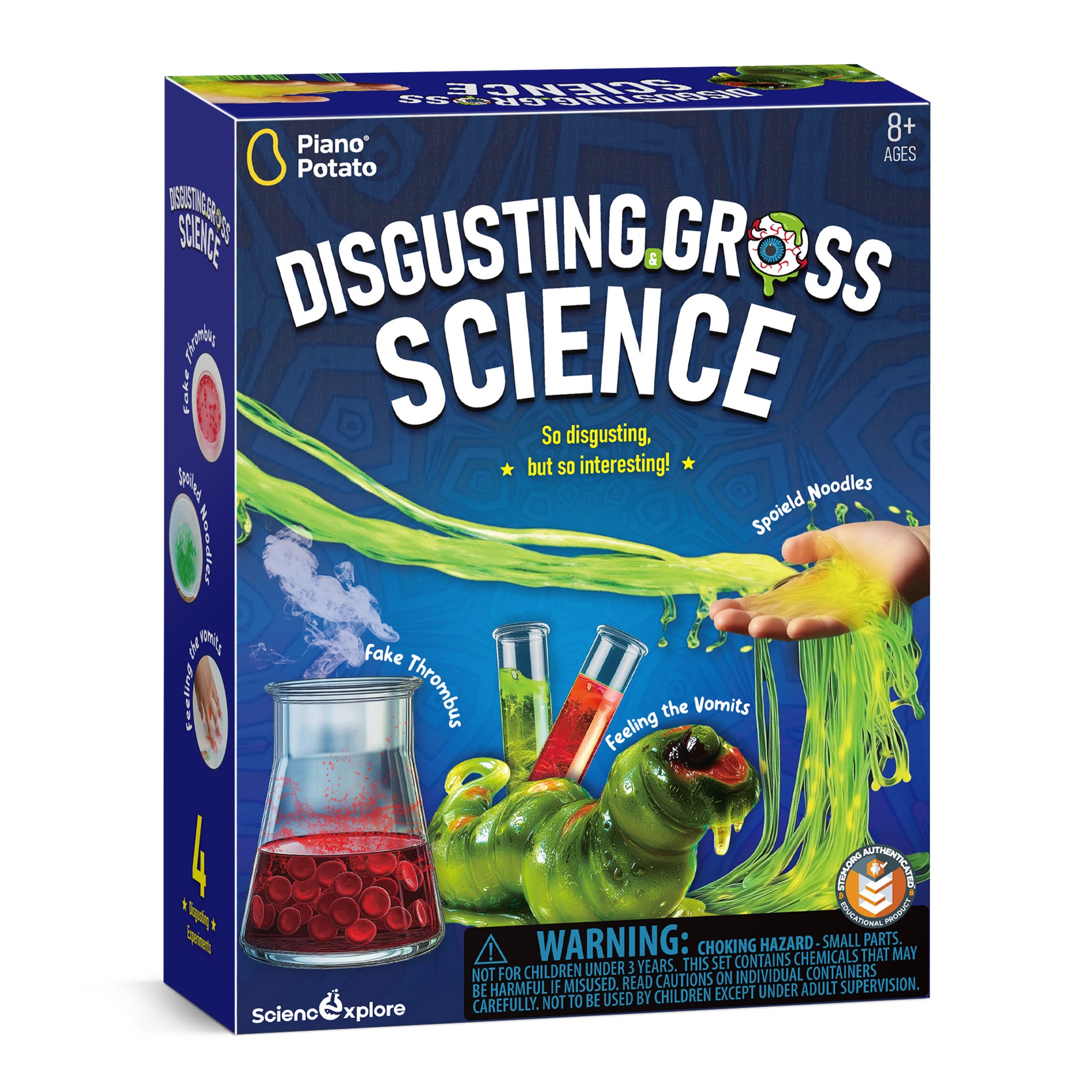
Older kids can handle more complex kits. The Disgusting & Gross Science Kit, for example, is labeled 8+ with adult supervision and adds fake blood to the slime.
If your kid coughs easily or has eczema, go unscented. Put 10 ml on the wrist or behind the ear and leave it for 30 minutes. Red or itchy skin means stop.
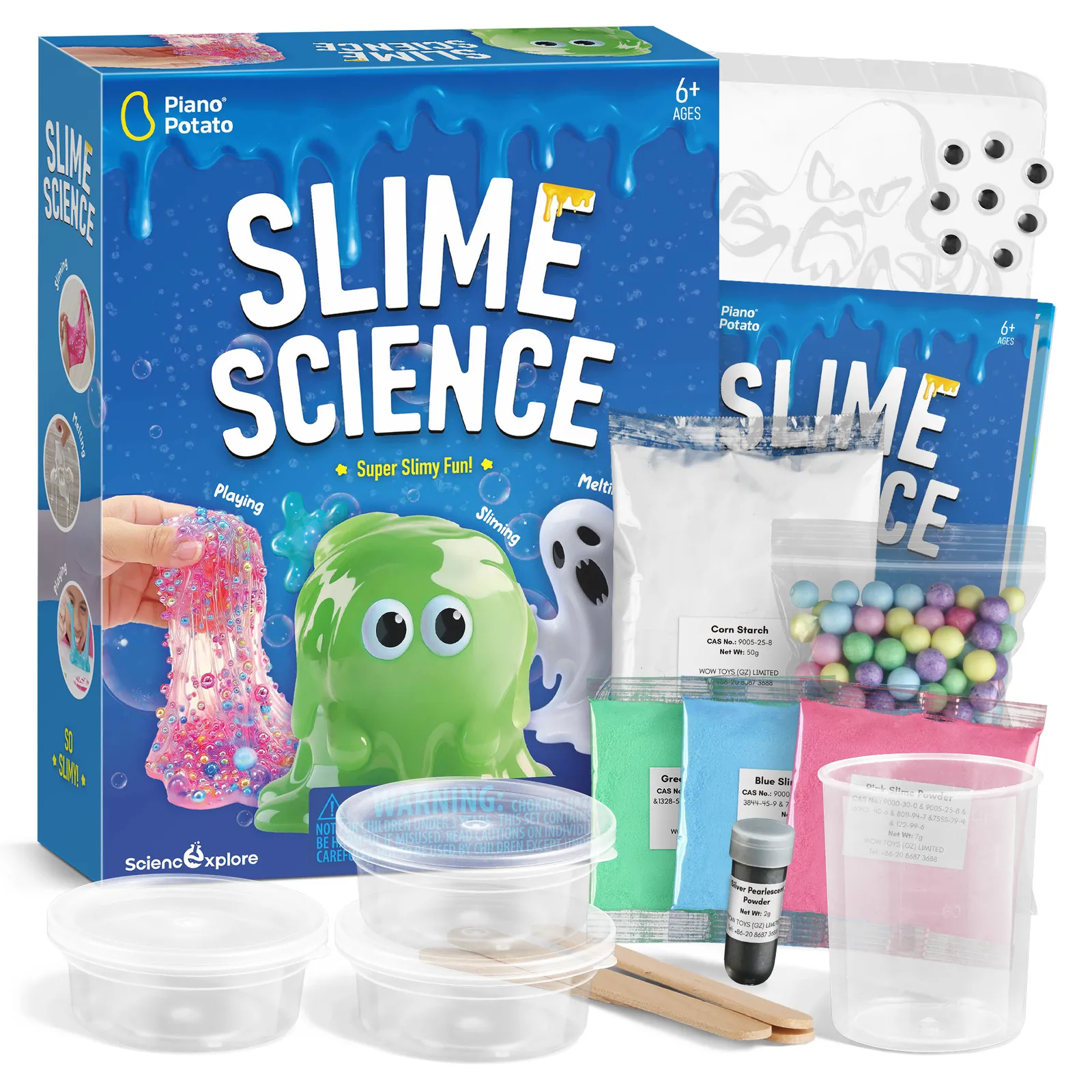
A sealed box will usually hold slime for 2–4 weeks. A thin bag typically gives you 3–5 days before it dries. The Slime Science Kit ships with three storage containers. Look for separate labels on the activator and color. The instruction sheet should spell out the ratio, the age range, and what to do if a child swallows it.
Check the price per 100 g. A 300 g box at ¥90 works out to ¥30 per 100 g; 150 g at ¥60 is ¥40. The bigger box is 25% cheaper per gram.
Make it yourself
A 150 g borax batch costs roughly ¥5–10 at home. The same amount in a store runs ¥40–70. You’re paying someone else to measure, color it, and put it in a box. The Fun & Science range includes pre-measured slime kits.
| Route | Mix | Yield and cost | What goes wrong | Age |
|---|---|---|---|---|
| Borax | 100 ml white glue + 50 ml water + 1–2 tsp borax water (100 ml water + 1 tsp borax) | 150–170 g, ¥5–10 | More than 2 tsp and it goes hard. Add 10–20 ml glue and rest 10–15 min. | 5+, adult mixes |
| Contact lens solution | 100 ml glue + 1 tbsp solution + 1/4 tsp baking soda | 110–130 g, ¥5–9 | The solution needs boric acid or sodium borate. More than 1/2 tsp baking soda makes it crumbly. | 5+, adult mixes |
| No borax | 1 tbsp psyllium husk + 120 ml water; or 2 parts cornstarch + 1 part conditioner; gelatin needs heat | 100–150 g, ¥2–4 | Let psyllium rest 5–10 min. Ages 3–4 need an adult. | 3+ |
| Food-based | 100 g marshmallows + a little oil or powdered sugar | 110–130 g, ¥5–8 | It usually contains gelatin. Not a snack. | 3+, make and toss |
The ratios are a starting point. Glue thickness varies, so add activator a little at a time.
The shopping list
- White glue: PVAc, 500 ml, ¥15–25. That’s about five batches. 502 won’t work — don’t try it.
- Borax: 500 g, ¥10–20. Mix 1 tsp into 100 ml of water.
- Contact lens solution: check for boric acid, sodium borate, or borate. The “no preservative” and hydrogen peroxide types often don’t work.
- Glycerin: 50 ml. Two or three drops per batch. More makes it sticky.
- Food coloring: 1–2 drops per 100 g. Dark colors stain.
- Glitter: 1–2 g per 100 g. Skip metal powder and fine dust.
- Shaving cream: 50–80 ml per 100 ml of glue.
- Sealed box: 500–1,000 ml for 150–300 g.
- Instant snow: sodium polyacrylate. Never down the drain.
Keeping it alive
Slime usually dies one of two ways. It dries out, or it grows mold. You can fix dry. You can’t fix moldy.
| Type | Unopened | Opened |
|---|---|---|
| Store-bought | 1–2 years | 2–4 weeks |
| Homemade with borax | — | 2–4 weeks |
| Fluffy or butter slime | — | 1–2 weeks |
| No-borax or food-based | — | 3–7 days |
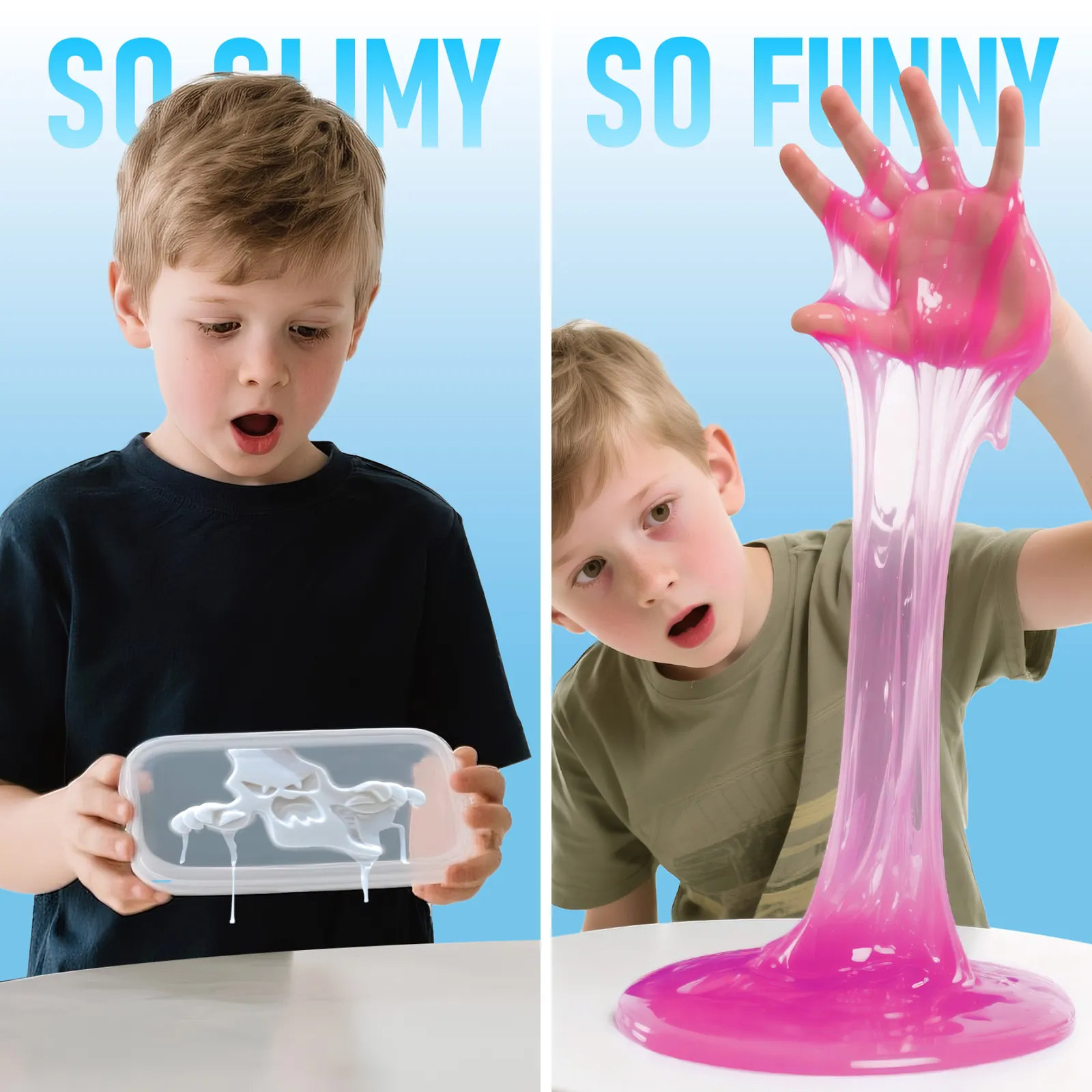
- Keep it between 15 and 25°C. A hot car can hit 50°C. The fridge feels safe, but condensation makes it worse.
- Leave about 20% headspace, and write the date on the lid. Play the older box first.
- A 150 g box gets you roughly 8–12 sessions at three sessions a week, which is about 3–4 weeks. If your kid plays once or twice a week, swap it out at four weeks.
- Toss it if it smells sour, grows mold, leaks water, changes color, or turns sticky and won’t come back.
- Dry slime can usually be saved with 2–3 drops of water or glycerin. Seal it and give it a few hours.
Safety
Borax is the main chemical worry, and small parts are the choking one. The candy colors don’t help.
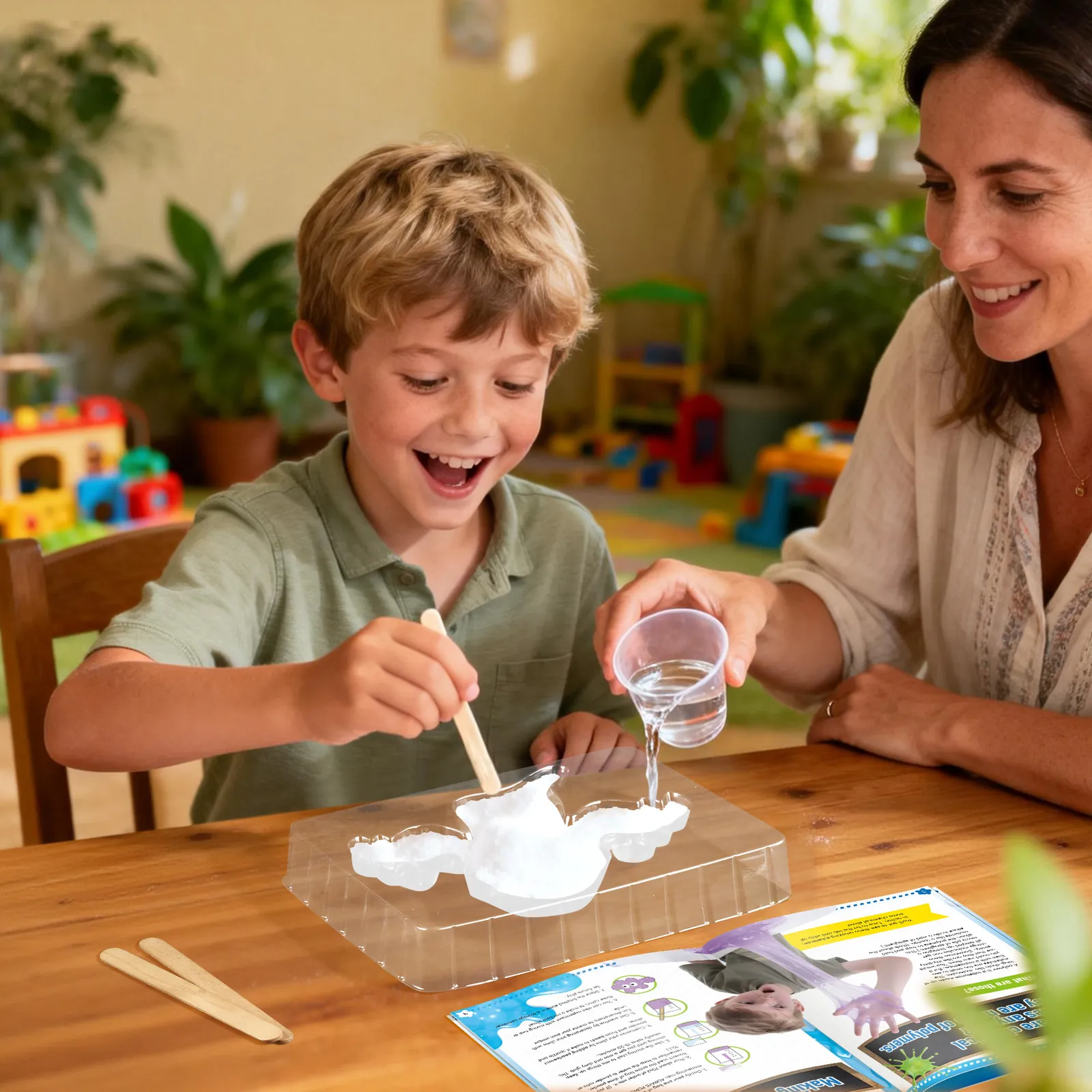
- If your child swallows slime, don’t make them vomit. Wipe out the mouth, give them a sip of water, and hold on to the package. Then call poison control at 1-800-222-1222 if you’re in the US. With a boron formula, call even if they seem fine.[8]
- Slime in the eyes needs a 15-minute rinse. If pain, light sensitivity, or blurry vision sticks around, see a doctor.
- On skin, soap and water usually do the job. Blisters or a spreading rash need a doctor.
- Keep pets away. Borax is toxic to cats and dogs.[9]
- Don’t rinse it down the sink. The absorbent polymer swells, and glitter and beads don’t break down.
- For carpet, scrape off what you can, then press with warm water and a little dish soap. Let it dry for 6–12 hours before you vacuum. Clothes can soak in equal parts white vinegar and water.
- Wash hands for 20 seconds before and after.[10]
A cheap plastic tablecloth will save you ten minutes of scrubbing.
Planning a private-label slime or sensory kit? Piano Potato develops the product, runs third-party safety testing, and handles packaging. Send a short brief and the team will come back with a practical quote.
How this guide was built
Piano Potato’s editorial team compared kit formats, label requirements, and published safety limits. Prices are retail snapshots, not quotes. Recipes are practical starting points, not lab-tested formulas. We update the guide when standards or product specs change.
Sources
- CPSC, Small Parts Ban and Choking Hazard Labeling
- ECHA, Substances Restricted in Toys
- BEUC and ANEC, 2018 Slime Tests
- BfR, 2022 Opinion on Boron in Toy Slime
- CPSC, Toy Safety Business Guidance
- ISO 8124-3:2020/Amd 1:2023
- European Commission, Toy Safety Legislation
- Poison Control, Is Homemade Slime Safe?
- ASPCA, Homemade Slime and Pets
- CDC, About Handwashing