
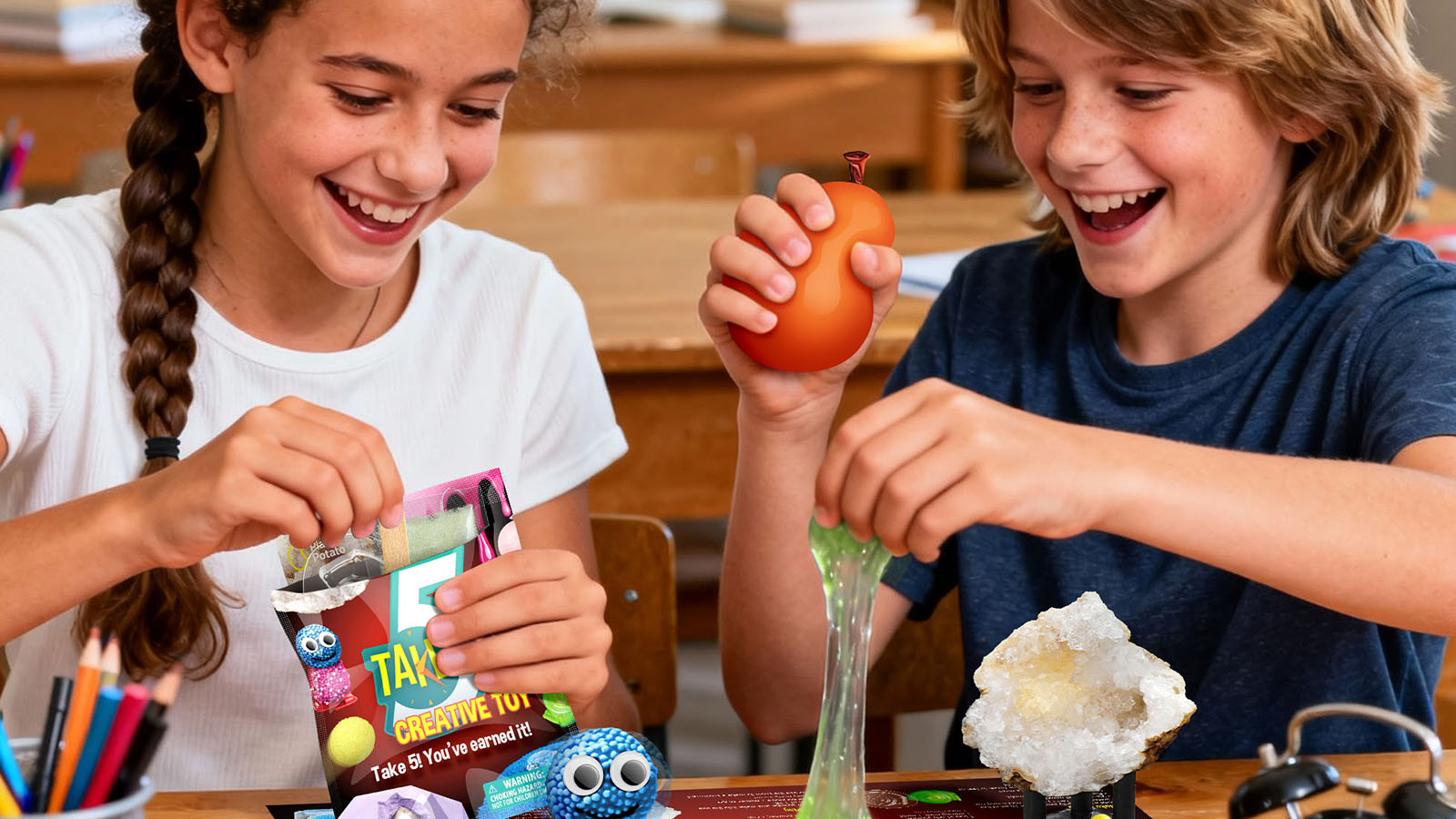
| Question | Illustrative Example |
|---|---|
| Who is it for? | Ages 8–12 |
| What does the child do? | Build 15 motorized machines |
| What do they use? | 120 reusable parts + 2 motors |
| What do they practise? | Gears, motion, measurement, design |
| How hard is the first activity? | 20 assembly steps |
| How long to first working result? | About 10–20 minutes in product testing |
| What is required separately? | 4 AA batteries |
| Why choose this one? | 15 rebuildable projects and no app required |
The figures above are examples, not industry standards. A real product page or package should use data from the actual product.
What Parents Need to See
Parents are usually trying to answer practical questions before they buy. Put those answers where they can find them quickly.
| Parent Question | Useful Answer |
|---|---|
| Will my child know what to do? | Show the first real activity, not only the finished model. |
| Is it too hard? | State the first-project steps, typical help needed, and difficulty progression. |
| Will it last more than one day? | State guided projects, challenge cards, rebuild options, and expansions. |
| Do I need to help? | State setup, reading level, adult help, and troubleshooting. |
| Does it need a screen? | State app, Wi-Fi, phone, tablet, account, and subscription requirements. |
| What else must I buy? | List batteries, household materials, refills, tools, or subscriptions. |
The priority changes with the buyer. Someone shopping for a gift may look first at age, difficulty, and the finished result. A parent trying to reduce screen time may care more about No app. No Wi-Fi. No account required. If the child already builds robots or science kits, the harder projects may matter more than the beginner activity.
When talking about STEM toy benefits, tie the benefit to something the child actually does. “Problem solving” carries more weight when the child has to build, test, find a fault, and change the design.
What Teachers Need to See
Teachers should be able to work out whether a product fits a lesson without emailing the supplier for basic details.
| Classroom Detail | Example |
|---|---|
| Recommended grade | Grades 3–5 |
| Students per kit | 2–4 |
| Setup | 5 minutes |
| Activity | 35 minutes |
| Reset and cleanup | 8 minutes |
| Total class time | 48 minutes |
| Consumables | None |
| Storage | Labeled tray included |
| Replacement parts | Available individually |
These numbers are illustrative. What matters is showing the full classroom time. If the activity itself takes 35 minutes but setup and reset add another 13 minutes, the teacher is planning for 48 minutes, not 35.
For 24 students using 6 kits:
24 students ÷ 6 kits = 4 students per group.
That group size only works if all four students have something useful to do. Depending on the product, roles might include builder, tester, recorder, materials manager, or programmer.
Write the Activity First
Start with what the child actually does. Broad education language can come later.
| Weak | Better |
|---|---|
| Develops engineering skills | Build 12 machines using gears, axles, wheels, and connectors |
| Introduces coding | Arrange commands to make a robot move, turn, stop, and follow a route |
| Encourages scientific thinking | Make a prediction, run the experiment, record the result, and compare what changed |
| Supports math skills | Measure a 30 cm bridge, count parts, and compare two gear ratios |
One quick check is to remove the word STEM. If the sentence no longer tells the buyer what the product is for, it needs more concrete information.
That approach is especially useful for building STEM toys. “Build, test, change, and rebuild” is easy to picture. A broad phrase about learning is not.
Name the Exact Learning Task
Engineering: The child builds a model, tests it, finds a weak point, changes the design, and tests it again. NGSS engineering expectations for grades 3–5 include defining problems, comparing solutions, testing designs, identifying failure points, and improving solutions.[1]
Coding: Say whether the child uses sequences, loops, conditions, sensors, physical coding cards, block code, or another system.
Math: Show the task itself: count 24 parts, measure 30 cm, compare angles, continue patterns, plot coordinates, or test ratios.
Science: Name the topic clearly: magnetism, electricity, density, crystal formation, force, motion, air pressure, rocks, minerals, or chemical reactions.
With a hands-on science kit, buyers should be able to tell what children will measure, mix, grow, observe, compare, or record.
A product that contains gears does not automatically teach gears. If that is part of the learning claim, the activity should ask the child to change a gear combination and see what happens.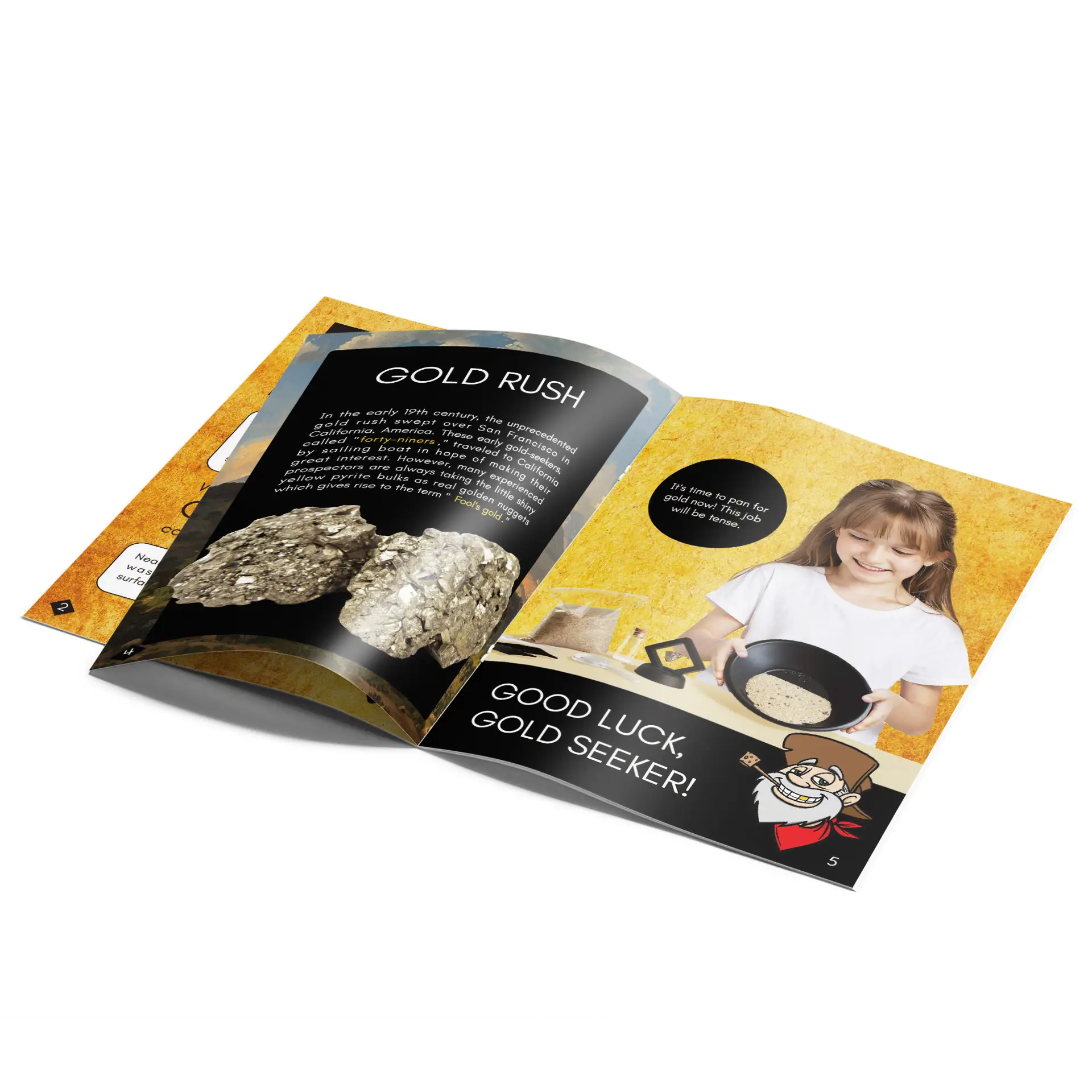
Write the Value Proposition
For one SKU, bring the activity, learning point, useful difference, buyer concern, and proof together.
| Part | Motor Lab Example |
|---|---|
| Activity | Build 15 motorized machines |
| Learning | Gears, motion, measurement, mechanical design |
| Difference | No app required |
| Buying concern | Parents may think it is too difficult |
| Proof | 3 difficulty levels with illustrated starting projects |
A useful headline:
Build 15 motorized machines with 120 reusable parts and no app required.
A useful supporting line:
Start with illustrated builds, then change gears, test movement, and solve harder design challenges.
A weak version:
The ultimate innovative STEM experience for future inventors.
The first version gives the buyer quantity, activity, reuse, and a clear difference. The second mostly gives adjectives.
Separate Features From Real Differences
A specification can be useful without being a reason to choose the product.
- 150 pieces;
- 12 projects;
- 2 motors;
- storage box;
- activity cards;
- age 8+.
If similar kits have the same things, those points help describe the product but do not separate it from the market.
A stronger difference could be:
- no app when most comparable robots require one;
- reusable parts when comparable experiments require refills;
- replaceable motors instead of a sealed electronic unit;
- 6 organized classroom stations instead of 6 separate retail boxes;
- 15 builds that use the same parts instead of one fixed model.
Before putting a feature in the main headline, check three things: buyers care about it, competitors do not all offer the same thing, and the product can prove it.
Keep Claims Within the Evidence
| Claim Level | Example |
|---|---|
| Product fact | Includes 20 experiments |
| Activity | Children build simple circuits |
| Practice | 10 challenges require sequencing and troubleshooting |
| Learning result | Improves problem-solving ability |
| Academic result | Improves school performance |
| Developmental result | Raises IQ or improves brain development |
The FTC requires advertisers to have a reasonable basis for objective advertising claims before making them.[2]
Use:
10 challenge cards ask children to identify what failed and change the design.
instead of:
Scientifically improves critical thinking.
Use:
Projects use counting, measurement, patterns, and basic ratios.
instead of:
Makes children better at math.
Separate Age From Difficulty
An age mark and a difficulty level are not the same thing. Buyers need both.
| Check | What to Measure |
|---|---|
| Safety | Parts, materials, tools, functions, and applicable age-related requirements |
| Reading | Amount of text and vocabulary |
| Hand control | Connecting, gripping, digging, pouring, cutting, or assembling |
| Concept | Difficulty of the science, math, coding, or engineering task |
| Independence | How often adult help is needed |
CPSC’s Age Determination Guidelines consider product characteristics together with children’s abilities, interests, and play behavior when discussing age grading.[3]
Two products can both say Ages 8–12 and still feel very different to the child:
| Kit A | Kit B | |
|---|---|---|
| First build | 18 steps | 42 steps |
| Instructions | Mainly pictures | 2 pages of text |
| Small connectors | 4 types | 11 types |
| Adult help | Mainly setup | Often needed during assembly |
The age range alone cannot explain those differences. Use the real product data.
Measure First Success
For product testing, record how long it takes a new user to get the first working result.
- first circuit lights;
- first robot moves;
- first bridge stands;
- first experiment shows a visible change;
- first crystal-growing setup is complete.
A practical internal test can use 10 children from the target age range. Record:
- time to first result;
- number of requests for help;
- steps completed incorrectly;
- whether the child fixes mistakes without restarting;
- whether the child begins a second activity.
Illustrative test data:
| Measure | Example Result |
|---|---|
| Fastest first result | 9 minutes |
| Median | 14 minutes |
| Longest | 24 minutes |
| Needed adult help | 3 of 10 |
| Started another activity | 7 of 10 |
These figures show one possible test method. They are not an industry benchmark. A real product should use its own test results.
Show How Difficulty Increases
| Level | Example Task |
|---|---|
| Start | Build a 20-step model with full instructions |
| Change | Replace one gear and compare movement |
| Solve | Build a vehicle that travels 1 metre with limited instructions |
| Create | Use the same parts to make a new machine |
If an advanced project simply has more instruction pages, say so. If the real change is less guidance, more troubleshooting, or open-ended work, state that clearly instead.
Count Real Replay Value
Use measurable forms of reuse instead of writing “hours of fun.”
| Reuse Type | Example |
|---|---|
| Repeat | Run the same experiment again |
| Variation | Change one variable and compare the result |
| Progression | Move from 10-step to 40-step builds |
| Creation | Build a model not shown in the guide |
| Expansion | Add parts, challenges, or compatible sets |
Compare two fictional $49 products:
| Kit A | Kit B | |
|---|---|---|
| Guided activities | 1 | 12 |
| Challenge cards | 0 | 8 |
| Reusable parts | Limited | Yes |
| Open-ended use | No | Yes |
Both products cost the same. The amount of usable activity is not the same.
State Every Screen Requirement
For an offline toy:
No app. No Wi-Fi. No account required.
For a connected toy, list:
- supported phone or tablet systems;
- internet requirement;
- account requirement;
- subscription price;
- offline functions;
- teacher and student account requirements;
- data collected.
Two fictional coding robots may both cost $69. If one also needs a $29 annual subscription:
$69 + $29 = $98 first-year cost.
In the United States, COPPA can apply to covered online services directed to children under 13 that collect personal information, and to general-audience services that have actual knowledge they are collecting personal information from children under 13.[4]
The FTC’s 2025 Apitor case involved allegations that a children’s robot app allowed a third party to collect geolocation information without the required parental consent.[5]
Put Five Things on the Front
- 1 product category;
- 1 age range;
- 1 main activity;
- 1 main difference;
- 1 image showing the real result.
Example:
Motor Lab Engineering Kit
Ages 8–12
Build 15 Moving Machines
No App Required
If 8–10 selling points are fighting for attention on the front, move the lower-priority information to the back.
Use the Back for Buying Details
The back can show:
- 3–5 real projects;
- 120-piece contents;
- 2 motors;
- 3 difficulty levels;
- 4 AA batteries required;
- typical tested activity time;
- main learning concepts;
- adult help or supervision;
- app or device requirements.
For a science kit, include household materials, refill needs, drying or growing time, and cleanup.
For a geology kit, show the number of specimens, digging tools, protective items, and identification materials. Piano Potato’s Dig & Explore range is a good example of why excavation products need different information from robotics or circuit toys.
Test the Package Before Printing
Show the front to 10 people who have never seen the product for about 5 seconds.
Ask:
- What is it?
- What does the child do?
- What age is it for?
- What makes it different?
Example result:
| Question | Correct Answers |
|---|---|
| Product type | 9 of 10 |
| Main activity | 4 of 10 |
| Age | 10 of 10 |
| Main difference | 3 of 10 |
Here, the product type and age are already clear. The activity and main difference are not. That tells the team where to change the wording or visual priority. These numbers are only an example test, not an industry pass/fail rule.
List the Full Box Contents
For a fictional engineering kit:
- 120 reusable building pieces;
- 2 motors;
- 1 battery box;
- 4 wheels;
- 6 gears;
- 15 project cards;
- 10 challenge cards;
- 1 instruction book;
- 1 storage tray.
Then show:
Required separately: 4 AA batteries.
Science products need the same level of detail. Piano Potato’s Fun & Science range includes products with different materials and activity types, so the label “science kit” is not enough to tell buyers what they are getting.
Make Every Image Answer a Question
| Image | Question |
|---|---|
| Box | What arrives? |
| All contents | What is included? |
| Scale | How large is it? |
| Child using it | What does the activity look like? |
| Finished project | What can be made? |
| Close-up | What do the motors, tools, gears, specimens, or circuits look like? |
| Storage | How are 100+ pieces stored? |
| Classroom | How many students can work around one kit? |
For a geode or excavation kit, show the real specimens, digging tools, eye protection if included, display pieces, and the size of the excavation material. A dig kit category gives buyers much more context when the photography shows what is actually excavated, not only the finished specimen.
Put These Facts Near the Buy Button
For a fictional Motor Lab product:
| Detail | Example |
|---|---|
| Age | 8–12 |
| Guided builds | 15 |
| Challenge cards | 10 |
| Parts | 120 |
| Motors | 2 |
| Typical build | 20–40 minutes |
| Difficulty | 3 levels |
| App | Not required |
| Batteries | 4 AA, not included |
| Home use | 1–2 children |
A real product page should replace every example above with measured product data.
For private-label products, the product claims, instructions, age marking, packaging, and approved physical version also need to match before production. Piano Potato’s private-label educational toy sourcing guide covers SKU, BOM, sample, packaging, testing, and production controls.
Calculate Classroom Use
For a class of 24 students:
| Kits | Students per Group |
|---|---|
| 4 | 6 |
| 6 | 4 |
| 8 | 3 |
| 12 | 2 |
Do not call a set suitable for 6 students if only 1 or 2 students can use it at the same time.
For a 48-minute class example:
5 minutes setup + 35 minutes activity + 8 minutes reset = 48 minutes.
Teacher materials can then match the real period:
- 1-page setup sheet;
- 35-minute activity;
- student worksheet;
- answer sheet;
- 8-minute reset checklist.
Plan for Lost Parts
A classroom kit should make it clear which pieces are used most often and which ones are essential.
Example 150-piece classroom set:
- 150 standard pieces;
- 10 spare connectors;
- 2 spare axles;
- 1 inventory sheet;
- individual replacement motors available;
- labeled storage compartments.
These numbers are a design example. Real quantities should come from product testing and expected classroom use.
For a teacher, Replacement parts available is more useful than a broad promise such as Built to last.
Use Specific Curriculum Claims
Explores force and motion describes a topic.
Aligned with Grade 4 engineering standards makes a stronger and more specific claim.
If formal alignment is used, record:
- grade;
- standard code;
- specific activity;
- what the student does;
- what evidence the teacher can observe.
NGSS engineering expectations, for example, include testing solutions and identifying failure points.[1]
CAST’s Universal Design for Learning guidance also recommends using more than one way to represent important information.[6]
For a toy manual, that can mean short text + diagrams + part numbers + photos instead of two pages of text with no visual support.
Calculate Classroom Cost
Example:
Classroom set price: $240
Students served per class: 24
Classes using the set: 4
24 × 4 = 96 student-use opportunities
$240 ÷ 96 = $2.50 per student-use
If the same set serves 8 classes:
24 × 8 = 192 student-use opportunities
$240 ÷ 192 = $1.25 per student-use
If the product also needs batteries, consumables, replacement pieces, devices, or significant teacher preparation, include those costs as well.
Calculate the Real Home Cost
Compare two fictional science kits:
| Cost | Kit A | Kit B |
|---|---|---|
| Initial price | $39 | $59 |
| Refill | $8 | $0 |
| 3 refills | $24 | $0 |
| Total | $63 | $59 |
Kit A costs less at checkout but more after 3 refills.
The same calculation can include:
- batteries;
- subscriptions;
- replacement chemicals;
- consumable craft materials;
- expansion packs.
Turn Reviews Into Product Data
Star ratings tell only part of the story. Count repeated comments as well.
Example from 20 detailed reviews:
| Issue | Mentions | Check |
|---|---|---|
| Instructions confusing | 7 | First 3 project pages |
| Good repeat use | 5 | Make replay value more visible |
| Batteries not obvious | 3 | Front, back, and product page |
| Storage difficult | 2 | Tray and cleanup design |
The figures above are an analysis example, not market data.
If reviews are incentivized, the FTC states that an incentive must not depend on a particular positive or negative opinion, and disclosure requirements may also apply.[7]
Use Safety Facts, Not Reassurance
| Product Type | Possible Issues to Check |
|---|---|
| Building kit | Small parts, magnets, accessible edges |
| Robot | Batteries, charging, small parts, electronics |
| Science kit | Powders, chemicals, hot water, liquids |
| Excavation kit | Fragments, dust, digging tools, small specimens |
| Projectile toy | Projectile requirements and eye hazards |
For products intended for children under 3 in the United States, small parts can trigger federal small-parts requirements, and certain toys and games require choking-hazard labeling.[8]
Write:
Adult supervision is required when hot water is used in Experiments 4 and 5.
instead of:
Adult supervision recommended.
Use the Correct Testing Words
These terms should not be used as if they mean the same thing:
- tested;
- third-party tested;
- compliant;
- certified;
- safe.
For toys intended primarily for children 12 and under in the United States, CPSC states that applicable children’s product safety rules require third-party testing and certification in a Children’s Product Certificate. The manufacturer or importer is responsible for identifying the rules that apply to the specific toy.[9]
CPSC’s ASTM F963 guidance separates requirements for hazards including small objects, edges, battery-operated toys, magnets, powders, sound-producing toys, and projectiles.[10]
A specific statement about the relevant test or requirement is more useful than 100% safe.
Piano Potato’s product safety page explains its general safety approach. Claims for one SKU should still match that product, age grading, test scope, and sales market.
Track Marketing Errors
Example data from 100 orders:
| Issue | Orders | What to Check |
|---|---|---|
| Too difficult | 9 | Age, first project, instructions |
| Smaller than expected | 6 | Dimensions and scale photos |
| Battery requirement missed | 5 | Front, back, and product page |
| Used only once | 8 | Replay value and next activity |
These are sample numbers.
When the same issue keeps appearing, check where it is coming from:
- the product;
- the instructions;
- wrong age positioning;
- missing information;
- price;
- photos;
- incorrect customer expectations.
Use Different Data for Each STEM Category
| Category | Useful Numbers and Facts |
|---|---|
| Engineering | Piece count, builds, difficulty levels, spare parts, first-build time |
| Robotics | Motors, sensors, charging time, coding modes, supported devices |
| Circuits | Circuit activities, modules, power source, difficulty progression |
| Science | Experiments, consumables, setup time, visible-result time, cleanup |
| Geology | Specimens, tools, excavation blocks, identification cards, activity time |
| Math games | Players, game time, concepts, challenge levels, problem count |
A robot and a crystal-growing kit should not be sold with the same proof. The useful numbers depend on what the buyer has to do with the product.
Finally
Replace claims that buyers cannot check with facts they can use. Write 15 builds instead of “many projects,” 4 AA batteries instead of “batteries required,” and 5 minutes setup + 35 minutes activity + 8 minutes reset instead of “classroom-friendly.” Test the first activity with 10 target users and record first-result time, mistakes, and requests for help. For a $240 classroom set used by 24 students across 4 classes, the cost is about $2.50 per student-use. Apply the same approach to age, difficulty, screens, refills, replacement parts, safety, and repeat use.