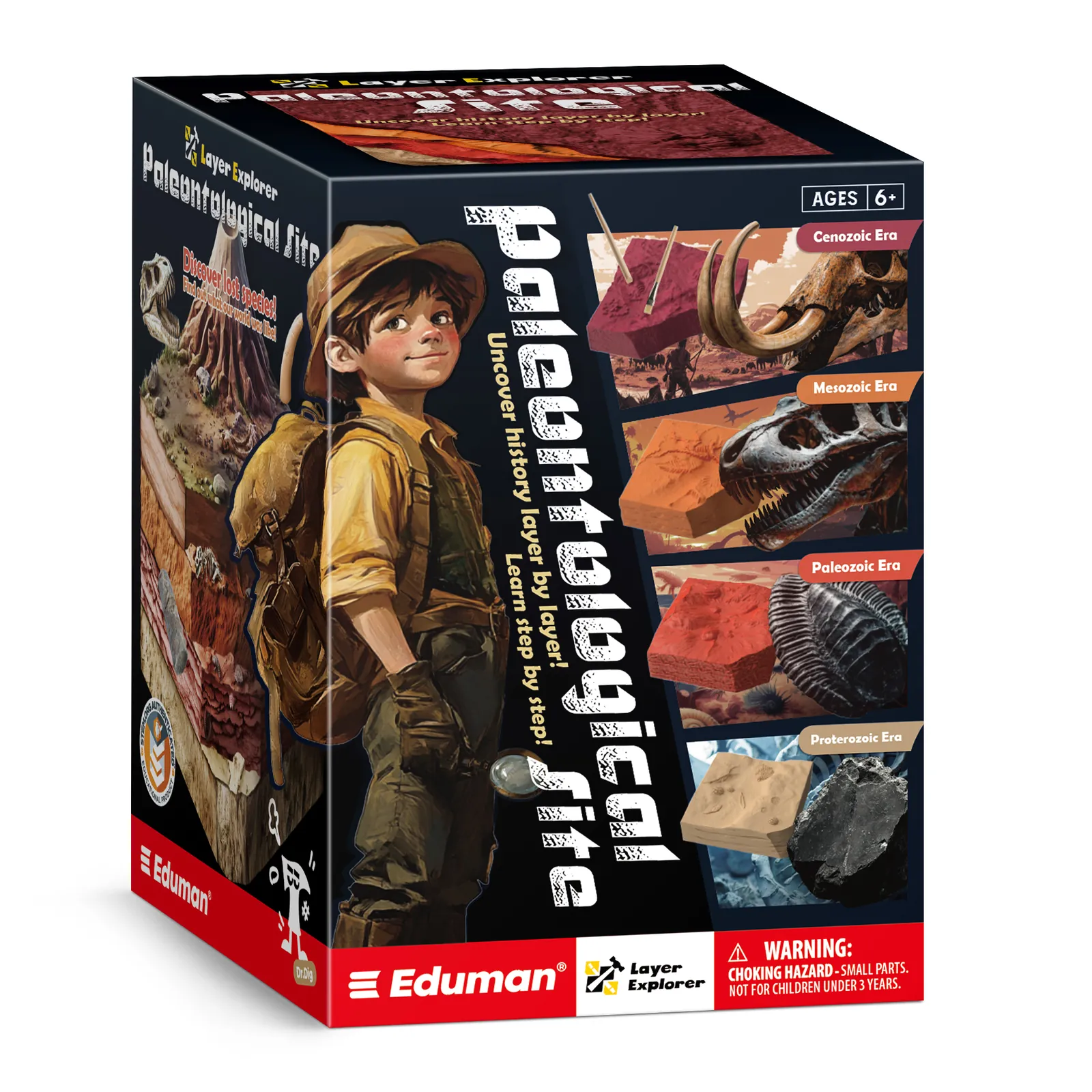

Eduman · Layer Explorer · Ages 6+
Dig down. Keep the layers in order.
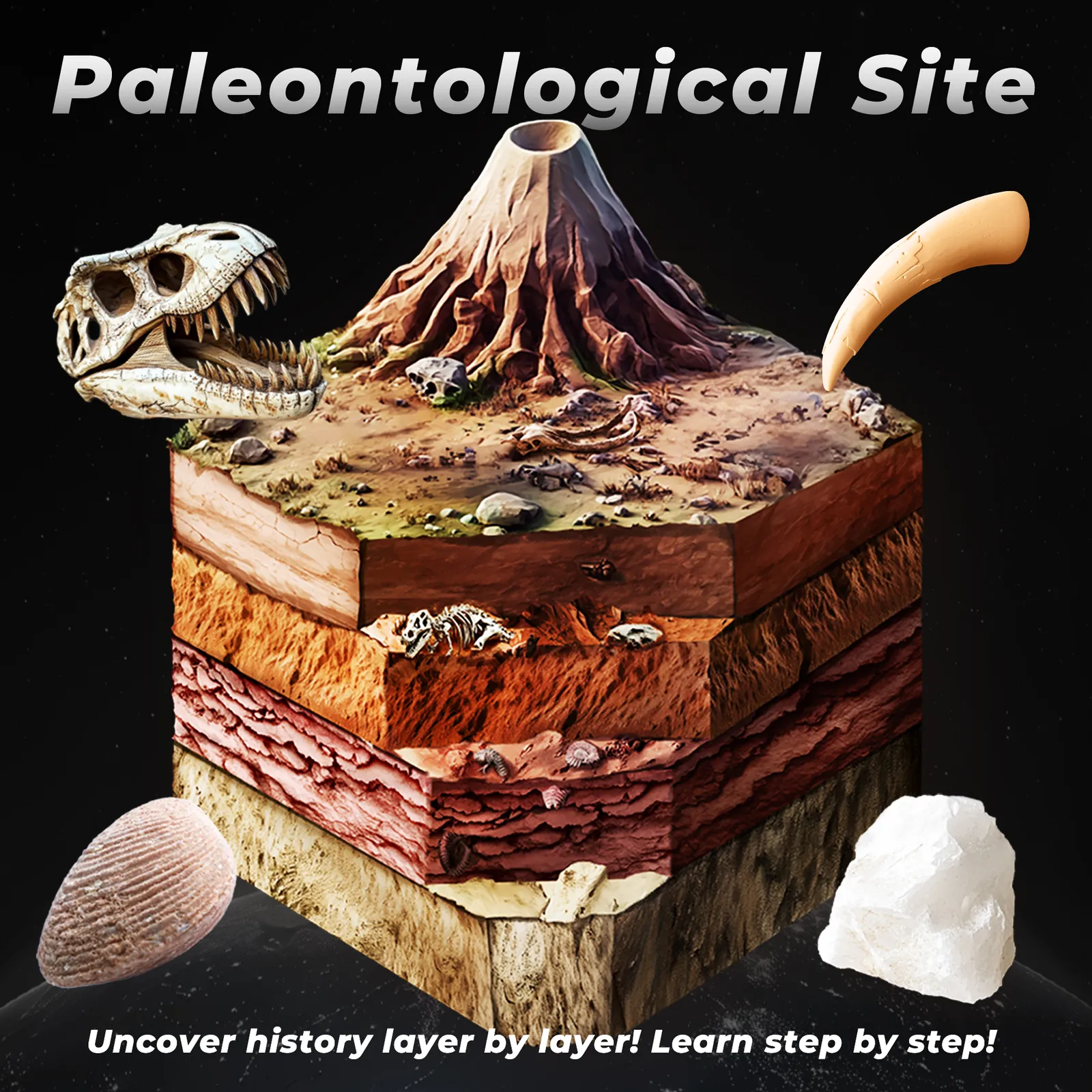
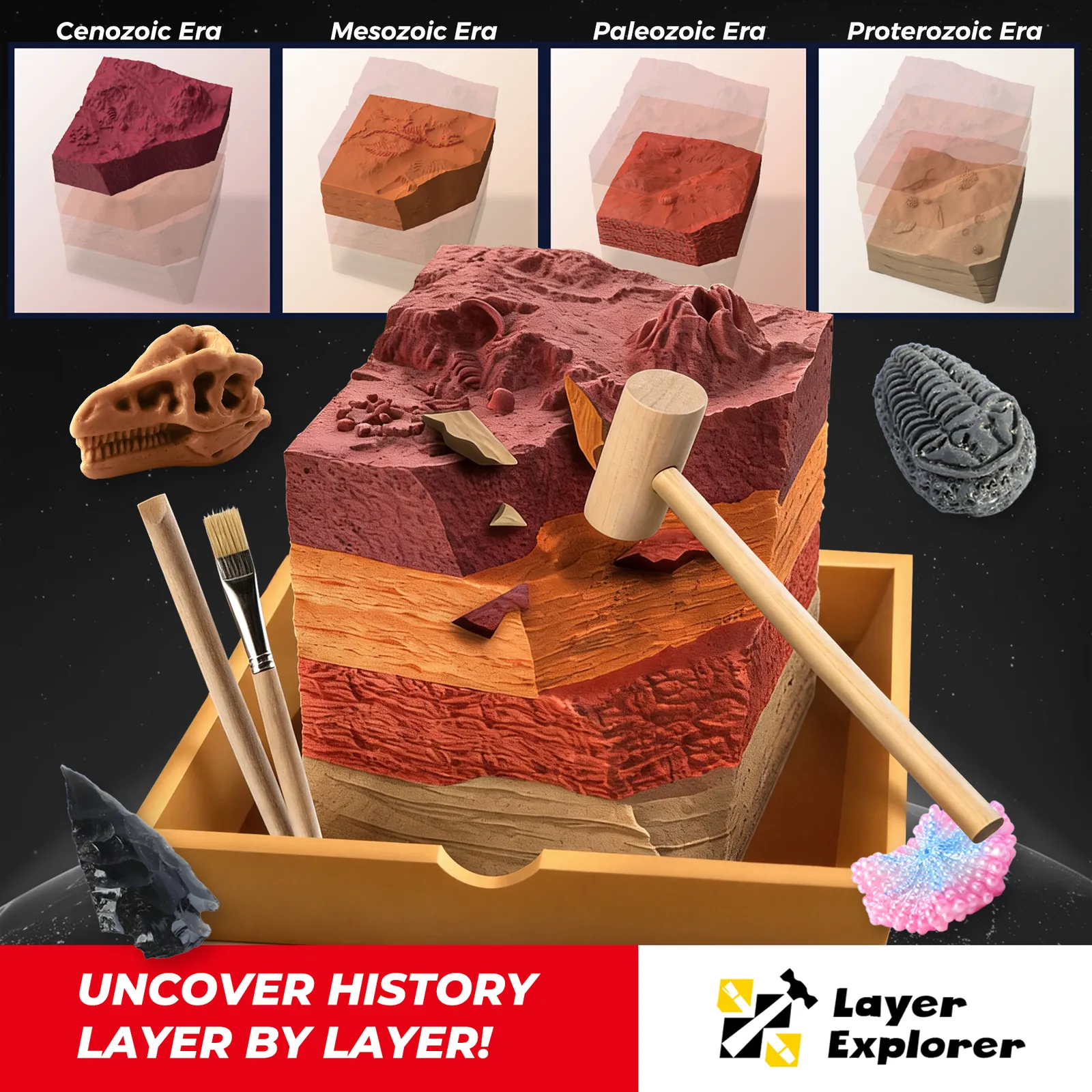
Start at the top of one four-layer block. Chip through each colored band, uncover the buried pieces, and keep track of where you found them.
The Paleontological Site kit brings together skull and tooth models, rocks and fossil-themed finds, three digging tools and an illustrated guide. Work through the layers, then use your finds to retrace the excavation.
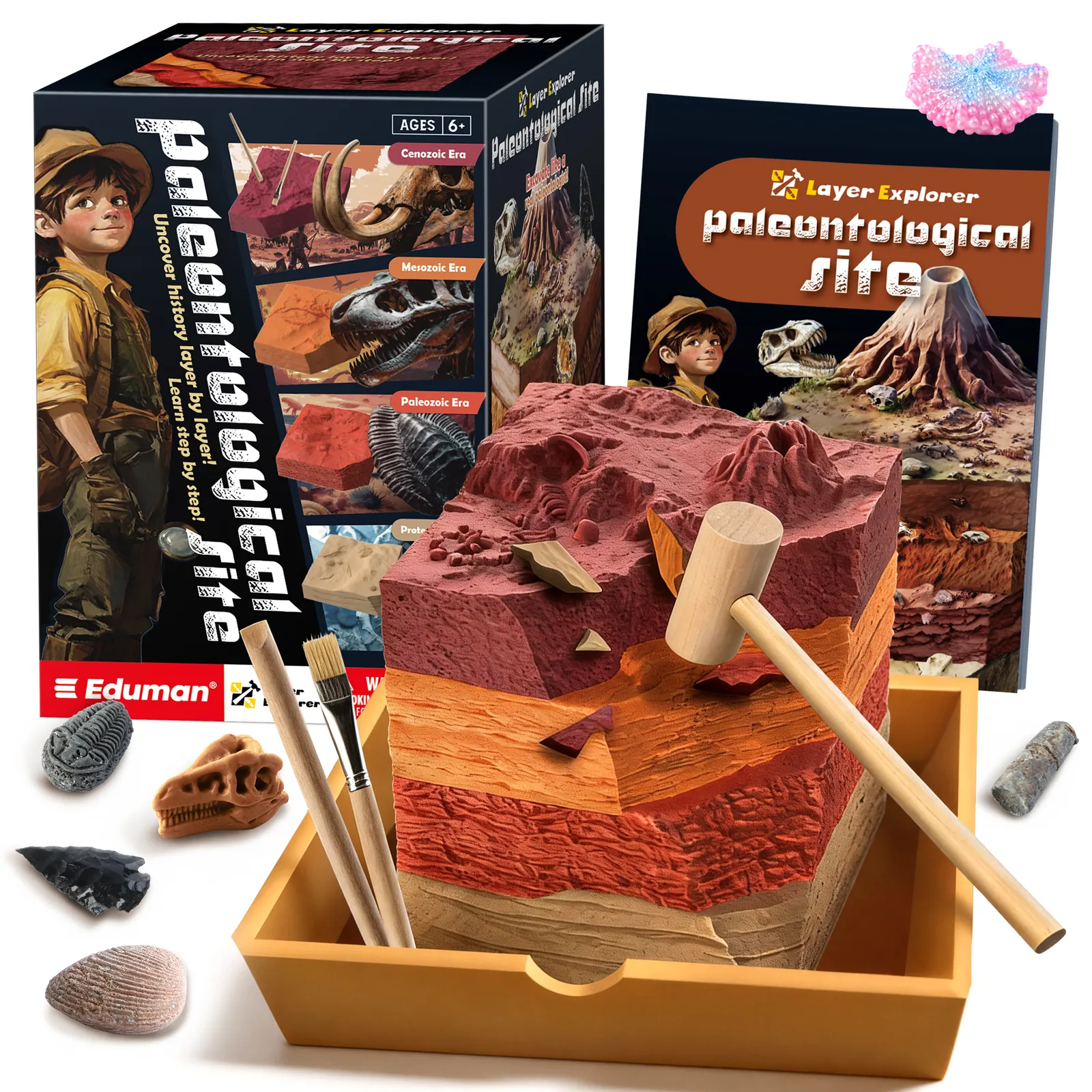
The route through the block
The deeper you dig, the farther back you go.
Cenozoic
Begin with the dark reddish top layer. Set its discoveries in their own group before moving down.
Mesozoic
The orange band comes next. Keep these finds beside the first group, with the layer name attached.
Paleozoic
Continue into the red band. Check each new piece against the guide before choosing a name.
Proterozoic
Finish with the tan base layer. Lay out all four groups in the same top-to-bottom order as the block.
This is a simplified model of layered ground. The bands are not drawn to a time scale. Cenozoic, Mesozoic and Paleozoic are eras; Proterozoic is an eon.[1]
From skull shapes to stone surfaces
Look at what you found—and where it was buried.
Skulls and a saber-shaped tooth
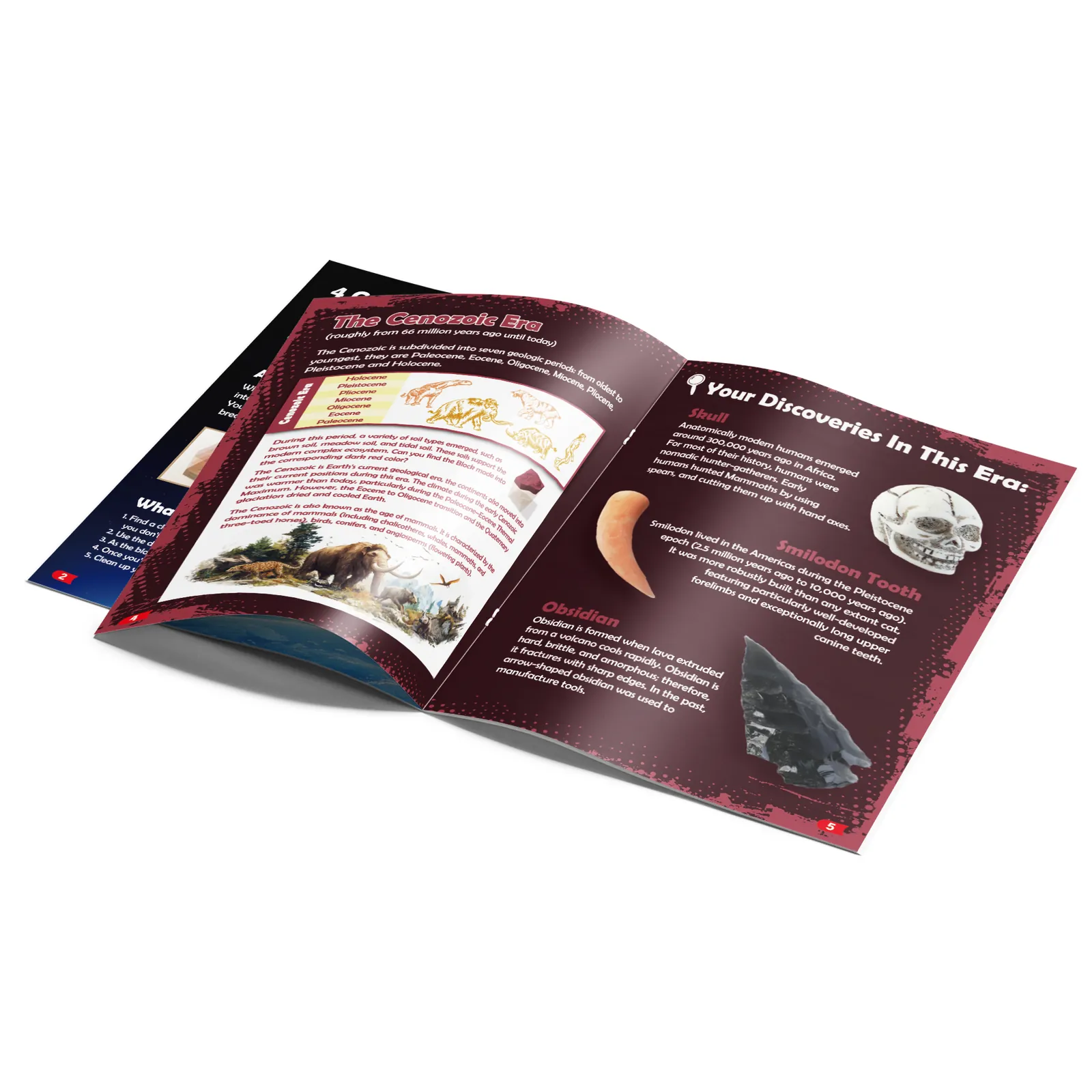
Look for a skull, a Tyrannosaurus skull and a Smilodon tooth model. Compare the openings in the skulls, then trace the tooth’s long curve with your eyes.
Rocks and prehistoric-life finds
Other named discoveries include obsidian, fossilized wood, dinosaur poop, clam, crinoids, dolomite, limestone and seaweed-themed pieces. Use the guide to match names with shapes and surface details.
The kit mixes model pieces with rock and fossil-themed finds. It is not an all-natural fossil collection, and the skull and tooth models are not excavated animal remains.
A small field record
Write down the layer before you forget it.
On your own sheet of paper, make four labeled spaces: Cenozoic, Mesozoic, Paleozoic and Proterozoic. Place each discovery in its space as soon as it comes out. Paper and a pencil are additions from home.
After the dig, cover the layer names and try to put the four groups back in order. Your notes let you check the answer without guessing.
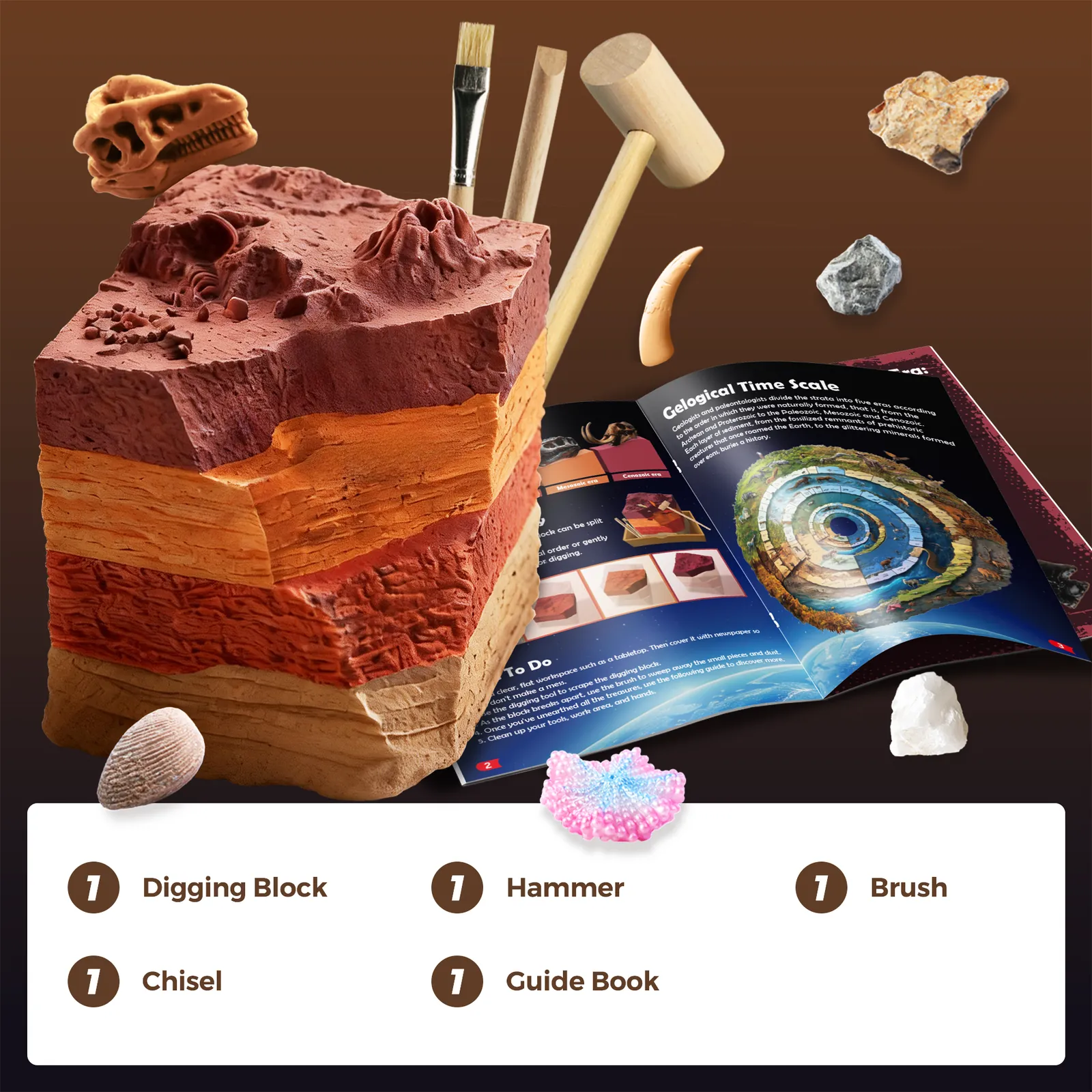
One work site
The tools and guide are included.
Four-layer block
A single excavation with four colored bands.
Hammer + 1 chisel
Remove small amounts of material as you work down.
Brush
Clear loose debris around each exposed piece.
Guidebook
Compare the discoveries and read about the time divisions.
Leave enough room beside the block for four groups of discoveries. A wide tray or a covered table helps keep the debris separate from the pieces you want to keep.
Work through one band at a time
Pause when the color changes.
Read, then begin
Check the guide before starting. Keep the block on a stable, covered surface and work from the top with small scrapes and light taps.
Free each piece
As an edge appears, brush away loose material and clear around it. Avoid striking the exposed find or pulling it out before it is free.
Record before going deeper
Put the discovery in its labeled group. At the next color band, check that the previous group is complete and your notes are up to date.
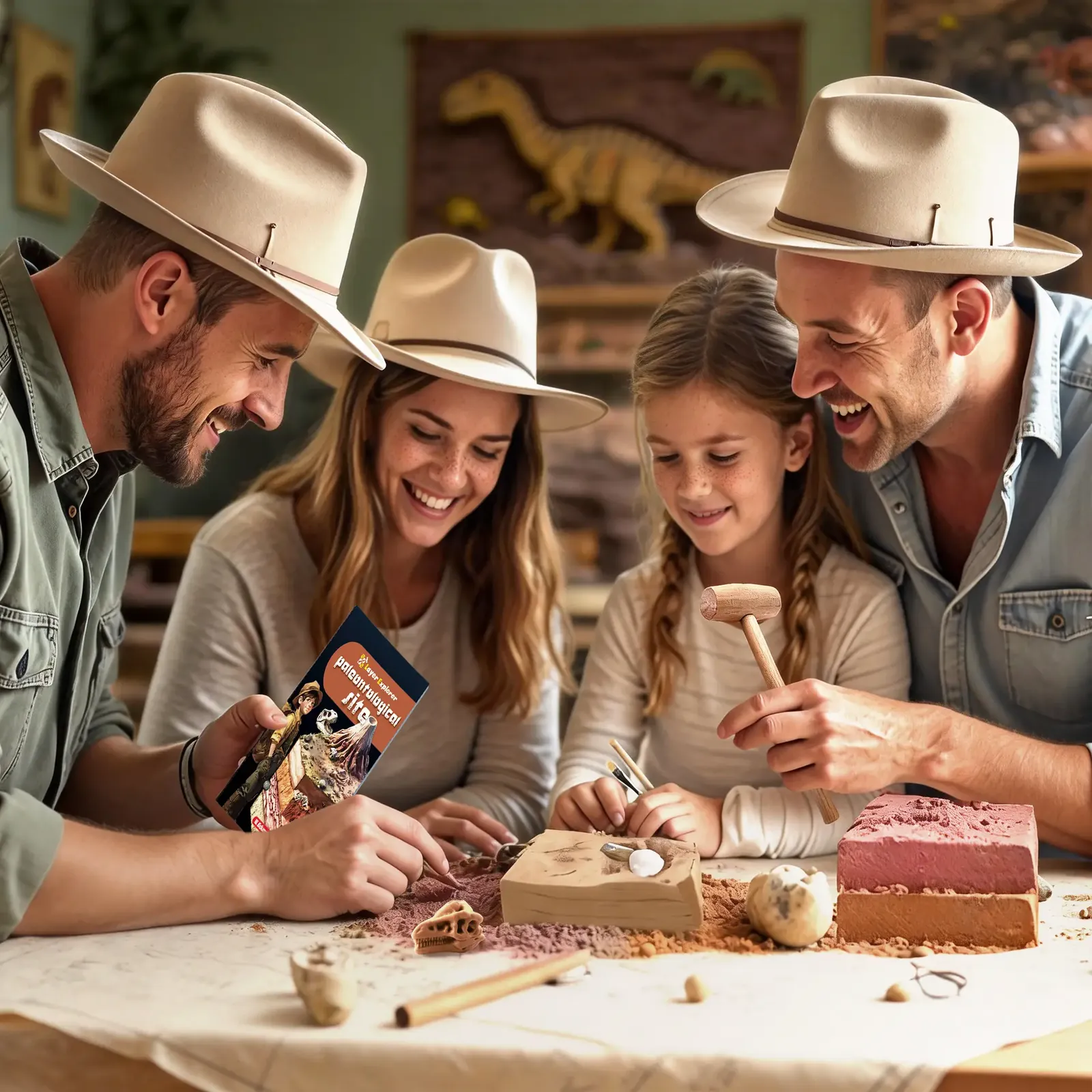
Sharing the dig? One child can excavate while another reads the guide and records finds, then swap roles at the next layer. There is one block and one tool set.
Product information
Size, age and packing.
Before and after the dig
Keep the discoveries. Clear the debris.
WARNING: CHOKING HAZARD — Small parts. Not for children under 3 years. The activity is recommended for ages 6 and up.
An adult should supervise tool use. Keep loose digging material away from eyes and mouths. Collect all the finds before clearing the work surface, and wash hands afterward.
For a break between layers, keep the remaining block in a dry place with the tools and guide. Store the small discoveries out of reach of younger children and pets.
The block breaks down during excavation. Keep the finished collection and your layer notes; the used digging material cannot be reset for another dig.
Questions about this dig
Four layers, one excavation.
Is this four separate digging kits?
No. It is one block with four stacked layers, plus one hammer, one chisel, one brush and one guidebook.
Are all the finds genuine fossils?
No. Skull and tooth models are part of the set, alongside rocks and fossil-themed pieces. Choose this kit for the layered excavation and identification activity, rather than an all-natural fossil collection.
Does it build a complete dinosaur skeleton?
No. The discoveries include separate skull and tooth models. This kit focuses on digging through layers and comparing finds, not assembling a full skeleton.
Can we spread the dig over several days?
Yes. Stop at a layer boundary, label the finds already uncovered and keep the remaining block dry. Start the next session by checking your notes and the guide.
Choose by what comes out
Another layer of discovery.
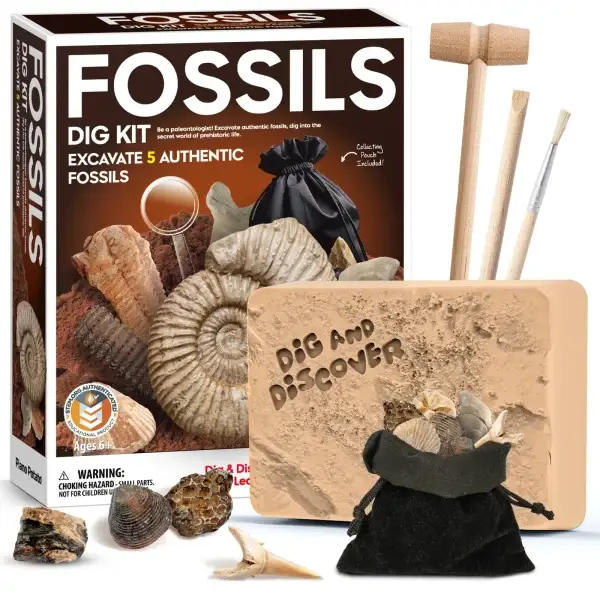
Five-Fossil Dig Kit
Choose five real fossil specimens, with a magnifier and collecting pouch for examining and keeping them.
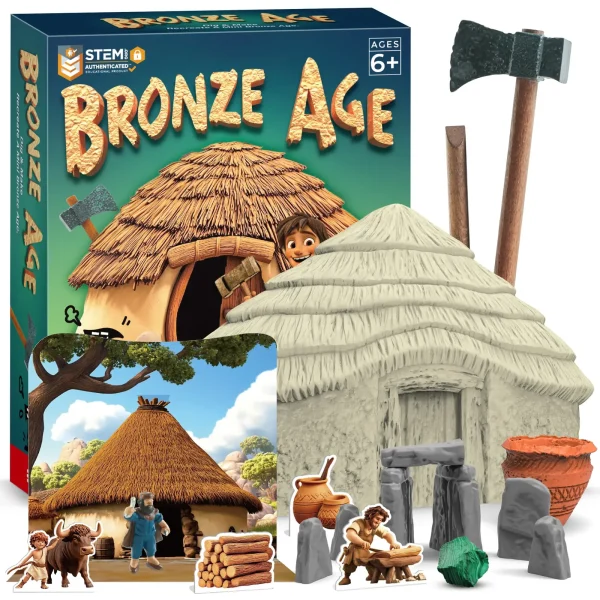
Bronze Age Archaeology Kit
Move into human history: uncover malachite, pottery and Stonehenge components, then make a scene with the included clay.
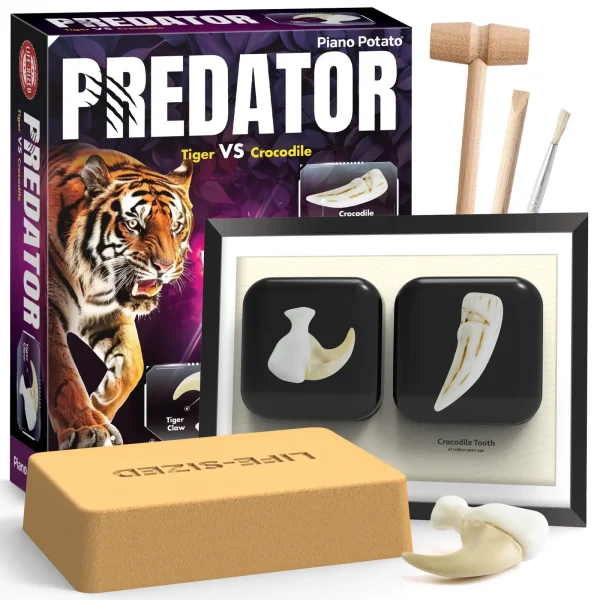
Predator Fossil Dig Kit
Uncover a tiger claw and crocodile tooth, then mount the two finds in the included display frame.
Reading for parents
Choose the next kind of hands-on project.
Start at the surface. See what changes below.
Set out the guide, leave space for your finds and open the first layer.