
- Say what the child does.
- State the intended age and real difficulty.
- Connect 2–3 learning points to actions in the toy.
- Give exact numbers for pieces, activities, players, size, setup, and extra supplies.
- State one clear difference from similar toys.
- Show repeat use instead of saying “hours of fun.”
- Include limits, safety information, and adult-help requirements.
Compare these two approaches. “An innovative STEM toy that inspires creativity” sounds polished but tells the buyer almost nothing. “40 challenges, 72 building pieces, ages 6+, no app required, 2-player use, and 10–15 minutes per challenge” gives the buyer information they can actually use.
Learning claims also need restraint. The American Academy of Pediatrics notes that many developmental claims used to market toys are not supported by scientific evidence.[1]
Build the Fact Sheet
Before anyone writes the first line of copy, get the product facts in one place. This avoids a common B2B problem: the copywriter is asked to “make it sound better” while basic product details are still missing or inconsistent.
Collect:
- official product name
- intended or recommended age
- main activity
- piece count
- piece types
- materials
- piece dimensions
- finished product dimensions
- number of players
- setup steps
- battery or charging requirements
- app, device, account, or internet requirements
- adult help or supervision
- official warnings
- cleaning instructions
- storage method
- number of projects, experiments, or challenges
- difficulty levels
- reusable parts
- consumable parts
- extra household materials
- refills or replacement parts
- compatible expansion products
- approved testing or certification statements
- approved learning claims
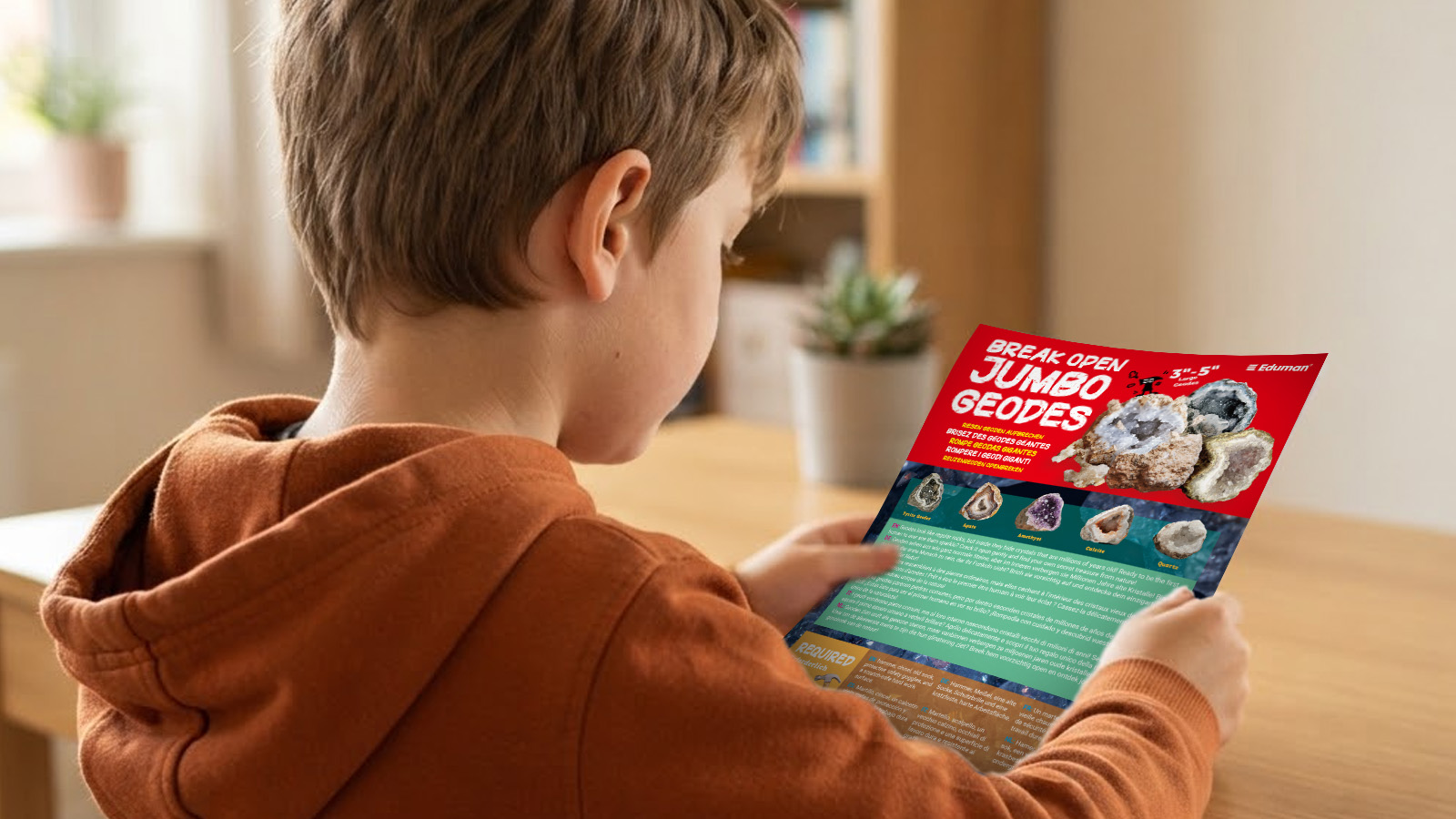
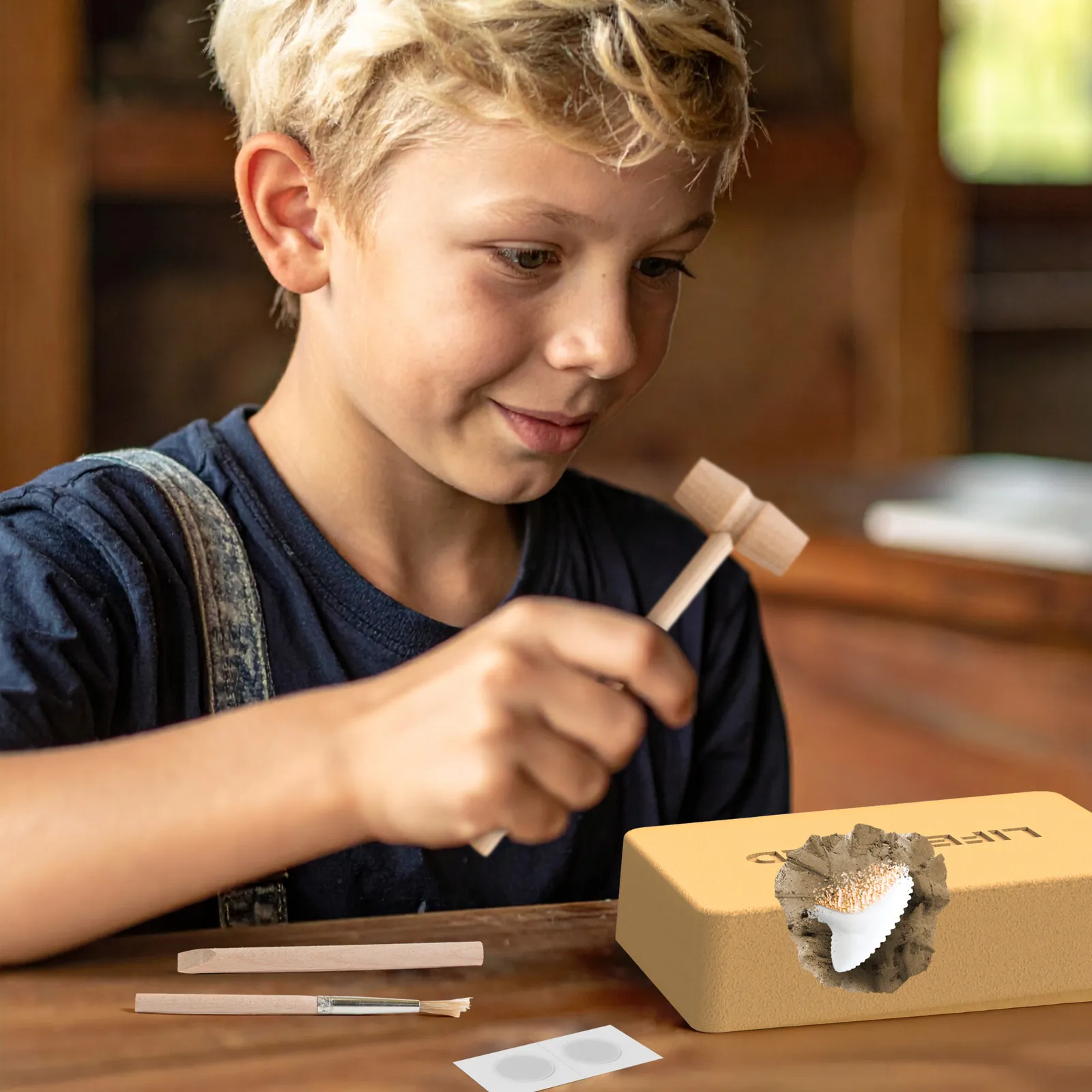
What matters depends on the product. For a dinosaur egg excavation kit, buyers may care about the number of hidden items, digging tools, block size, preparation, cleanup, age, and whether water is needed.
A building set is different. Saying “52 pieces” is not enough if the buyer still cannot tell what those pieces are. A breakdown such as 24 squares, 16 triangles, 8 special pieces, and 4 wheel bases is much more useful.
Leave one final line on the fact sheet:
Main product difference: ____________________
If the team cannot fill that line with a real product fact, the copywriter should not invent one.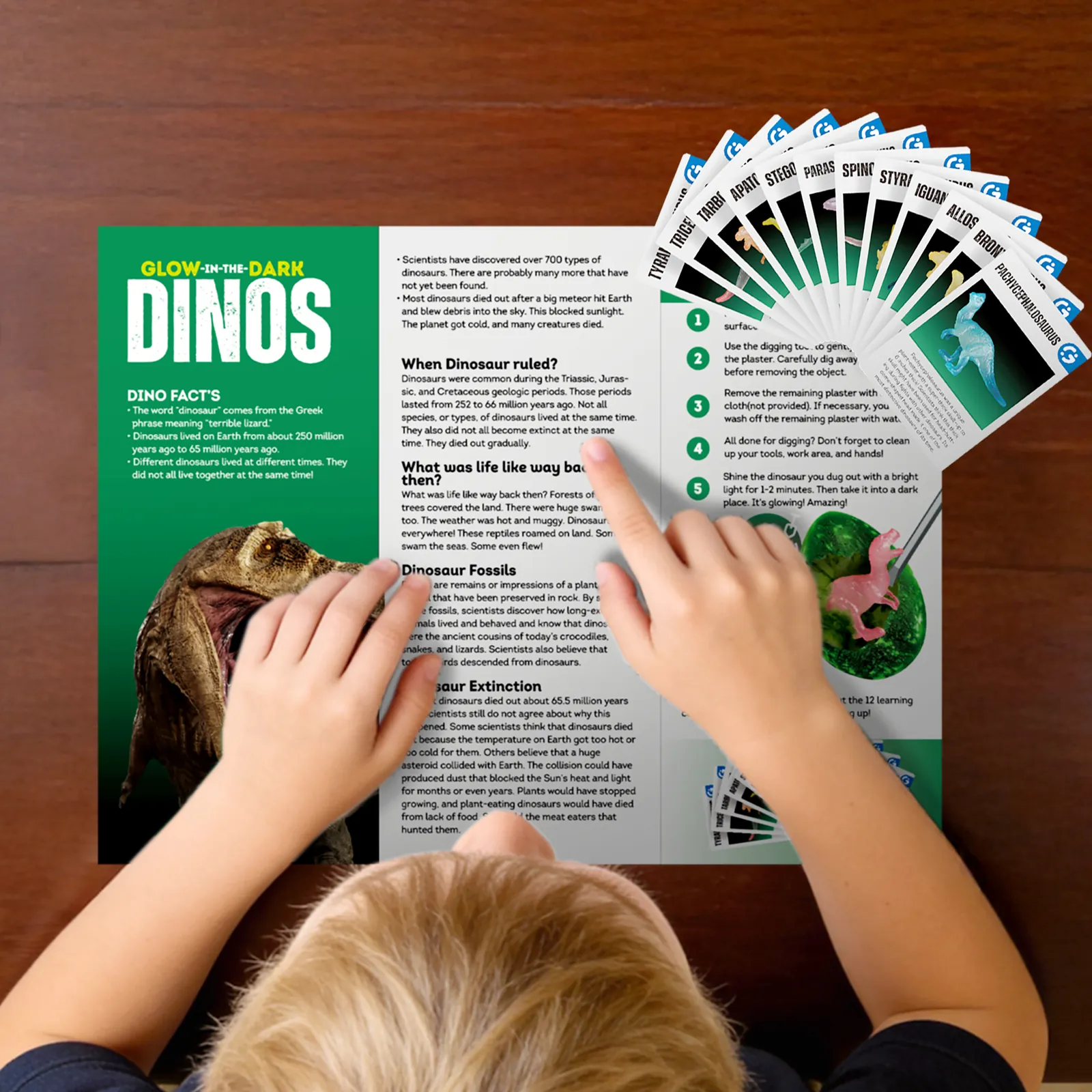
Pull Real Buyer Questions
Some of the best product-page improvements come from questions the company is already receiving. Instead of guessing what parents care about, check the places where buyers are already telling you.
Use:
- customer service messages
- return reasons
- customer reviews
- retailer Q&A pages
- competitor reviews
- teacher feedback
- play-test notes
- post-purchase surveys
Pay attention to repeated questions around:
- age
- difficulty
- size
- setup
- adult help
- missing supplies
- app compatibility
- cleanup
- durability
- repeat use
- number of players
If buyers keep saying “I did not know it needed an app,” the issue is not the customer. The app requirement is buried too deep.
If people say “it was smaller than expected,” add real measurements where they are easy to see.
If buyers say “my child finished everything in one afternoon,” the product page should show how many activities are included and what can still be used afterward.
Customer wording can also improve clarity. “The puzzles get harder” is easier to understand than “multi-stage cognitive progression system.” The same principle applies to broader STEM toy messaging: use the words buyers understand, not internal marketing language.
Pick the Main Buyer
The same toy can be bought by a parent, teacher, grandparent, homeschool family, or gift buyer. The page cannot give every audience equal weight, so choose the main buyer first.
For parents, the priority is usually:
- age fit
- safety
- repeat use
- adult help
- cleanup
- storage
Gift buyers may be looking for:
- age
- what is included
- whether batteries are required
- whether extra materials are needed
- whether the child can start quickly
Teachers are more likely to care about:
- number of users
- activity length
- reset time
- durability
- storage
- reusable materials
Write the opening for one main buyer. The rest of the page can still answer secondary questions without trying to speak to parents, teachers, grandparents, schools, homeschoolers, and gift buyers all at once.
Write the First 3 Sentences
The opening does not need a brand story. It needs to make the product understandable quickly.
Use the first 3 sentences to cover:
- what the toy is
- what the child does
- age or difficulty
Weak:
“Designed to inspire young minds and unlock unlimited potential.”
Better:
“Build towers, bridges, animals, and vehicles with 64 magnetic building pieces. Children can copy 20 illustrated models or create their own structures. Designed for ages 6+.”
That gives the buyer the product type, activity, amount of guided content, and intended age without making them read three more paragraphs.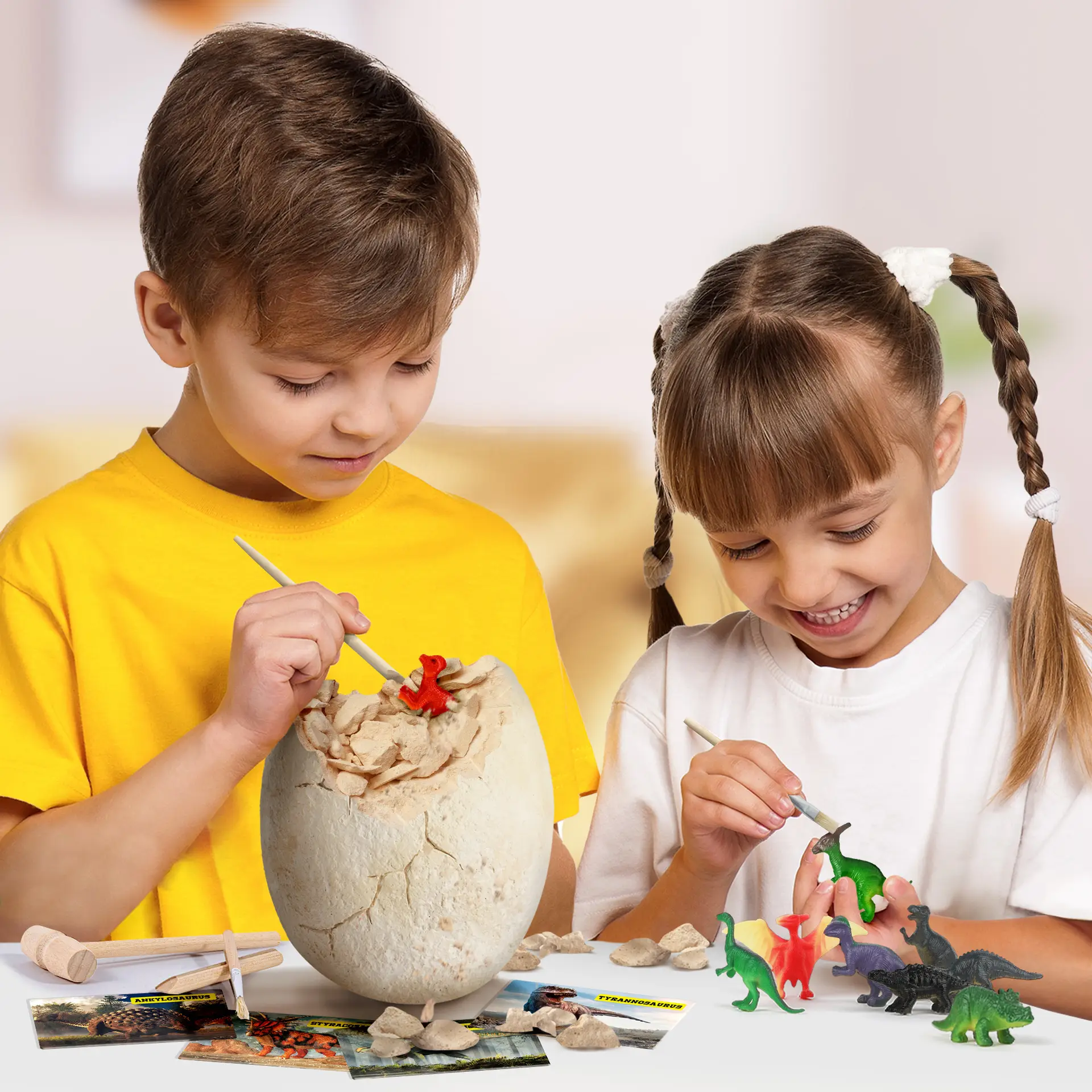
Tie Learning to Actions
The easiest way to keep learning claims grounded is to start with what the child physically does.
Child action → skill used → accurate claim
Take a threading toy. A child threads 12 beads in a red-blue-red-blue sequence.
- Action: pick up, position, and thread the beads.
- Skill: hand control, color matching, pattern recognition.
- Copy: “Children practice threading, color matching, and simple pattern building.”
Now take a challenge game. The child chooses a card and moves pieces until the path works.
- Action: place, test, change, and retry.
- Skill: planning and trial-and-error problem-solving.
- Copy: “Children test different arrangements and change their solution when the first one does not work.”
For most products, 2–3 strong learning points are enough. A list of 8 or 10 benefits usually makes the copy weaker because the link between the toy and the claim becomes harder to see.
Match Claims to Evidence
Objective advertising claims should have a reasonable basis before publication.[2]
Product facts:
- “Contains 48 pieces.”
- “Includes 20 cards.”
- “Requires three AA batteries.”
These should match the approved specification.
Play facts:
- “Children sort pieces by color.”
- “Players compare quantities.”
- “Children test different gear arrangements.”
These should match the real activity.
Result claims:
- “Improves mathematical ability.”
- “Increases concentration.”
- “Improves school performance.”
These statements promise an outcome, so they need stronger support.
Health or behavioral claims:
- reduces anxiety
- improves ADHD symptoms
- treats sensory problems
- changes a diagnosed developmental condition
FTC guidance applies a particularly high evidence standard to health-related claims.[3]
A parent review can tell you what happened in one family. It cannot prove a health, academic, or behavioral result for everyone else.
Separate Age From Difficulty
An age label and a difficulty level answer different questions.
Instead of stopping at:
“Ages 6+.”
Give the buyer something they can judge:
“Designed for ages 6+. The first 8 activities use picture instructions and 3–5 pieces. Later activities use 10–15 pieces and require several steps.”
Useful difficulty details include:
- whether reading is required
- number of steps
- number of pieces used
- whether an adult must explain the first activity
- whether later activities become harder
- whether the child can reset the activity alone
Do not lower the official age range because a younger child can complete one part of the toy. CPSC age guidance considers product characteristics, children’s abilities, interests, and expected use.[4]
Quantify Repeat Use
“Hours of endless fun” gives no useful measure of value.
Use real numbers instead:
- 40 challenge cards
- 12 experiments
- 20 guided models
- 3 difficulty levels
- 10 reusable project templates
One play session and total repeat use are not the same thing.
A 40-challenge set with an average of 10 minutes per challenge contains about 400 minutes of guided activity, or roughly 6 hours and 40 minutes, before free play is counted.
A 45-minute craft that produces one finished object has a different kind of value from a 10-minute puzzle that can be reset 40 times.
Useful repeat-use facts include:
- number of activities
- time per activity
- different possible outcomes
- difficulty progression
- reusable materials
- open-ended use after guided activities
Building toys often support repeat use because children can build, test, change, and rebuild. Piano Potato’s discussion of building STEM toys covers the same type of repeat-play behavior.
Show the Difficulty Curve
“Grows with your child” only works if the buyer can see what changes.
For example:
- Challenges 1–10: use 3–4 pieces.
- Challenges 11–25: use 5–8 pieces.
- Challenges 26–40: use more pieces and show less of the solution.
A coding toy could be shown like this:
- beginner: 3–5 commands
- intermediate: 6–9 commands
- advanced: 10+ commands with error correction
A building set might use:
- beginner: flat models under 10 pieces
- intermediate: small 3D structures
- advanced: 20+ piece structures
These numbers are examples of how to present progression. Use the actual progression for the product. Do not copy sample numbers into a real listing.
State the Real Difference
Buyers do not need another product described as “unique” or “innovative.” They need to know what is different in practical terms.
That difference might be:
- larger pieces
- more challenge levels
- picture instructions
- less setup
- open-ended use
- divided storage
- reusable experiment tools
- more players
- no app
- no subscription
- no batteries
- replacement parts
- compatibility with another set
Weak:
“Features a unique educational design.”
Better:
“After all 30 guided challenges are completed, the same 56 pieces can still be used for free building.”
When in doubt, use:
Feature → What changes → Why it matters
For example:
“12 pre-measured experiment packs → less measuring before each activity → less setup for the parent.”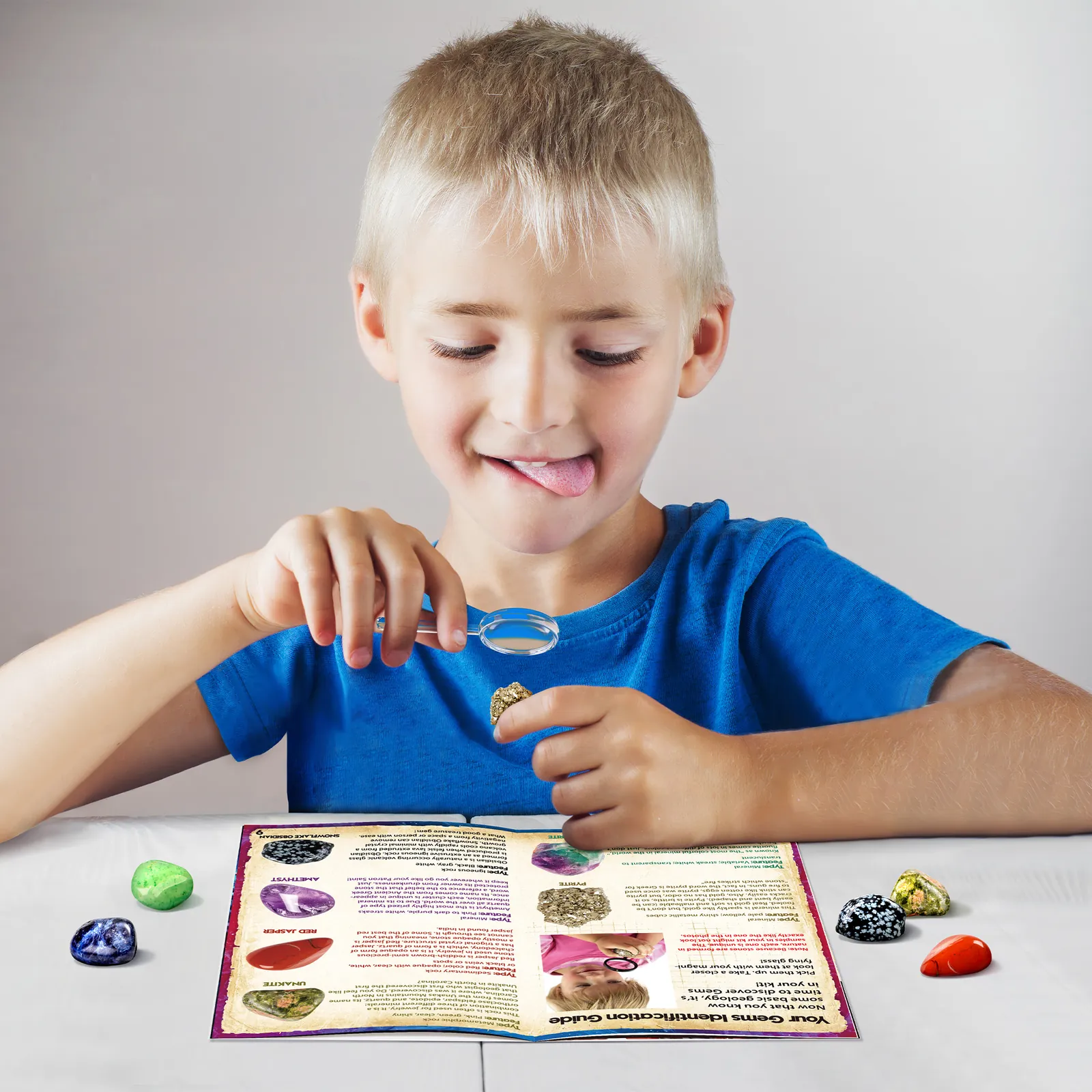
Remove Buying Friction
Most product-page objections are practical, not philosophical. Answer them directly.
Will it be too hard?
State the first activity and later difficulty.
Will it be used once?
State the number of projects, variations, and reusable parts.
Will an adult have to help?
State setup, instruction, and supervision needs.
Will it be messy?
State preparation and cleanup.
Is it smaller than it looks?
Give dimensions.
Are extra items required?
List batteries, apps, water, ingredients, tools, subscriptions, and refills.
Can 2 children use it?
State the real number of players and whether there are enough parts.
A 60-piece construction set may support 2 children, but if one large build uses 40 pieces, both children cannot make large structures at the same time.
Important limits should be written plainly:
- “Designed mainly for one child.”
- “Adult setup required.”
- “2 of 12 experiments need household ingredients.”
- “Refill materials are sold separately.”
List Every Important Box Item
Do not make the buyer work out the contents from photos.
Example:
- 24 square pieces
- 16 triangles
- 8 window pieces
- 4 wheel bases
- 20 challenge cards
- 1 storage case
- 1 instruction guide
For science products, separate what comes in the box from what the family needs to provide.
Included:
- 12 experiment packs
- 4 cups
- 2 droppers
- 1 measuring spoon
- 1 activity guide
You also need:
- water
- paper towels
- any other named household materials
If 8 of 12 activities use only the supplied materials, say so. That means two-thirds of the activities need no extra supplies.
Products in the Dig & Explore category need the same level of clarity around the excavation block, hidden items, tools, preparation, and cleanup.
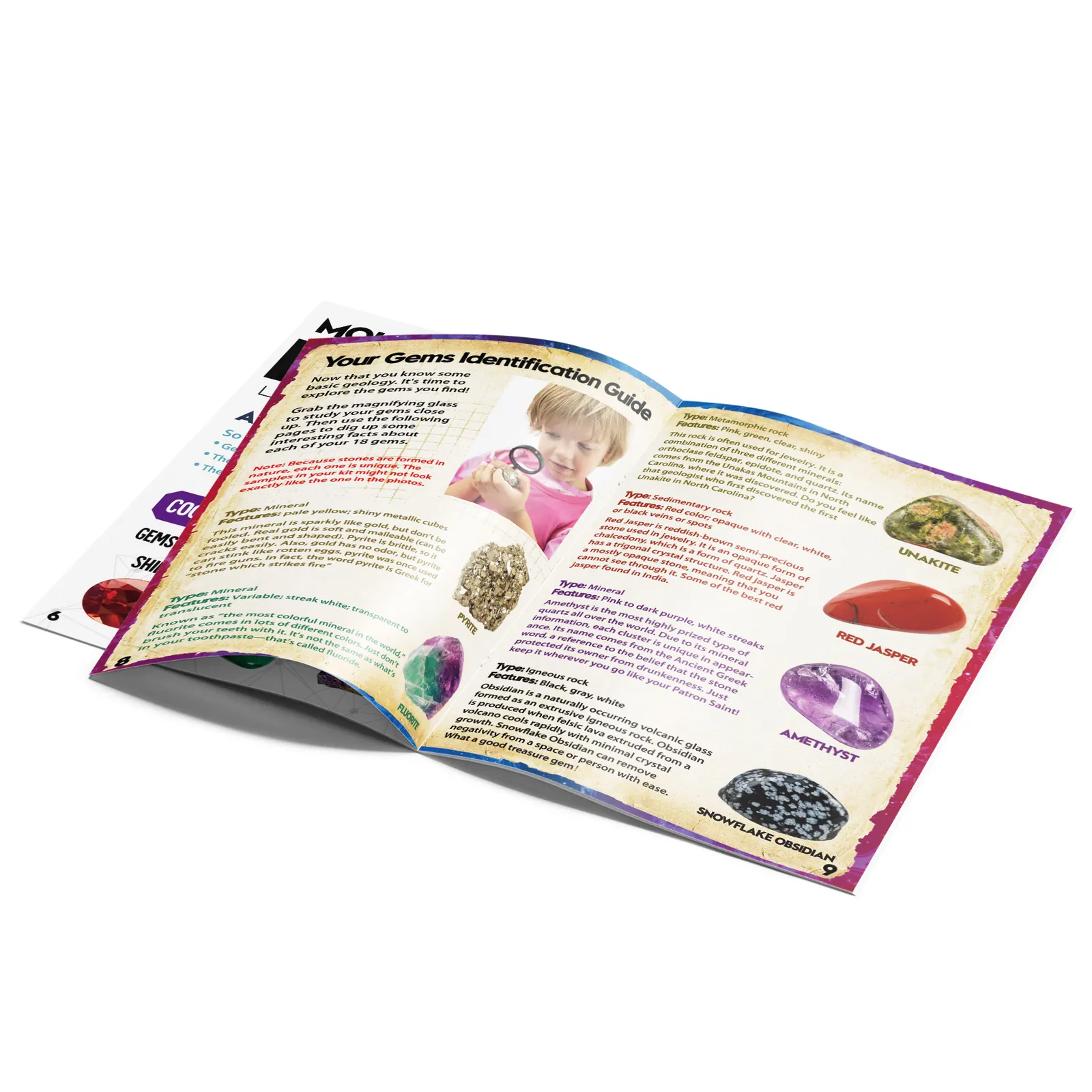
For a gemstone and crystal dig kit, naming the specimens and tools gives the buyer more useful information than calling it a “complete geology kit.”
Give Exact Measurements
“Large,” “compact,” and “huge” are marketing words unless the buyer can see the size.
Replace them with:
- “Each piece measures about 4 × 4 cm.”
- “The storage case measures 30 × 22 × 8 cm.”
- “The completed base measures 38 × 28 cm.”
- “The marble run can reach about 60 cm tall.”
Use only verified measurements for the actual SKU.
State Setup and Adult Help
Anything that happens before play starts belongs in the product description if it affects the buyer’s decision.
This may include:
- assemble parts
- install batteries
- apply stickers
- download an app
- create an account
- add water
- protect the table
- mix materials
- use a screwdriver
If testing shows 5 minutes of setup and 5–10 minutes of cleanup, state those figures.
If timing has not been tested, explain the steps and leave the estimate out.
It also helps to separate different kinds of independence:
- setup
- understanding instructions
- playing
- resetting
- cleaning up
For example:
“An adult may need to explain the first challenge. Children can choose and reset later challenges themselves.”
State How Group Play Works
“Great for social skills” is too broad to be useful.
Say what the group actually does:
“Designed for 2–4 players. One round takes about 15 minutes. Players take turns adding pieces and decide together how to complete the structure.”
Include:
- number of players
- round length
- turn-taking
- cooperative or competitive play
- whether an adult can join
- whether mixed ages can play
- whether there are enough parts for separate projects
Match the Copy to the Toy Type
Different toy categories need different details. The same list of “STEM, creativity, logic, focus, and problem-solving” should not be copied across every product.
Fine motor toys:
“Children hold the lace with one hand and guide 12 beads with the other.”
Math toys:
“Count from 1 to 10, compare 2 groups, continue an AB pattern, and measure the finished structure.”
Science kits:
“Spend about 15 minutes preparing the crystal solution, then observe changes over several days.”
Products in Piano Potato’s Fun & Science category show why this matters. Volcano, crystal-growing, and slime activities may all sit under “science,” but the setup, waiting time, and activity are not the same.
The same approach applies to hands-on STEM learning kits: say what children mix, build, observe, test, or record.
Engineering toys:
“Build a 30 cm bridge, add weight, see where it bends, change the design, and test it again.”
Creative toys:
“Follow 1 of 10 sample designs or choose your own colors and patterns.”
For products in Arts & Crafts, make it clear how much is guided and how much is open-ended.
Language toys:
“Match 26 letter cards with pictures” or “arrange 3 pictures and tell what happened first, next, and last.”
Pretend-play toys:
“Choose from 20 play-food pieces, take an order, use pretend money, and switch roles.”
Sensory toys:
“Scoop, pour, squeeze, sort, and compare 4 textures.”
Do not turn sensory play into a medical or therapeutic claim without suitable evidence.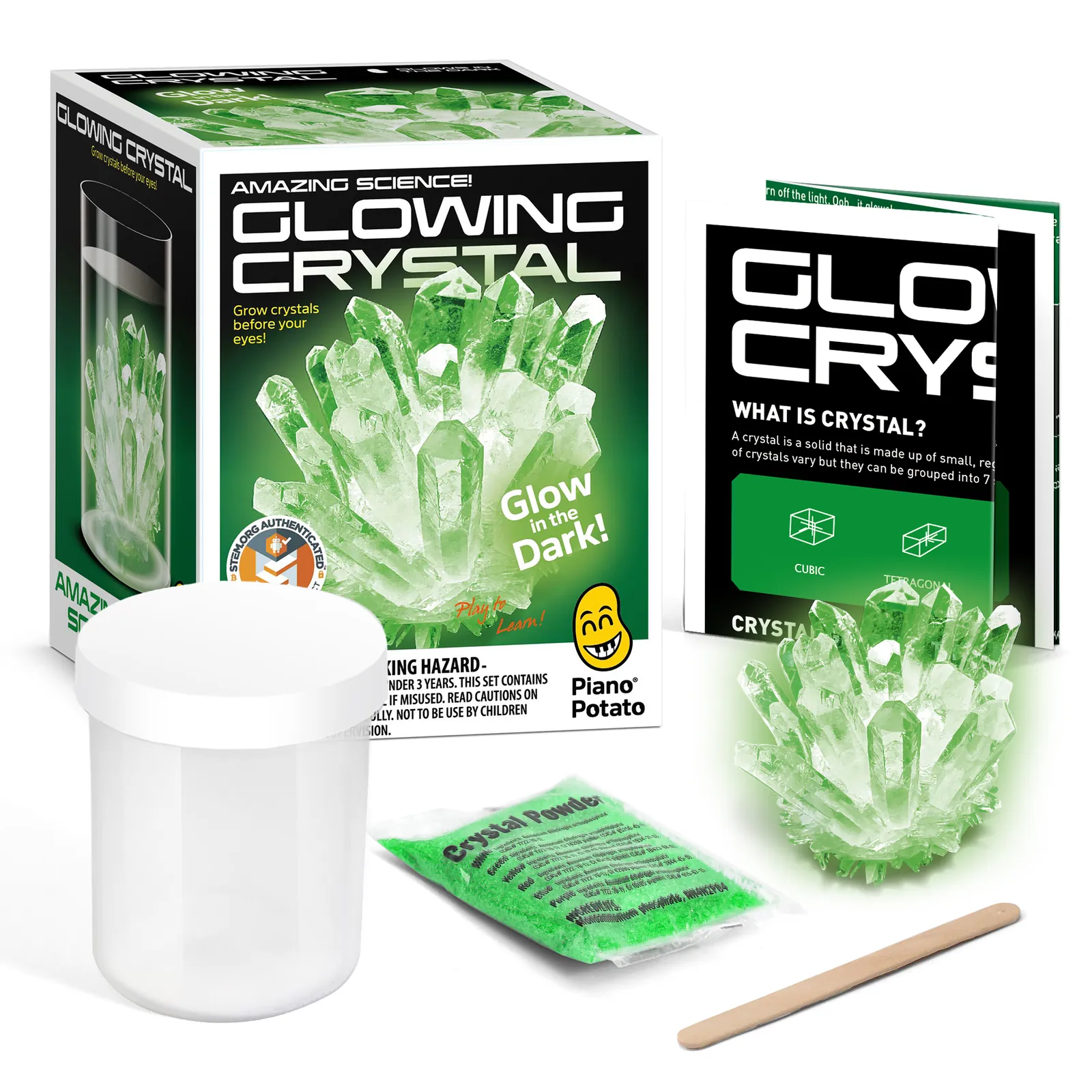
Use STEM and Montessori Precisely
Before calling a product STEM, check three things:
- Which science, technology, engineering, or math idea is present?
- What does the child do with it?
- Can you explain the activity without using the word “STEM”?
Weak:
“The perfect STEM toy.”
Better:
“Children connect 6 gears and test how changing their position changes movement.”
The same rule applies when describing the benefits of STEM toys: explain the activity before the benefit.
Montessori needs the same care. A toy is not Montessori simply because it is wooden, neutral-colored, or screen-free.
If “Montessori-inspired” is accurate, point to the actual feature:
- one focused activity
- hands-on use
- simple-to-harder progression
- independent repetition
- a way for the child to notice and correct an error
Verify Materials and Care
Material claims should read like specifications, not praise.
Instead of:
“Premium materials.”
Use verified details such as:
- solid beech wood
- 3 mm laminated board
- ABS plastic
- cotton fabric
Only use these claims when they are approved:
- BPA-free
- phthalate-free
- FSC-certified
- food-grade
- organic
- recycled
- non-toxic
The same applies to durability.
Instead of:
“Built to last.”
Write:
“The puzzle uses 3 mm board pieces designed to resist bending during repeated handling.”
Cleaning instructions should come from the manufacturer. Do not assume wood can be soaked, fabric can be machine washed, or electronic parts can be cleaned with water.
Use Approved Safety Information
Check whether the product includes any of the following:
- small parts
- magnets
- button or coin batteries
- projectiles
- cords
- tools
- sharp functional points
- powders or liquids
- heat
- adult supervision
For the U.S. market, products intended for children under 3 are subject to specific small-parts rules, and certain products with small parts require choking-hazard warnings.[5]
For U.S. children’s toys intended primarily for children 12 or younger, applicable rules generally require testing by a CPSC-accepted third-party laboratory and certification in a Children’s Product Certificate. ASTM F963 covers toys intended for children under 14, but the applicable sections depend on the product.[6]
Magnets have separate size and strength concerns because loose or separable high-powered magnets can cause serious injury if swallowed.[7]
Button and coin batteries also have accessibility and warning requirements. Applicable toys are handled under the relevant federal toy-standard provisions.[8]
Do not invent:
- age grading
- choking warnings
- testing claims
- certification claims
- chemical claims
- compliance statements
Take them from approved product and compliance records.
Use Reviews as Input, Not Proof
Reviews are useful for spotting product-page problems.
Look for:
- unclear difficulty
- missing measurements
- hidden setup
- common use cases
- customer language
If 10 reviews say younger children needed help, check whether the age and difficulty section is clear enough.
If 8 buyers say the product was smaller than expected, make the dimensions easier to find.
Do not turn those comments into “80% of children need adult help” unless the number comes from a properly designed study.
If reviews are used as testimonials in marketing, FTC review and testimonial rules also apply.[9]
Use Plain Words
The product page should sound like a knowledgeable person explaining the toy, not a textbook.
Replace:
“Facilitates cognitive development through multisensory engagement.”
With:
“Children touch, sort, move, and compare the pieces.”
Replace:
“Promotes spatial cognition.”
With:
“Children work out how shapes turn and fit together.”
Replace:
“Enhances bilateral coordination.”
With:
“Children use both hands while threading or connecting pieces.”
Also remove words that make the product sound impressive without adding information:
- amazing
- incredible
- premium
- unique
- innovative
- ultimate
- perfect
- revolutionary
- magical
- must-have
Ask one simple question:
What fact proves this word?
If there is no answer, use the fact instead.
Match Search Words to Product Facts
Search terms should come from the product itself.
- product: building set, puzzle, science kit, excavation kit
- age: ages 6+, preschool, for 8-year-olds
- activity: building, counting, sorting, experimenting, painting
- play style: screen-free, open-ended, cooperative, independent
- material: wooden, magnetic, fabric
- use: classroom, home activity, travel, group play, gift
Someone searching “STEM toy for 8 year old” may still be comparing age, difficulty, and activity.
Someone searching “72-piece magnetic building set” is more likely to want exact contents, dimensions, compatibility, and differences from similar sets.
Google’s people-first content guidance asks whether content gives readers original information, useful depth, first-hand expertise, and enough information to achieve their goal.[10]
Describe the product accurately. Repeating the same keyword 5, 10, or 20 times does not make the page more useful.
Give Each Bullet One Job
Five bullets should not say the same thing five different ways.
- Play: what the child does
- Learning: the main skill or idea
- Difficulty: who can start and how it gets harder
- Practical use: app, batteries, setup, adult help
- Difference: one reason to choose this product
Example:
- Build and rebuild: Use 56 pieces to make towers, bridges, vehicles, and original designs.
- 30 progressive challenges: Start with flat patterns and move to more complex 3D builds.
- Ages 6+: Picture examples give beginners a clear starting point.
- No app required: No Wi-Fi, screen, or account is needed.
- Use after the cards: All 56 pieces remain available for open-ended building.
Build FAQs From Purchase Questions
FAQ content should cover real purchase questions that are not already answered clearly above.
- Does it need batteries?
- Does it need an app?
- Can a child use it alone?
- How many children can play?
- What is included?
- What else is required?
- How long does one activity take?
- Can the materials be reused?
- Are replacement pieces available?
- How should the toy be cleaned?
For a complex toy, 6–10 useful questions are normally enough. Adding 20 weak FAQ questions only makes the page longer.
Record Product Test Notes
When the content team can test the toy, record what actually happens during use.
- user age
- first-time or repeat use
- setup time
- instruction problems
- where adult help was needed
- first activity chosen
- activity length
- activities repeated
- cleanup time
- parts ignored
- parts that were easy to lose
- finished product size
A test with 5 children may show that 4 needed help opening one connector. That is useful product information. It is not proof that 80% of all children will have the same problem.
Useful test notes look like:
- “Adult help was needed for the first 5 minutes.”
- “Children copied the picture model before changing the design.”
- “A large structure used about 40 of the 60 available pieces.”
- “Cleanup took about 7 minutes.”
Do not claim first-hand product experience if the product was not actually tested.
Use a Complete Product Example
Weak:
“Give your child the ultimate educational experience with this amazing 72-piece magnetic STEM set. It boosts creativity, intelligence, fine motor skills, logic, imagination, problem-solving, and brain development.”
Assume the verified facts are:
- 72 magnetic building pieces
- ages 6+
- 20 illustrated building cards
- beginner and advanced models
- no batteries
- no app
- storage box included
- solo or shared building
- open-ended use after the cards
Better:
“Build towers, bridges, vehicles, animals, and geometric models with 72 magnetic building pieces for ages 6+.
Children can copy 20 illustrated building cards or combine the pieces into their own designs. The early cards use smaller builds, while later cards introduce more complex 3D structures.
Pieces can be connected, removed, and repositioned. If a structure falls, children can change the design and try again while working with shape, balance, and symmetry.
After all 20 guided models are completed, the 72 building pieces remain available for free building.
The set supports solo or shared play. Two children can build together, although larger projects use more of the available pieces.
No batteries, app, Wi-Fi connection, or online account are required.
Included:
- 30 square pieces
- 24 triangle pieces
- 8 window pieces
- 4 wheel bases
- 6 connector pieces
- 20 building cards
- 1 storage box
Recommended age: 6+.
Follow the official product warnings and safety instructions.”
The piece count is correct: 30 + 24 + 8 + 4 + 6 = 72. The 20 cards and storage box are separate from the 72 building pieces.
Use Numbers to Show Value
“Great value” does not tell a buyer what they are paying for.
These examples do:
- A $30 toy used 2 times works out to $15 per play session.
- The same $30 toy used 20 times works out to $1.50 per session.
- A $40 science kit with 10 complete experiments works out to $4 per experiment before reusable tools are counted.
- 40 challenges × 10 minutes gives about 400 minutes of guided activity.
- 8 of 12 experiments using only supplied materials means two-thirds need no extra supplies.
Use these calculations only when the underlying product numbers are real. They show how the product can be evaluated; they do not predict how many times a child will use it.
Run 4 Checks
Proof: Can the number, age, material, safety statement, learning claim, and result be supported?
Competitor: Could the same sentence appear on 100 similar toys? If yes, add specific product detail.
So what? Why should the buyer care about this feature?
“6-section storage tray” becomes useful when the copy explains that each piece type has its own section and missing pieces are easier to notice.
Buyer: Does the sentence answer a question about play, age, learning, difficulty, setup, safety, size, contents, repeat use, storage, or product difference?
If it does not, remove it.
Finally
Before publishing, check 10 things: activity, age, difficulty, 2–3 relevant learning points, exact box contents, dimensions, setup, adult help, repeat use, and safety information. Replace “educational,” “premium,” and “great value” with measurable details such as 40 challenges, 72 pieces, 2–4 players, 10-minute activities, or 8 of 12 experiments requiring no extra supplies. Verify every safety, material, and result claim before publication. If a sentence could describe almost any toy, rewrite it with a product-specific fact. Strong toy copy should reduce uncertainty, not add more marketing language.