
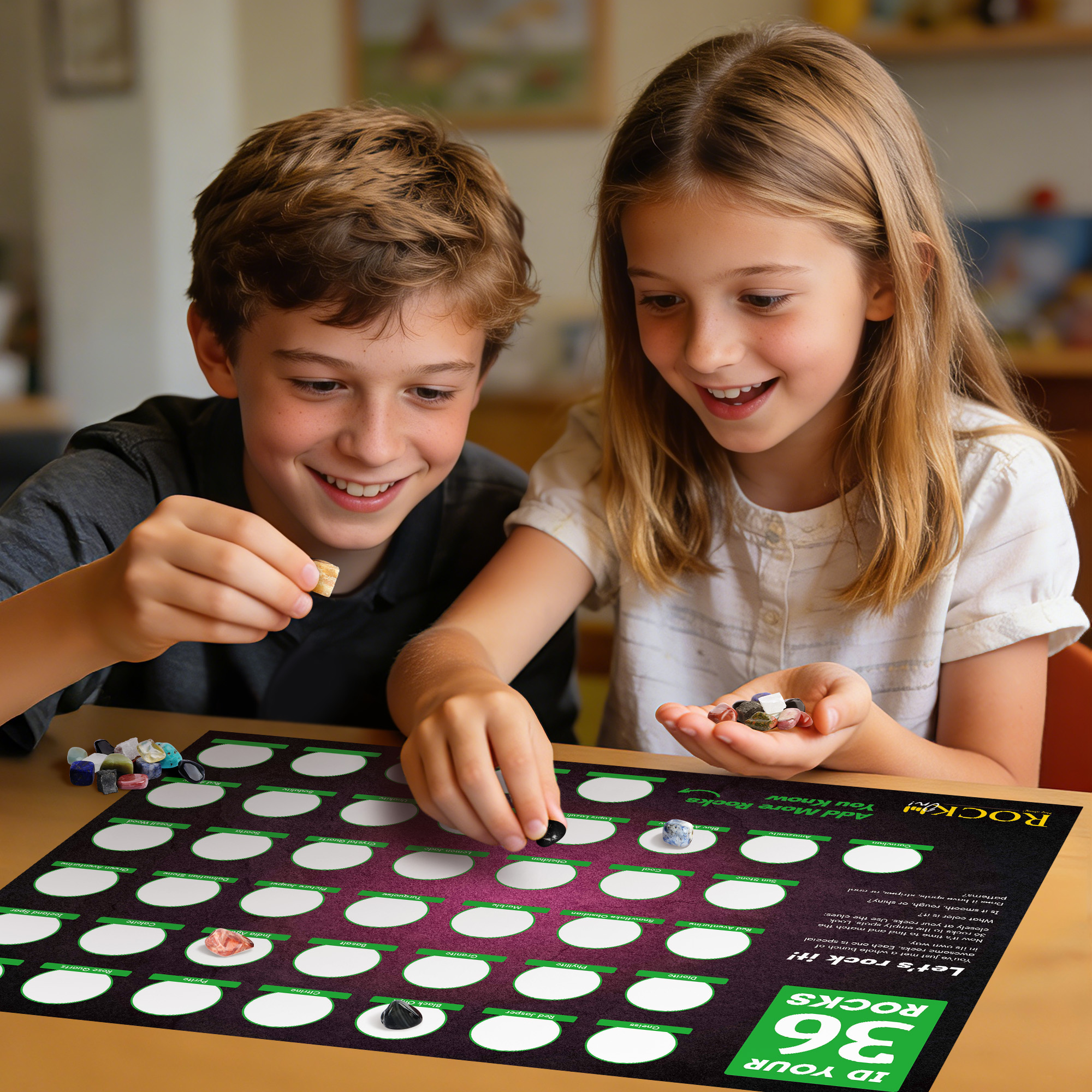
Choose a gift the child already wants to use, can start with limited help and can use in more than one way. Check the age warning, project length, number of parts, adult supervision, repeat-use value and full cost before buying. A toy is not educational simply because its packaging uses words such as “STEM,” “learning” or “brain training.”
Use five filters: real interest, active play, suitable difficulty, repeat use and safety. Reject the toy when the child mainly watches it, an adult must complete most of the activity, or small parts and batteries could reach a younger child.
Use These Five Buying Filters
| Filter | Buy When | Do Not Buy When |
|---|---|---|
| Interest | The child has recently chosen similar subjects or activities. | The gift reflects what the adult wants the child to enjoy. |
| Active play | The child builds, measures, chooses, tests, explains or creates. | The toy performs the activity after one button press. |
| Difficulty | The child can start alone and ask for help only at harder stages. | An adult must read, assemble or solve every step. |
| Repeat use | The parts allow different designs, stories, levels or experiments. | The activity ends after a few minutes and leaves no useful result. |
| Safety | The age warning, parts and materials suit every child in the home. | Magnets, button batteries or small pieces can become accessible. |
Before paying, name three things the child can do with the gift. A one-time kit can still be useful, but it should teach a clear method or produce something worth keeping.
Match the Child, Not Only the Age Number
Children of the same age can have different reading skills, hand control, attention, interests and safety awareness. The American Academy of Pediatrics recommends choosing toys that fit the child’s current abilities while allowing the child to practise new skills.[1]
Ask these questions before comparing products:
- What has the child chosen to do several times during the past month?
- Does the child prefer building, moving, drawing, collecting, pretending or solving?
- Can the child follow pictures, written instructions or both?
- Does the child usually play alone, with siblings or with an adult?
- What blocks, tracks, figures, books or craft systems are already owned?
- Are there children under three in the home?
- Does the child avoid loud sound, flashing light or certain textures?
- Can the family provide the required setup and supervision?
When buying for another family, ask the caregiver about these points directly. Five minutes of checking can prevent a duplicate gift, an unwanted subscription or a toy that cannot be used safely in the home.
Connect the Gift to a Real Interest
| Current Interest | Useful Gift Type | Useful Activity |
|---|---|---|
| Dinosaurs | Figures, fossils or an excavation set | Digging, sorting, identifying and storytelling |
| Vehicles | Track, model or building system | Designing, testing movement and rebuilding |
| Animals | Nature guide, binoculars or drawing tools | Observing, comparing and recording |
| Cooking | Measuring tools and simple recipes | Measuring, sequencing and checking results |
| Music | Simple instrument or rhythm set | Listening, copying patterns and practising |
| Space | Star guide, model or geology set | Observing, comparing scale and recording |
| Art | Paper, paint, clay or craft tools | Planning, making and changing a design |
| Stories | Books, puppets or costumes | Retelling events and creating dialogue |
| Puzzles | Maze, logic puzzle or strategy game | Planning, testing and correcting mistakes |
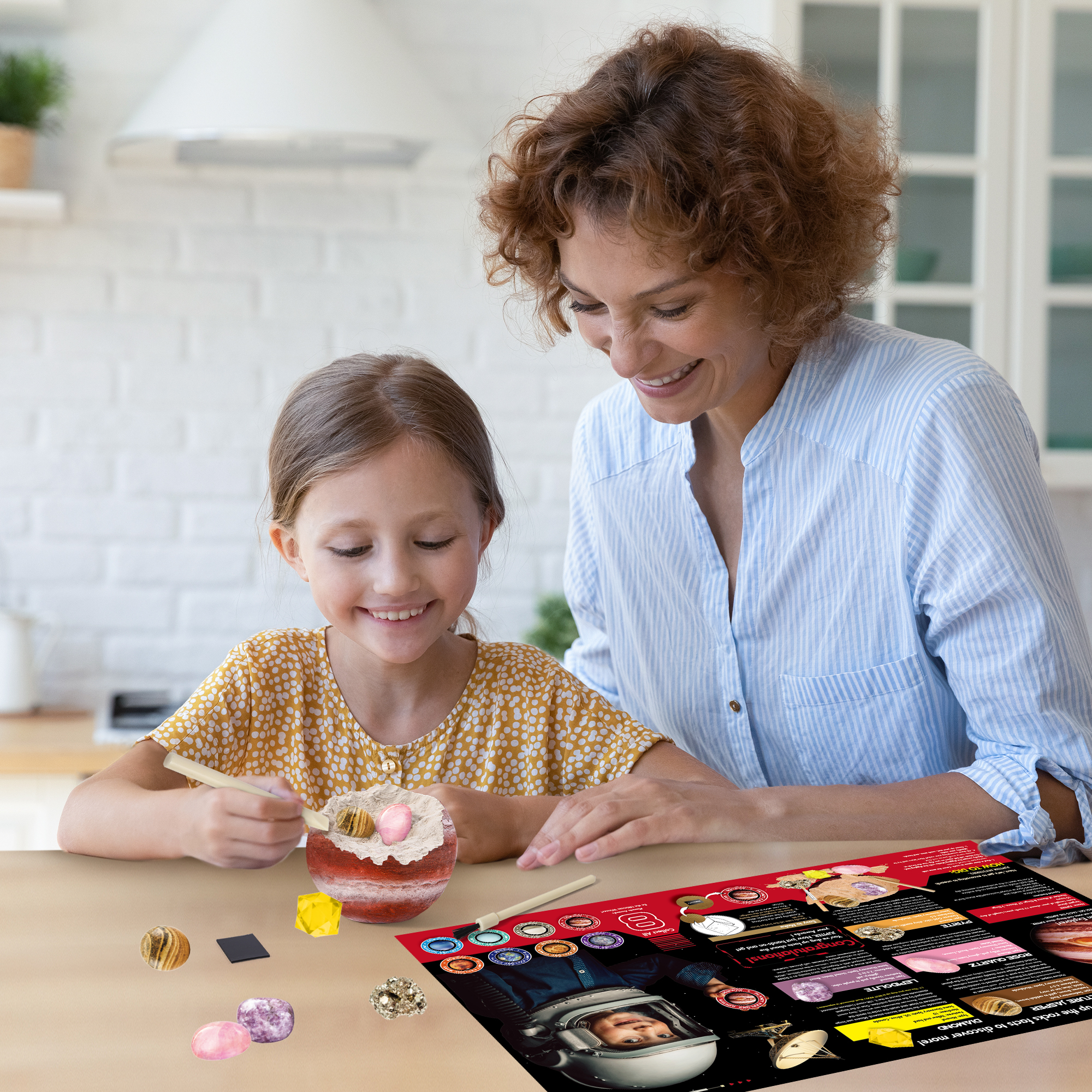
A child interested in fossils may use a dig and explore activity more often than a general science toy. The fossil or gemstone theme attracts the child; the digging, sorting and identification provide the learning.
Reject Toys That Leave the Child Watching
The AAP advises families not to use electronic toys as a replacement for hands-on play and interaction. Simple toys can support language, pretend play, problem-solving, movement and social contact.[2]
| Toy Design | Child’s Role | Buying Decision |
|---|---|---|
| Runs the same routine after one button press | Watches | Low value unless used for a short, specific practice task |
| Asks fixed questions with preset answers | Selects | Suitable for short review, but not open play |
| Can be built and rebuilt | Designs and tests | Strong choice for problem-solving |
| Includes figures and open scenery | Creates stories | Strong choice for language and pretend play |
| Allows one condition to be changed | Predicts and compares | Strong choice for science learning |
| Requires planned moves | Makes decisions | Strong choice for logic and strategy |
| Produces one guided craft | Follows a method | Useful when the finished result is worth keeping |
| Provides reusable materials | Creates original work | Strong choice for repeat use |
Electronic features can add value when they respond to the child’s decisions. A programmable vehicle that follows a route created by the child requires planning. A vehicle that performs the same routine every time does not.
Keep Regular Setup Under Five Minutes
Use the first ten minutes to judge whether the toy will actually be used:
- The child should be able to identify the first step.
- The main activity should begin quickly.
- The result of each action should be visible.
- A mistake should be fixable.
- Adult help should be limited to setup, safety or a difficult stage.
- Required tools and materials should be easy to find.
A longer first assembly is reasonable. Regular play becomes less practical when every session needs 15–30 minutes of adult preparation, charging, material collection or app setup.
Match the Project Time to the Age
These are practical shopping ranges, not medical attention-span rules.
| Age | Useful Length for One Stage | Product Features to Check |
|---|---|---|
| 3–5 years | About 10–20 minutes | Picture steps, quick results and easy restarts |
| 6–8 years | About 20–45 minutes | Visible progress and limited adult help |
| 9–12 years | About 30–60 minutes | Several stages that can be finished separately |
| Teens | About 45–90 minutes | A clear result at the end of each work session |
A model can take several hours in total when it is divided into clear stages. Check whether unfinished work can remain on a tray or board without losing small pieces.
Avoid Toys That Are Too Easy or Too Hard
| Too Easy | Suitable | Too Hard |
|---|---|---|
| The child finishes without making choices. | The child understands the first step. | The instructions exceed the child’s reading level. |
| Only one action is possible. | Some thought or practice is needed. | Adult help is required at every stage. |
| The difficulty never changes. | Mistakes can be corrected. | One mistake ruins the complete project. |
| There is no reason to try again. | Progress is easy to see. | The child cannot see any progress. |
Picture instructions, removable hints, beginner and advanced rules, short project stages and replaceable parts make a toy easier to use over time.
Judge learning difficulty by the child’s real ability. Follow the package age warning when it relates to small parts, magnets, batteries, chemicals, projectiles or tools.
Check What Happens After the First Use
A reusable gift should offer at least three clearly different results, difficulty levels or ways to play.
- What can the child do on the first day?
- What can the child change on the fifth use?
- What can the child still do one month later?
A fixed craft or model can still be valuable when it teaches a method or produces a useful finished object. Avoid one-time kits that provide only a few minutes of activity and leave no reusable tool, skill or finished result.
Use Guided and Open-Ended Toys for Different Jobs
| Type | Examples | Useful For | Limit |
|---|---|---|---|
| Guided | Puzzle, model, craft kit or rule-based game | Following a method and reaching a clear result | May allow only one correct result |
| Open-ended | Blocks, figures, paint, clay or fabric | Creating different designs, uses and stories | Some children need an idea to get started |
NAEYC notes that open-ended materials support creative, sensory and dramatic play because children can use them in different ways.[3]
A practical gift can combine both types. A Christmas ornament craft kit gives the child a clear project while still allowing choices in clay shapes, colors and decoration.
Choose Language Gifts That Require Speaking
- Picture books: name objects, predict events and retell the story.
- Puppets and figures: create dialogue and solve story problems.
- Story cards: arrange events in order and explain cause and effect.
- Word games: use vocabulary to reach a goal.
- Journals and comic materials: turn ideas into written sequences.
Listening to a recorded word is passive. Explaining a game rule, describing a picture or inventing a character requires the child to choose and organize language.
For ages 3–5, use picture-led activities. For ages 6–8, look for instructions showing one or two actions per picture. Older children can follow longer text, but complex work should still be divided into short stages.
Choose Math Gifts That Use Numbers for a Purpose
Useful math activities include:
- Sorting and grouping objects
- Measuring length, volume or time
- Estimating before checking
- Comparing size, distance or quantity
- Recognizing patterns
- Planning several steps
- Understanding direction and position
- Testing balance
- Calculating scores or limited resources
Moving three spaces, dividing eight pieces, measuring a tower or comparing two routes gives numbers a practical use. A toy that only reads numbers aloud provides less participation.
Choose Science Kits With Reusable Tools
A useful science kit should let the child predict, observe, compare and repeat.
Parents can compare hands-on science kits with earth and space activities. Reaction and crystal kits focus on visible changes; geology and fossil kits focus on observation, identification and classification.
Look for:
- At least 2–3 reusable tools, such as a dropper, measuring cup, container or magnifier
- At least three activities or conditions that can be repeated or compared
- A result the child can see or measure
- A question or prediction before starting
- Space to record observations
- Replacement materials that are easy to buy
- Instructions that match the child’s reading level
Use the same five steps for each activity:
- Predict the result.
- Change one factor.
- Observe what happens.
- Compare the result with the prediction.
- Repeat the test.
A gemstone digging and crystal-growing set combines a short excavation task with longer observation. The child can identify seven specimens, measure materials and record crystal changes.
Some crystal projects need about 7–10 days. Follow the exact product instructions because water measurement and room temperature can affect the result. Record one observation at the same time each day instead of repeatedly moving the container.
Check the actual box contents before buying. A kit may advertise 20 activities but require families to supply most containers, liquids or batteries. This guide to entry-level science kit contents lists the tools and materials parents should check.
Choose Creative Kits With Extra Material
- Drawing and painting: color, line, shape and composition
- Clay: hand control and three-dimensional planning
- Music: rhythm, listening and repeated practice
- Costumes: role play and storytelling
- Photography and stop motion: sequence, selection and editing
A guided project teaches a method. Extra material lets the child apply that method to a new design. When comparing arts and crafts activities, check whether enough material remains for at least one independent project.
Choose Games That Fit the Available Players
- Two-player games are easier to use regularly in most homes.
- Three- or four-player games make sense only when enough players are usually available.
- Cooperative games give everyone one shared goal.
- Competitive games require children to manage winning, losing and changing plans.
- Shared projects allow children to build, draw or dig together without one winner.
For a group kit, each child should have a tool, material or clear job. One tool shared among four children creates more waiting than useful activity.
Choose Physical Gifts by Size and Space
Check the child’s height, weight and current skill before buying a bicycle, scooter, skates, ball set or balance product.
- Confirm the manufacturer’s size and weight range.
- Identify a safe place where the product can be used.
- Include the correct helmet and pads in the budget.
- Check brakes, wheels and steering before the first use.
- Do not buy a large indoor product without measuring the available space.
Use This Age Table
| Age | Suitable Gift Types | Main Buying Check |
|---|---|---|
| Birth–12 months | Board books, textured balls, rattles and large stacking pieces | Weight, washability, loose parts and strings |
| 1–2 years | Large blocks, nesting cups, push toys and chunky puzzles | Choking risks, stability and durability |
| 3–5 years | Figures, costumes, art materials and simple games | Small parts, short instructions and frustration level |
| 6–8 years | Building systems, science kits, crafts and games | Reading level, setup time and replacement materials |
| 9–12 years | Robotics, models, strategy games and instruments | Tool safety, project length and required devices |
| Teens | Creative technology, hobby tools, music and photography | Real interest, product quality and ongoing cost |
Babies need light, washable products without detachable parts or long strings. Toddlers may throw, mouth, step on or sit on a toy, so strength matters. Preschoolers need quick setup and visible progress.
For ages 6–8, picture instructions should support some independent use. For older children and teens, check project length, storage, tool risks, device requirements and the cost of continuing the hobby.
Plan Storage Before Buying Large Sets
- Sets with about 100–300 pieces usually need a fixed storage box.
- Sets with more than 500 pieces are easier to use when parts are sorted by type or size.
- Models with many similar pieces need a tray so parts do not roll onto the floor.
- Small parts must remain away from children under three, regardless of the total piece count.
These are storage guides, not safety standards. Always follow the product’s age and small-parts warnings.
Check These Safety Risks Before Wrapping
The safety information below is based mainly on United States sources. Families elsewhere should also check their national product-safety authority. Piano Potato provides general information on its product safety page, but the instructions for the exact product take priority.
The CPSC report published on April 20, 2026, estimated that 267,100 toy-related injuries were treated in U.S. hospital emergency departments during 2024. About 175,400 involved children aged 12 or younger, and about 91,600 involved children aged four or younger. The head and face accounted for 45% of the estimated injuries. “Toy-related” means a toy was linked to the incident; it does not prove that the toy was the only cause.[4]
| Risk | Check | Action |
|---|---|---|
| Small parts | Wheels, caps, beads, eyes, buttons and broken plastic | Keep away from children under three. |
| Magnets | Cracked covers, exposed magnets and missing pieces | Stop use immediately if a magnet is loose or missing. |
| Batteries | Battery cover, screw and surrounding plastic | Use a compartment that requires a tool to open. |
| Water beads | Loose beads and leaking filled toys | Keep away from young children and children who mouth objects. |
| Projectiles | Hard tips, firing speed and eye risk | Never aim at faces, animals, roads or windows. |
| Science materials | Heat, glass, powder, chemicals and electrical parts | Follow the exact age and supervision instructions. |
| Riding toys | Size, brakes, steering, wheels and helmet fit | Use only in a suitable riding area. |
The AAP advises parents to read age labels, avoid excessively loud toys, inspect stuffed toys and keep toys that fire objects away from young children.[5]
Do Not Buy Loose High-Powered Magnets
If two or more strong magnets are swallowed, they can attract through internal tissue and cause blockage, perforation or infection.
Check magnetic toys for cracked plastic, split seams and missing magnets. Seek immediate medical care when swallowing is possible, even if the child has no symptoms.[6]
Use Tool-Closed Battery Compartments
Choose toys with battery covers that require a screwdriver, coin or other tool. Check the screw and surrounding plastic after changing batteries and after the toy has been dropped.
A swallowed button or coin battery can burn through a child’s throat or esophagus in as little as two hours. Seek emergency medical care immediately when swallowing is suspected. Do not wait for symptoms. Keep new and used batteries out of reach.[7]
Keep Water Beads Away From Young Children
Water-bead toys manufactured after March 12, 2026, must meet a new U.S. safety standard covering expansion, acrylamide content, testing and warnings. The rule reduces risk but does not make loose beads suitable for babies, toddlers or children who put objects in their mouths.[8]
Clean the play area after use because dry beads can roll under furniture. Discard any filled sensory toy that begins to leak.
Read Every Science and Craft Warning
Check kits for sharp tools, heat, glass, loose powder, strong adhesives, electrical parts and materials that may irritate the skin or eyes.
Do not combine materials from different kits or replace an included material with a household chemical unless the instructions specifically allow it. The American Chemical Society advises children to work with an adult, read all directions, use required protective equipment, keep food away and clean the work area after the activity.[9]
Check the Exact Model for Recalls
Check recalls before giving secondhand, inherited or older electronic toys. Do not use products with cracked battery covers, exposed magnets, missing labels or unknown parts.
In the United States, current toy recalls and safety warnings are available in the CPSC recall database. Do not sell, donate or pass on a recalled product.[10]
Check Every App, Camera and Microphone
Before buying a connected toy, identify whether it uses:
- A microphone or camera
- Location access
- Online chat
- Cloud storage
- Advertising
- A child profile
- In-app purchases
- A paid subscription
Confirm:
- What information is collected
- Whether recordings are stored
- Whether data is shared
- Whether the toy works offline
- Whether parents can delete stored information
- Whether the microphone or camera can be disabled
- How long software updates will continue
- What functions remain if the app closes
In the United States, COPPA applies to covered online services directed to children under 13 and services that knowingly collect personal information from children under 13. This can include connected toys and internet-connected devices.[11]
Check AI Toys for Recording and Emotional Pressure
- Does the toy record every conversation?
- Are conversations used to improve or train an AI system?
- Can the child share a name, school, location or family routine?
- Can parents review and delete conversation history?
- Does the toy clearly identify itself as a machine?
- Does it encourage secrecy or emotional dependence?
- Can it promote products or subscriptions?
- Does it remain useful when the AI service is unavailable?
UNICEF’s 2026 policy brief on AI chatbots and companions identifies risks involving privacy, safety, emotional attachment and replacement of human contact.[12]
Avoid products designed to keep a child in long conversations or position the toy as a replacement for parents, friends or other trusted people.
Choose for the Child’s Actual Abilities
Check whether the child:
- Puts objects in the mouth
- Throws, bites or pulls toys apart
- Needs extra time to respond
- Uses picture steps more easily than spoken instructions
- Is sensitive to sound, light or texture
- Can recognize danger
- Can stop the toy independently
- Needs large controls, stable bases or lightweight pieces
The AAP recommends considering developmental age, physical ability and choking risks when choosing toys for children with special needs.[13]
Products in a sensory and learning category still need individual checks. A “sensory” label does not make loose fillers, magnets or accessible batteries safe.
Calculate the Cost Beyond the Box Price
Total cost = product price + batteries + refills + protective equipment + subscription + storage.
Check:
- How many complete activities the included materials support
- The cost of one refill pack
- Whether standard batteries can be used
- Whether a phone, tablet or computer is required
- Whether the toy works without a subscription
- Whether individual parts can be replaced
- Whether fabric and tools can be cleaned
- Whether a storage container is included
A $15 one-use kit is not automatically cheaper than a $30 reusable set. A low-priced smart toy can become expensive when it requires a monthly subscription or a supported device.
Complete Adult Setup Before Christmas Morning
- Check rechargeable toys at least one night before use.
- Complete assembly in advance when adult work takes more than 20–30 minutes.
- Leave child-led construction untouched when building is part of the activity.
- Confirm that every part is present.
- Check app, account and subscription requirements.
- Adjust bicycles, scooters and helmets.
- Prepare a container for small pieces.
- Keep the receipt and return information.
Prepare one container for packaging and another for toy parts when several children open gifts together. Remove plastic bags, wires, ties, foam and battery packaging immediately.
A 24-day dinosaur Christmas calendar creates a new figure, fossil or activity piece each day. Store the pieces where babies and toddlers cannot reach them.
Use This Final Buying Checklist
- The gift matches an interest the child already shows.
- The child builds, chooses, tests, explains or creates.
- The child can understand the first step.
- Regular setup takes about five minutes or less.
- The project is divided into suitable time periods.
- The toy has three different uses, levels or results, or produces a useful one-time outcome.
- The age warning and safety instructions fit the child.
- Small parts, magnets and batteries remain secure.
- The family has enough space, time and supervision.
- Subscriptions, refills, devices and storage costs are known.
- The exact product and model have been checked for recalls.
Finally
Buy the toy only when the child can begin within a few minutes, make real choices and reach a clear result without an adult completing the activity. For ages 3–5, one stage should usually finish in about 10–20 minutes; older children can manage longer projects when each stage has a clear stopping point. Check three possible uses, the storage needed and the full cost of batteries, refills or subscriptions. Safety comes first: inspect small parts, magnets and battery covers, follow the age warning, and check the exact model against current recalls before wrapping it.